
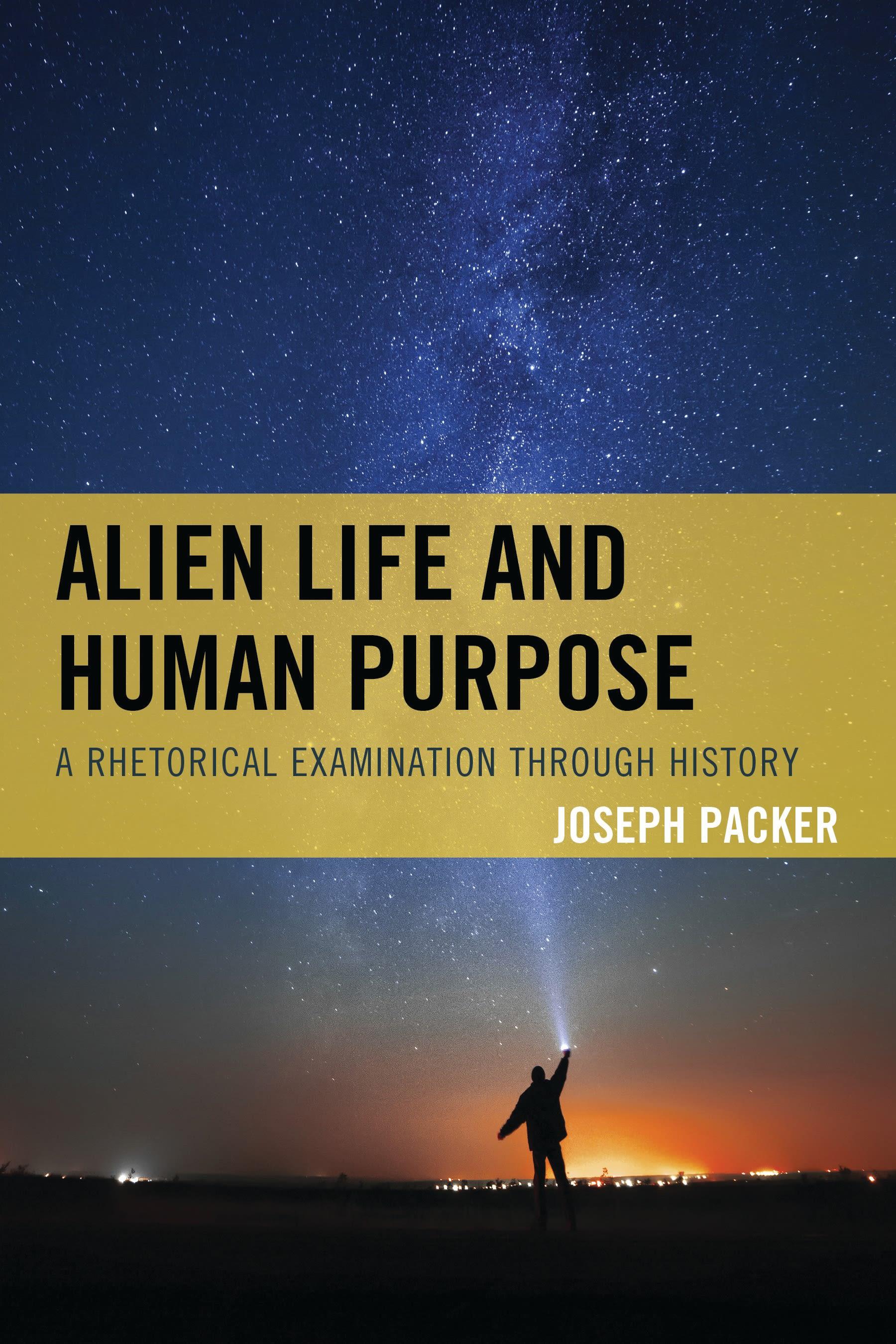
Alien Life and Human Purpose: A Rhetorical Examination through History provides a rhetorical examination of the way major historical figures connect their arguments for the absence of alien life, or “unity,” to their philosophical, religious, and ethical agendas. Although the unity myth has often existed in the background of society, shaping institutions and values, during periods where relativism gained prominence, its opponents actively wielded the unity myth as a response; Plato used the unity myth against the sophists, Anglican theologian and philosopher William Whewell against the utilitarians, co-discoverer of evolution Alfred Russell Wallace against the social Darwinists, university professors Frank J. Tipler and John D. Barrow against the postmodernists, etc. These individuals presented scientific defenses of unity and then used the “fact” of unity to claim the universe is teleological, knowable, and ordered, rather than chaotic and relativistic. This book argues that unity and its complimentary mythic function have played an important role in shaping values throughout history and more importantly continue to do so today.
Betala smidigt med kort, Klarna, Apple Pay eller Google Pay. Är du inte nöjd har du alltid 14 dagars ångerrätt. Läs mer i våra villkor. Har du några frågor, mejla oss på hello@memmo.org.
Memmo gör det enklare att plugga – var du än är i världen. Hos oss samlar du kursböcker och smarta studieverktyg på ett och samma ställe: sammanfattningar, quiz, poddar och flashcards. Och så Ted, din studiekompis som svarar på allt du undrar. Över 50 000 studenter pluggar redan här – byggt för att du ska lära dig snabbare och stressa mindre.