
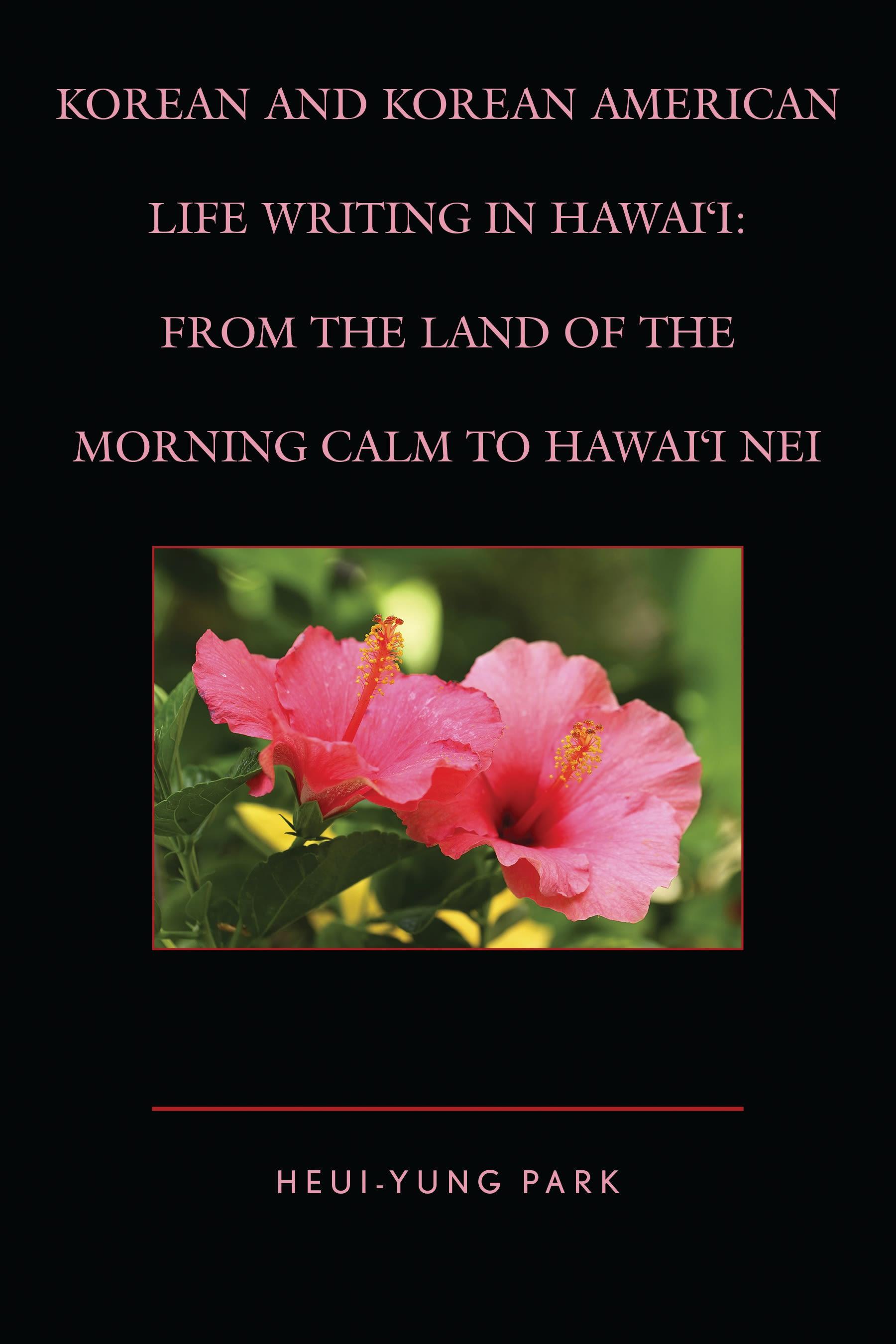
Korean and Korean American Life Writing in Hawai'i examines such self-representing genres as lyric poems, oral history, autobiography, and memoirs written by Korean and Korean Americans from the early twentieth century to the present, in order to explore how these people have shaped their individual or collective identities. Their representations, produced in different periods by successive generations, reveal how Koreans in their diaspora to Hawai‘i came to terms with their ethnic and local selves, and also how the sense of who and what they are changed over the years, both within and beyond the initial generation.
Looking into their individual and collective identities in lyric poems, oral history, autobiography, and memoirs reveals how the earliest arrivals, their children, and their grandchildren have come to terms with their national, ethnic, and local selves, and how their sense of identity changes over the course of time, both within and beyond the initial generation. In the lyric poems found in Korean-language periodicals of the native-born generation, we can trace the significance of the motherland and Hawai‘i for these writers’ sense of identity. The oral histories of first-generation women, most of whom arrived as picture brides, also represent another “us”: often vulnerable Koreans who define themselves in relation to both the present culture and to Korean men. The self developed by the second-, third-, and in-between-generation Koreans diversifies because their identity is not defined exclusively by their ancestral land, extending to Hawai‘i and to America.
This study focuses on three main areas of emphasis: Hawai‘i; Korean language and culture; and life writing. By tracing how identity changes with each generation, this study reveals how identity formation for Hawai‘i diasporic Koreans has evolved.
Looking into their individual and collective identities in lyric poems, oral history, autobiography, and memoirs reveals how the earliest arrivals, their children, and their grandchildren have come to terms with their national, ethnic, and local selves, and how their sense of identity changes over the course of time, both within and beyond the initial generation. In the lyric poems found in Korean-language periodicals of the native-born generation, we can trace the significance of the motherland and Hawai‘i for these writers’ sense of identity. The oral histories of first-generation women, most of whom arrived as picture brides, also represent another “us”: often vulnerable Koreans who define themselves in relation to both the present culture and to Korean men. The self developed by the second-, third-, and in-between-generation Koreans diversifies because their identity is not defined exclusively by their ancestral land, extending to Hawai‘i and to America.
This study focuses on three main areas of emphasis: Hawai‘i; Korean language and culture; and life writing. By tracing how identity changes with each generation, this study reveals how identity formation for Hawai‘i diasporic Koreans has evolved.
Sidor: 196
Kategori: Kultur-, Genus- & Postkoloniala studier
e-ISBN: 9781498507684
Fraktvikt: 1.2 kg
Skickas inom: 1-2 dagar
Betala smidigt med kort, Klarna, Apple Pay eller Google Pay. Är du inte nöjd har du alltid 14 dagars ångerrätt. Läs mer i våra villkor. Har du några frågor, mejla oss på hello@memmo.org.
Memmo gör det enklare att plugga – var du än är i världen. Hos oss samlar du kursböcker och smarta studieverktyg på ett och samma ställe: sammanfattningar, quiz, poddar och flashcards. Och så Ted, din studiekompis som svarar på allt du undrar. Över 50 000 studenter pluggar redan här – byggt för att du ska lära dig snabbare och stressa mindre.