
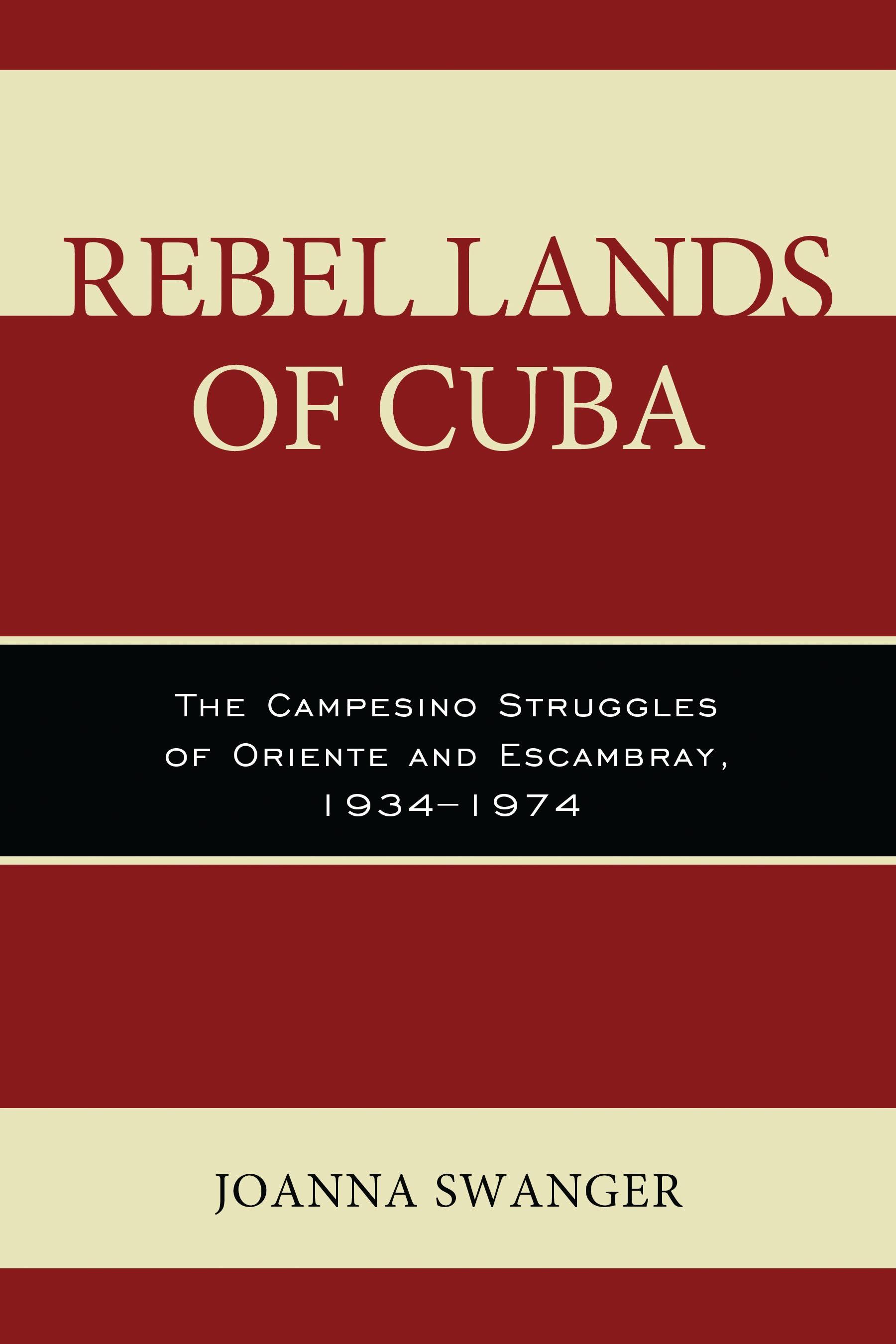
The book is a comparative history of twentieth-century Cuban campesinos in two regions in Cuba marked by extreme differences in race, gender, and land tenure: Oriente and Escambray. It explores the ways these differences articulated with state formation from the pre-revolutionary period of 1934-1959 and then 1959-1974 and seeks to explain why campesinos in Escambray, having been active in the insurrection against Batista, later turned to stage a massive counter-revolution against the government headed by Fidel Castro. Although campesinos in both regions had been equally ignored by pre-1959 governments for different reasons, they developed two distinct understandings of what the role of the state should be in response to political neglect. Rich archival sources—many of which have not been accessed previously—document the unique shape of land struggles in each region in the 1930s through the 1950s. The author argues that because of the way race and gender and a collectivist land tenure tradition in Oriente mapped nicely onto the goals of the 1959 Revolution, Oriente became a kind of revolutionary showcase. In Escambray, on the other hand, a construct of white masculinity, tied to private property ownership, directly contravened the goals of the Revolution, which fueled the counter-revolution and also led to brutal state repression in the area.
Betala smidigt med kort, Klarna, Apple Pay eller Google Pay. Är du inte nöjd har du alltid 14 dagars ångerrätt. Läs mer i våra villkor. Har du några frågor, mejla oss på hello@memmo.org.
Memmo gör det enklare att plugga – var du än är i världen. Hos oss samlar du kursböcker och smarta studieverktyg på ett och samma ställe: sammanfattningar, quiz, poddar och flashcards. Och så Ted, din studiekompis som svarar på allt du undrar. Över 50 000 studenter pluggar redan här – byggt för att du ska lära dig snabbare och stressa mindre.