
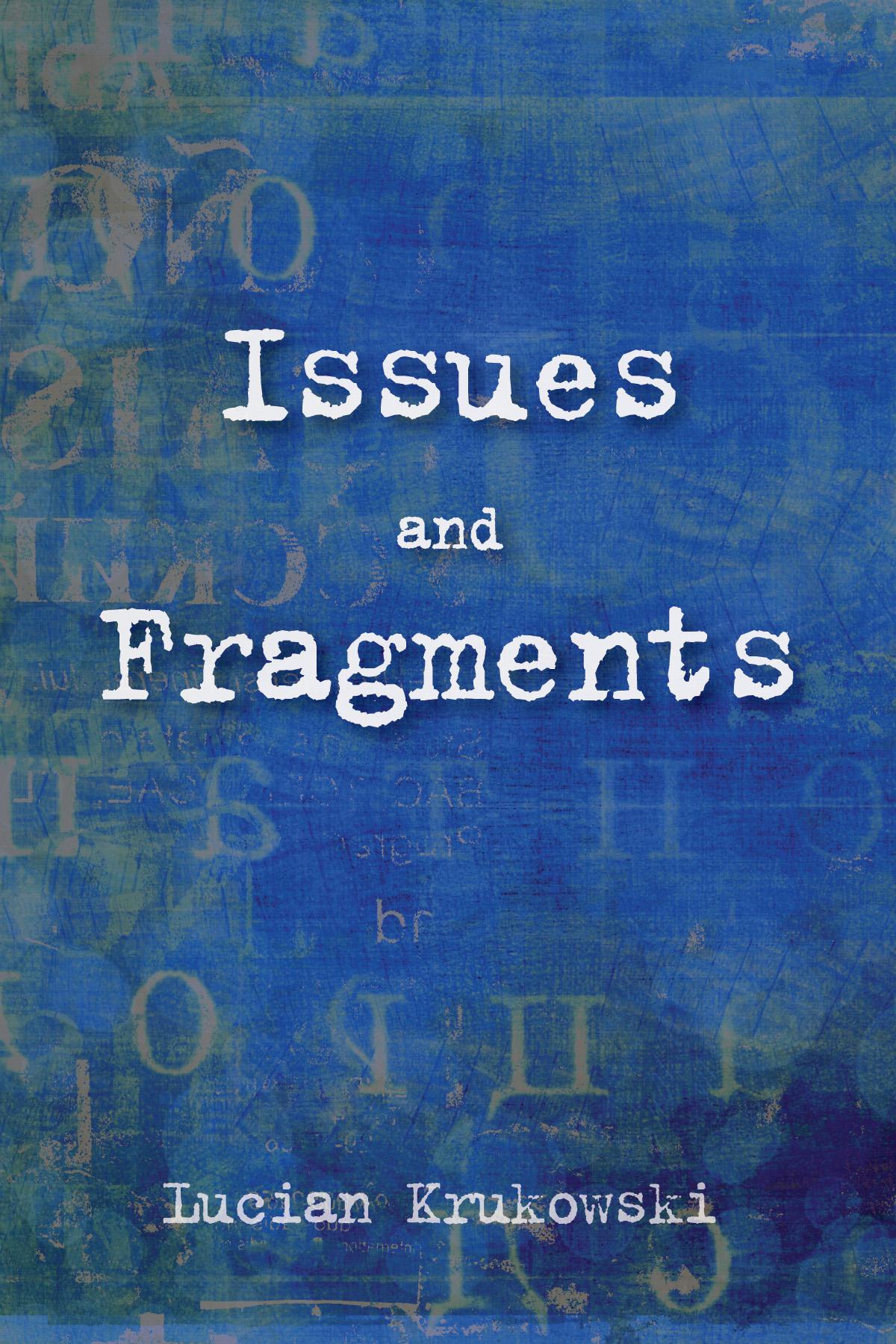
There are many subjects that appear in this book: Philosophy, Art, Fiction, Poetry, God. They are each approached through language that fits their content--language that itself shares characteristics of the subject it addresses. There are thus as many languages as there are subjects--exhibiting different forms of "being about" their subjects. Such forms are variously called "analysis," or "exegesis," or "criticism," or "speculation," or "invention," or "memories and dreams." Issues become fragmented at the edges--the limits--of their language. Fragments, in turn, seek the shape--the boundaries--of their content. The forms of "aboutness" are as varied, and numerous, as are their subjects. There is no exhaustive listing.
There is one subject this book is most concerned with. It underlies the others and questions the value--the possibilities--of mutual reciprocation. This, too, has many forms: "What can or cannot be said." "Where are boundaries firm and where porous." "What is gained and what lost through interaction between subject-contents." "The many problems of synthesis." "What the difference is between 'Actual' and 'Real' in theories of life." "Contrasts between the nature--and the varying descriptions--of God and after-life."
The contention here is that all given descriptions are partial, and that in these partialities and their similarities, ways can found to construct--however slowly and painfully--the larger subject-nature of living and dying.
Betala smidigt med kort, Klarna, Apple Pay eller Google Pay. Är du inte nöjd har du alltid 14 dagars ångerrätt. Läs mer i våra villkor. Har du några frågor, mejla oss på hello@memmo.org.
Memmo gör det enklare att plugga – var du än är i världen. Hos oss samlar du kursböcker och smarta studieverktyg på ett och samma ställe: sammanfattningar, quiz, poddar och flashcards. Och så Ted, din studiekompis som svarar på allt du undrar. Över 50 000 studenter pluggar redan här – byggt för att du ska lära dig snabbare och stressa mindre.
Du kanske också gillar
Köp boken0