
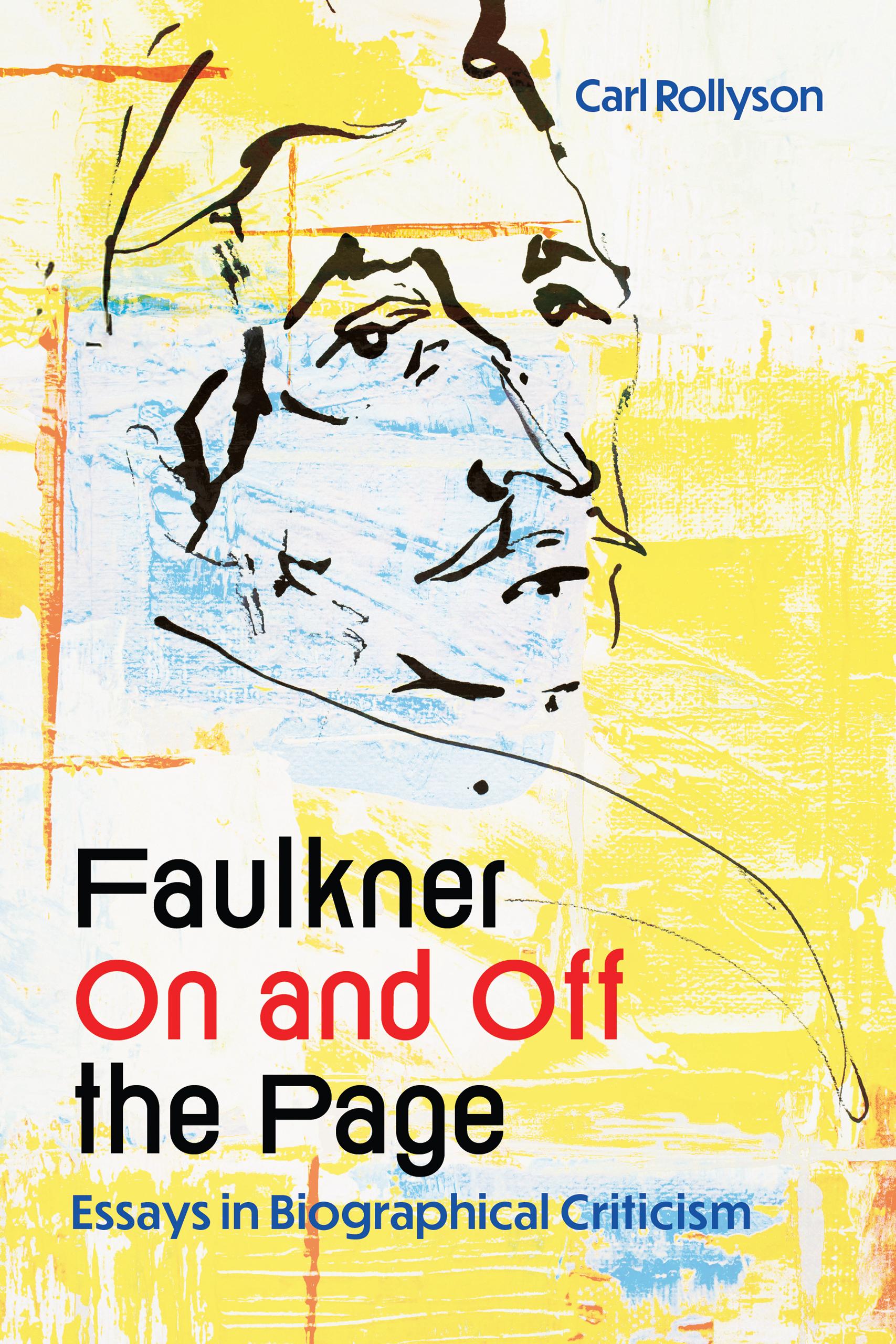
Though numerous biographies have been published on William Faulkner, readers are often presented conflicting interpretations of his life and work. Faulkner’s view of himself and his own family was mercurial, and it is widely acknowledged that Faulkner was an unreliable narrator of his own life. As a result, biographies of Faulkner echo and complicate the multitude of ways he portrayed himself, accepting that truth—if it exists—is subjective. Like his work, Faulkner’s own life, then, is not only open to different readings but welcomes them within the landscape of his oeuvre.
Faulkner On and Off the Page acknowledges the challenges of “factifying” a life into a textual narrative, while also emphasizing the potential for biography to establish a throughline that traces how literature emerges from life and, in turn, shapes the life narrative Faulkner constructed for himself. Unburdened by the sanctity of the written word, Faulkner embraced mutability and perpetual evolution. This process of reinvention also manifests within the pages of Faulkner's biographies, as each biographer brings a unique context and perspective shaped by generations of Faulkner scholars.
Rather than thinking of Faulkner as exclusively the great high modernist who strayed to Hollywood when he needed the money and stayed home when he didn’t, this book portrays an unsettled writer incessantly on the move incorporating what only looked like alien elements into his work, while maintaining a public persona that disparaged anything that did not fit the narrative of the novelist he created in interviews, essays, and speeches. This book attempts to carry on the work of finding the man on the page even as he is shaping a life off of it.
Faulkner On and Off the Page acknowledges the challenges of “factifying” a life into a textual narrative, while also emphasizing the potential for biography to establish a throughline that traces how literature emerges from life and, in turn, shapes the life narrative Faulkner constructed for himself. Unburdened by the sanctity of the written word, Faulkner embraced mutability and perpetual evolution. This process of reinvention also manifests within the pages of Faulkner's biographies, as each biographer brings a unique context and perspective shaped by generations of Faulkner scholars.
Rather than thinking of Faulkner as exclusively the great high modernist who strayed to Hollywood when he needed the money and stayed home when he didn’t, this book portrays an unsettled writer incessantly on the move incorporating what only looked like alien elements into his work, while maintaining a public persona that disparaged anything that did not fit the narrative of the novelist he created in interviews, essays, and speeches. This book attempts to carry on the work of finding the man on the page even as he is shaping a life off of it.
Betala smidigt med kort, Klarna, Apple Pay eller Google Pay. Är du inte nöjd har du alltid 14 dagars ångerrätt. Läs mer i våra villkor. Har du några frågor, mejla oss på hello@memmo.org.
Memmo gör det enklare att plugga – var du än är i världen. Hos oss samlar du kursböcker och smarta studieverktyg på ett och samma ställe: sammanfattningar, quiz, poddar och flashcards. Och så Ted, din studiekompis som svarar på allt du undrar. Över 50 000 studenter pluggar redan här – byggt för att du ska lära dig snabbare och stressa mindre.
Du kanske också gillar
Köp boken0