
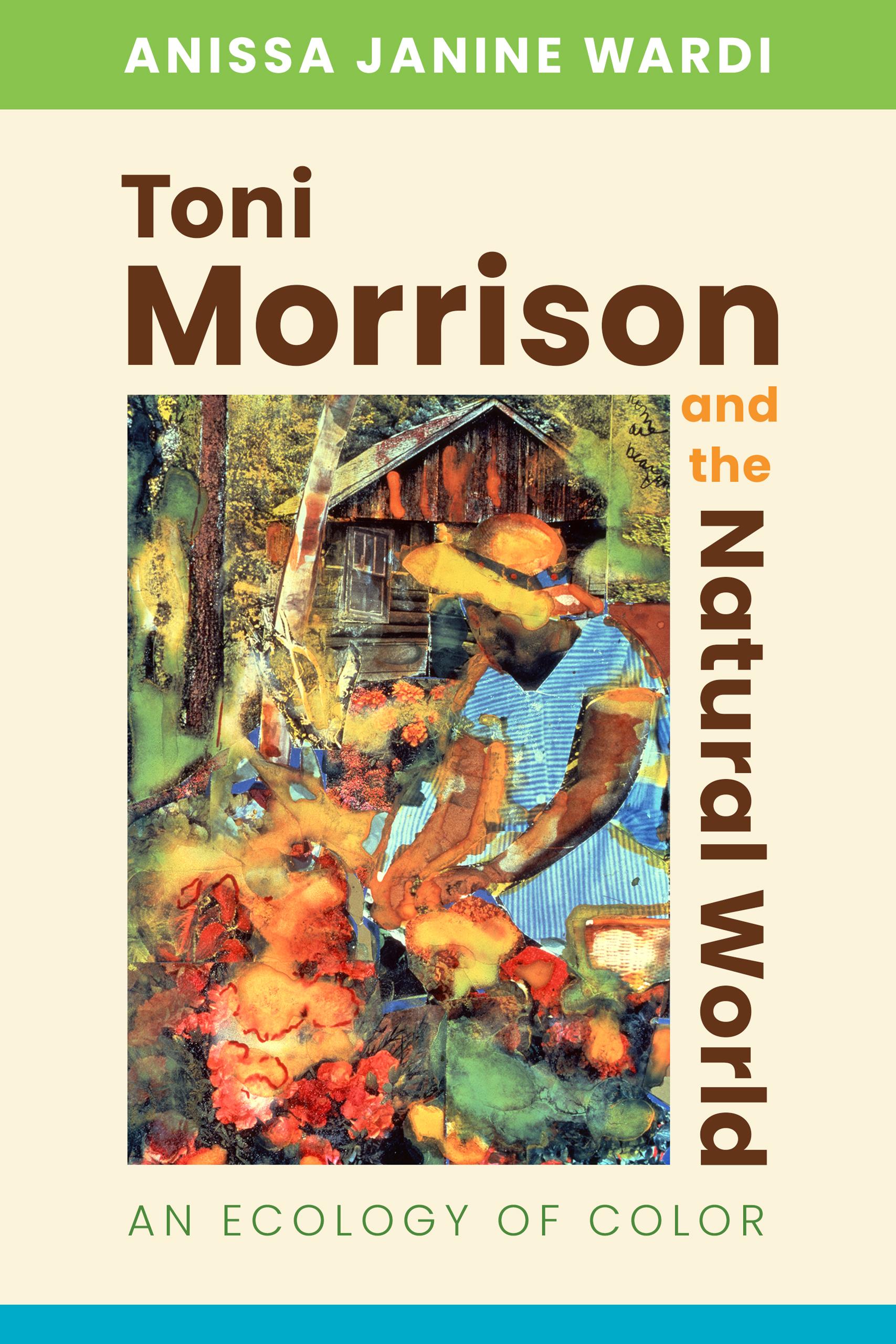
Winner of the Toni Morrison Society Book Prize for Best Single-Authored Book, 2019-2022
Critics have routinely excluded African American literature from ecocritical inquiry despite the fact that the literary tradition has, from its inception, proved to be steeped in environmental concerns that address elements of the natural world and relate nature to the transatlantic slave trade, plantation labor, and nationhood. Toni Morrison’s work is no exception. Toni Morrison and the Natural World: An Ecology of Color is the first full-length ecocritical investigation of the Nobel Laureate’s novels and brings to the fore an unequaled engagement between race and nature.
Morrison’s ecological consciousness holds that human geographies are enmeshed with nonhuman nature. It follows, then, that ecology, the branch of biology that studies how people relate to each other and their environment, is an apt framework for this book. The interrelationships and interactions between individuals and community, and between organisms and the biosphere, are central to this analysis. They highlight that the human and nonhuman are part of a larger ecosystem of interfacings and transformations. Toni Morrison and the Natural World is organized by color, examining soil (brown) in The Bluest Eye and Paradise; plant life (green) in Song of Solomon, Beloved, and Home; bodies of water (blue) in Tar Baby and Love; and fire (orange) in Sula and God Help the Child.
By providing a racially inflected reading of nature, Toni Morrison and the Natural World makes an important contribution to the field of environmental studies and provides a landmark for Morrison scholarship.
Critics have routinely excluded African American literature from ecocritical inquiry despite the fact that the literary tradition has, from its inception, proved to be steeped in environmental concerns that address elements of the natural world and relate nature to the transatlantic slave trade, plantation labor, and nationhood. Toni Morrison’s work is no exception. Toni Morrison and the Natural World: An Ecology of Color is the first full-length ecocritical investigation of the Nobel Laureate’s novels and brings to the fore an unequaled engagement between race and nature.
Morrison’s ecological consciousness holds that human geographies are enmeshed with nonhuman nature. It follows, then, that ecology, the branch of biology that studies how people relate to each other and their environment, is an apt framework for this book. The interrelationships and interactions between individuals and community, and between organisms and the biosphere, are central to this analysis. They highlight that the human and nonhuman are part of a larger ecosystem of interfacings and transformations. Toni Morrison and the Natural World is organized by color, examining soil (brown) in The Bluest Eye and Paradise; plant life (green) in Song of Solomon, Beloved, and Home; bodies of water (blue) in Tar Baby and Love; and fire (orange) in Sula and God Help the Child.
By providing a racially inflected reading of nature, Toni Morrison and the Natural World makes an important contribution to the field of environmental studies and provides a landmark for Morrison scholarship.
Betala smidigt med kort, Klarna, Apple Pay eller Google Pay. Är du inte nöjd har du alltid 14 dagars ångerrätt. Läs mer i våra villkor. Har du några frågor, mejla oss på hello@memmo.org.
Memmo gör det enklare att plugga – var du än är i världen. Hos oss samlar du kursböcker och smarta studieverktyg på ett och samma ställe: sammanfattningar, quiz, poddar och flashcards. Och så Ted, din studiekompis som svarar på allt du undrar. Över 50 000 studenter pluggar redan här – byggt för att du ska lära dig snabbare och stressa mindre.
Du kanske också gillar
Köp boken0