
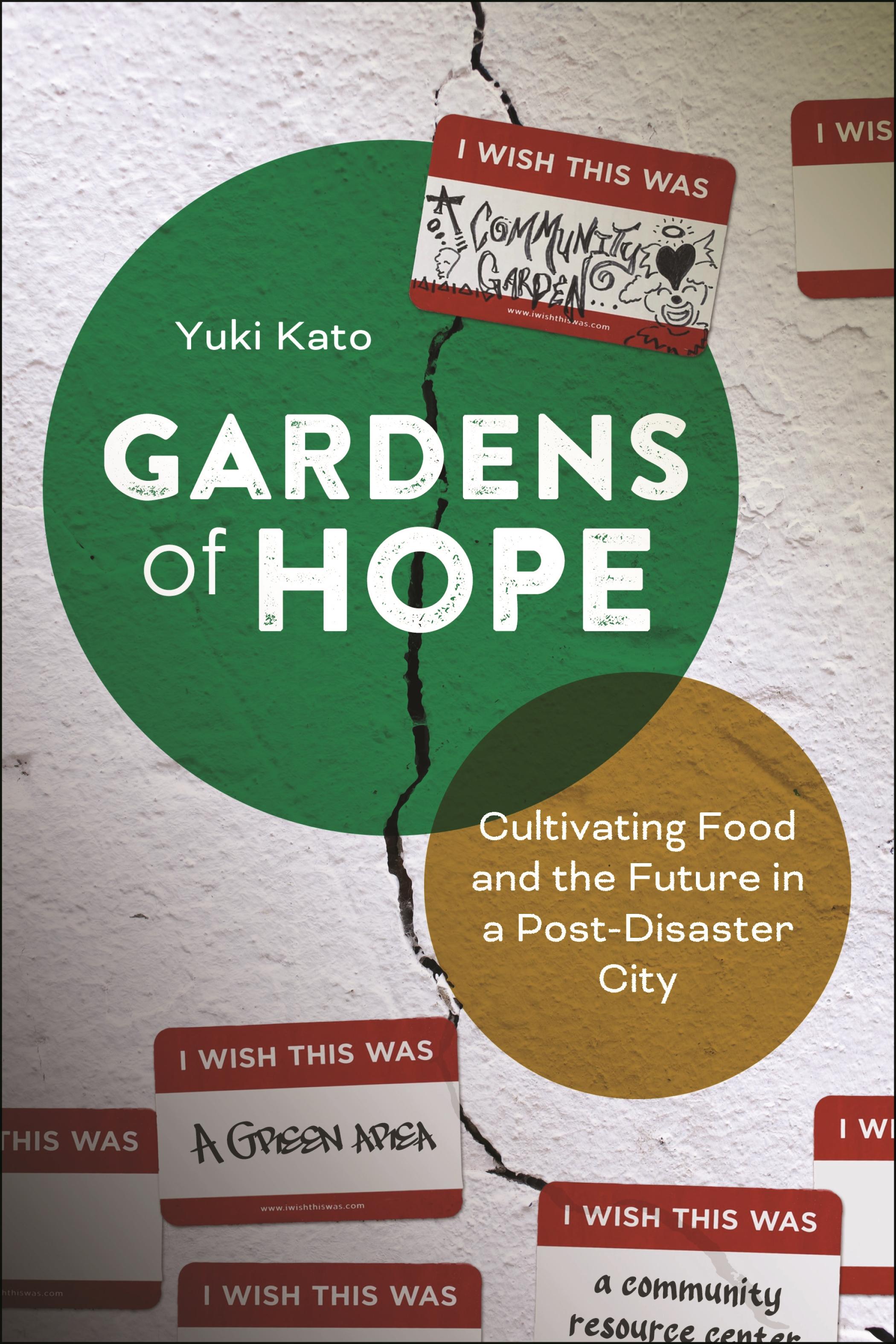
Social changes through urban gardening and farming
Gardens are often spaces of hope, expected to solve many problems in a city including food insecurity and climate resilience. In fact, there has been a historical trend of urban gardening gaining popularity during times of crisis. Gardens of Hope is the story of urban gardening in New Orleans in the decade after Hurricane Katrina. Yuki Kato highlights the impact urban gardens have on communities after disasters and the efforts of well-intended individuals envisioning alternative futures in the form of urban farming.
Drawing on repeated interviews with residents who began cultivation projects in New Orleans between 2005 and 2015, Kato explains how good intentions and grit were not enough to implement or sustain urban gardeners’ visions for the post-disaster city’s future. Coining the term “prefigurative urbanism,” Kato illustrates how individuals tried to realize alternative ways of living and working in the city through pragmatism and innovation. Gardens of Hope asks key questions about what inspires and enables individuals to pursue prefigurative urbanism and about the potential and limitations of this form of civic engagement to bring about short- and long-term changes in cities undergoing transformation, from gentrification, post-pandemic recovery, to climate change.
Betala smidigt med kort, Klarna, Apple Pay eller Google Pay. Är du inte nöjd har du alltid 14 dagars ångerrätt. Läs mer i våra villkor. Har du några frågor, mejla oss på hello@memmo.org.
Memmo gör det enklare att plugga – var du än är i världen. Hos oss samlar du kursböcker och smarta studieverktyg på ett och samma ställe: sammanfattningar, quiz, poddar och flashcards. Och så Ted, din studiekompis som svarar på allt du undrar. Över 50 000 studenter pluggar redan här – byggt för att du ska lära dig snabbare och stressa mindre.