
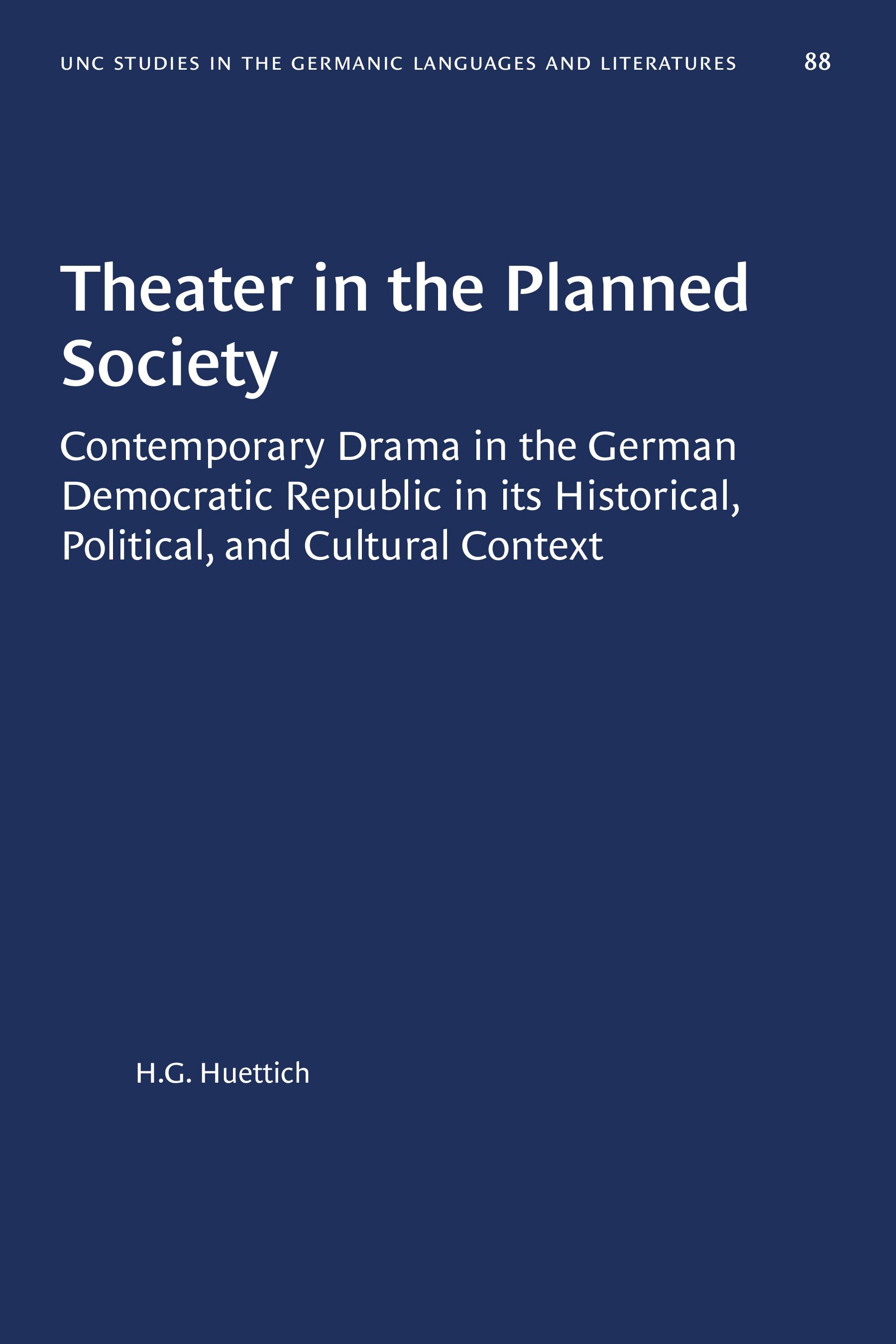
This study presents the historical development of topical drama in the German Democratic Republic from 1945 to 1975. The author investigates the sociopolitical function of both dramas and dramatists such as Karl Grünberg, Friedrich Wolf, and Erwin Strittmatter during the various transitional stages of the GDR’s growth toward a socialist society.
The substantive, critical study of plays, authors, productions, and dramatic theory is supplemented by a critical analysis of the Socialist Unity Party’s cultural and literary policies during the GDR’s turbulent history. While Western critics tend to isolate individual GDR dramas and interpret them out of context, Huettich explores in depth how the cultural policy of the GDR significantly helped shape the course of post-World War II drama in the 'planned society.'
The substantive, critical study of plays, authors, productions, and dramatic theory is supplemented by a critical analysis of the Socialist Unity Party’s cultural and literary policies during the GDR’s turbulent history. While Western critics tend to isolate individual GDR dramas and interpret them out of context, Huettich explores in depth how the cultural policy of the GDR significantly helped shape the course of post-World War II drama in the 'planned society.'
Sidor: 192
Kategori: Drama, Teater & Scenkonst
e-ISBN: 9781469657585
Fraktvikt: 1.2 kg
Skickas inom: 1-2 dagar
Betala smidigt med kort, Klarna, Apple Pay eller Google Pay. Är du inte nöjd har du alltid 14 dagars ångerrätt. Läs mer i våra villkor. Har du några frågor, mejla oss på hello@memmo.org.
Memmo gör det enklare att plugga – var du än är i världen. Hos oss samlar du kursböcker och smarta studieverktyg på ett och samma ställe: sammanfattningar, quiz, poddar och flashcards. Och så Ted, din studiekompis som svarar på allt du undrar. Över 50 000 studenter pluggar redan här – byggt för att du ska lära dig snabbare och stressa mindre.
Du kanske också gillar
Köp boken0