
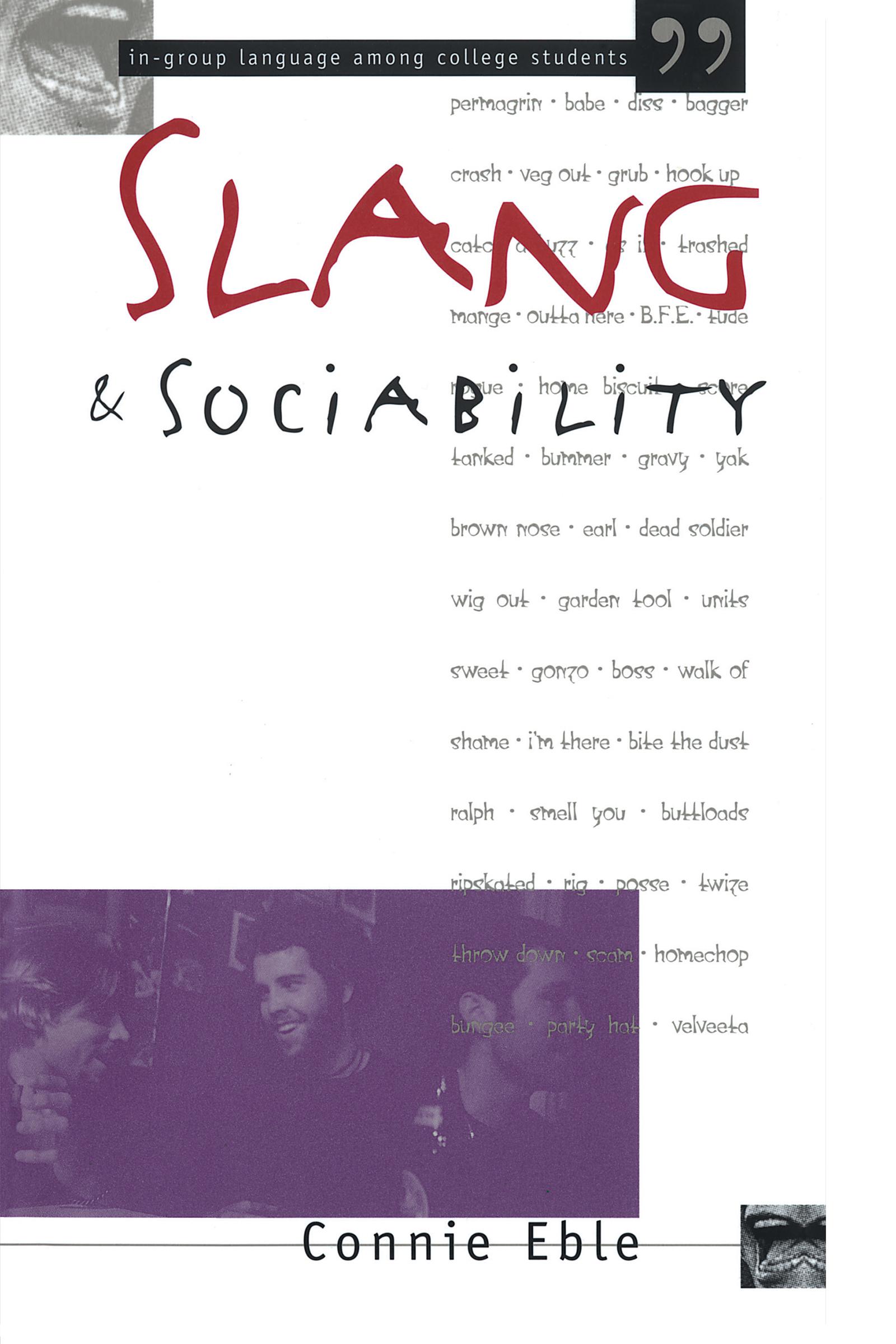
Slang is often seen as a lesser form of language, one that is simply not as meaningful or important as its 'regular' counterpart. Connie Eble refutes this notion as she reveals the sources, poetry, symbolism, and subtlety of informal slang expressions. In Slang and Sociability, Eble explores the words and phrases that American college students use casually among themselves. Based on more than 10,000 examples submitted by Eble’s students at the University of North Carolina at Chapel Hill over the last twenty years, the book shows that slang is dynamic vocabulary that cannot be dismissed as deviant or marginal. Like more formal words and phrases, slang is created, modified, and transmitted by its users to serve their own purposes. In the case of college students, these purposes include cementing group identity and opposing authority. The book includes a glossary of the more than 1,000 slang words and phrases discussed in the text, as well as a list of the 40 most enduring terms since 1972. Examples from the glossary: group gropes — encounter groups squirrel kisser — environmentalist Goth — student who dresses in black and listens to avant-garde music bad bongos — situation in which things do not go well triangle — person who is stupid or not up on the latest za — pizza smoke — to perform well dead soldier — empty beer container toast — in big trouble, the victim of misfortune parental units — parents
Betala smidigt med kort, Klarna, Apple Pay eller Google Pay. Är du inte nöjd har du alltid 14 dagars ångerrätt. Läs mer i våra villkor. Har du några frågor, mejla oss på hello@memmo.org.
Memmo gör det enklare att plugga – var du än är i världen. Hos oss samlar du kursböcker och smarta studieverktyg på ett och samma ställe: sammanfattningar, quiz, poddar och flashcards. Och så Ted, din studiekompis som svarar på allt du undrar. Över 50 000 studenter pluggar redan här – byggt för att du ska lära dig snabbare och stressa mindre.