
Existentialism is the philosophy of human existence, which flourished first in Germany in the 1920s and 1930s and then in France in the decade following the end of World War II. The operative meaning of existentialism here is thus broader than it was circa 1945 when the term first gained currency in France as a label for the philosophy of Jean-Paul Sartre. However, it is considerably less broad than the view proposed by commentators in the 1950s and 1960s who, in an attempt to overcome Sartre's hegemony, discovered the seeds of existentialism far and wide: in Shakespeare, Saint Augustine, and the Old Testament prophets. In this dictionary, existentialism is understood as a decidedly 20th-century phenomenon, though with roots in the 19th century. Effort has been made to understand the philosophy of existentialism, as all philosophies should be understood, as part of an ongoing intellectual tradition: an evolving history of problems, concepts, and arguments.
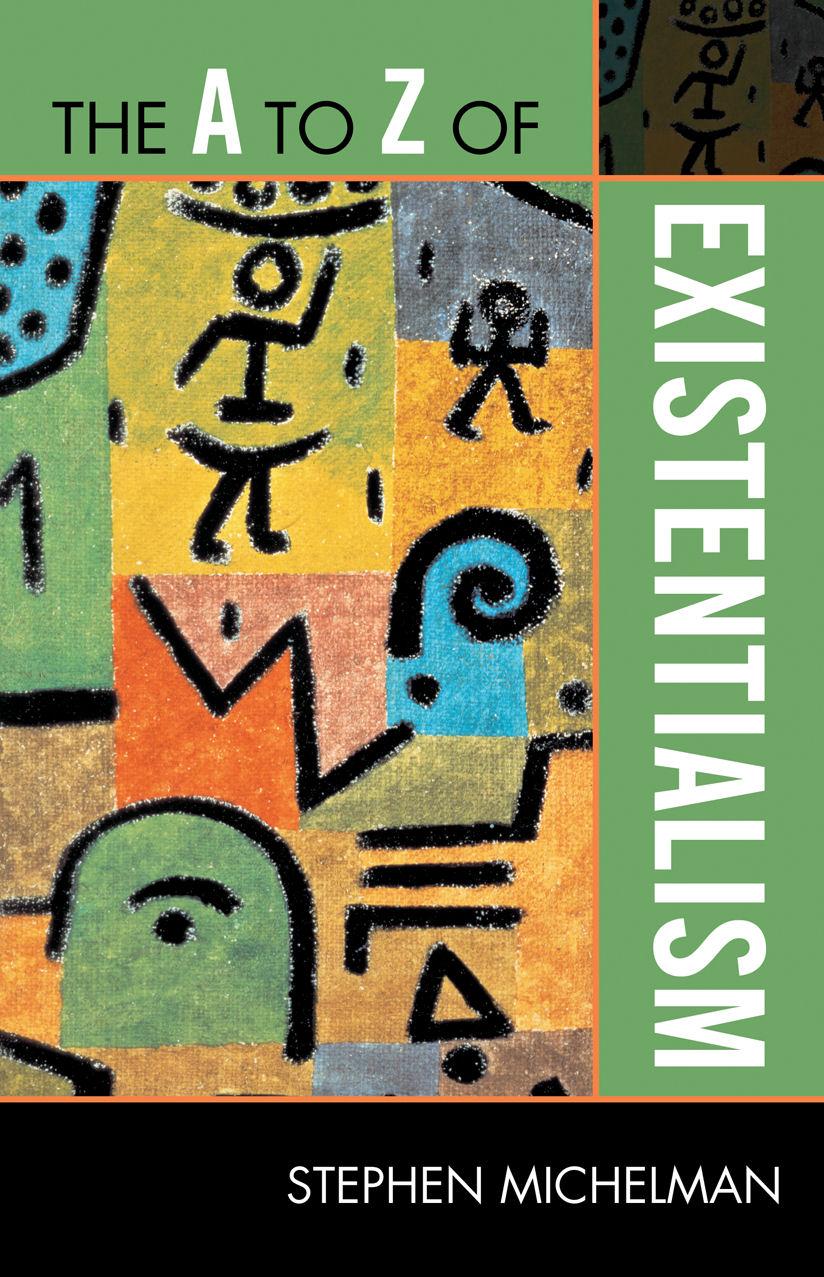
The A to Z of Existentialism explains the central claims of existentialist philosophy and the contexts in which it developed into one of the most influential intellectual trends of the 20th century. This is done through a chronology, an introductory essay, a bibliography, and more than 300 cross-referenced dictionary entries offering clear, accessible accounts of the life and thought of major existentialists like Jean-Paul Sartre, Martin Heidegger, Martin Buber, Karl Jaspers, Gabriel Marcel, Simone de Beauvoir, Albert Camus, and Maurice Merleau-Ponty, as well as thinkers influential to its development such as Wilhelm Dilthey, Henri Bergson, Edmund Husserl, and Max Scheler. This book affords readers an integrated, critical, and historically-sensitive understanding of this important philosophical movement.
The A to Z of Existentialism explains the central claims of existentialist philosophy and the contexts in which it developed into one of the most influential intellectual trends of the 20th century. This is done through a chronology, an introductory essay, a bibliography, and more than 300 cross-referenced dictionary entries offering clear, accessible accounts of the life and thought of major existentialists like Jean-Paul Sartre, Martin Heidegger, Martin Buber, Karl Jaspers, Gabriel Marcel, Simone de Beauvoir, Albert Camus, and Maurice Merleau-Ponty, as well as thinkers influential to its development such as Wilhelm Dilthey, Henri Bergson, Edmund Husserl, and Max Scheler. This book affords readers an integrated, critical, and historically-sensitive understanding of this important philosophical movement.
Betala smidigt med kort, Klarna, Apple Pay eller Google Pay. Är du inte nöjd har du alltid 14 dagars ångerrätt. Läs mer i våra villkor. Har du några frågor, mejla oss på hello@memmo.org.
Memmo gör det enklare att plugga – var du än är i världen. Hos oss samlar du kursböcker och smarta studieverktyg på ett och samma ställe: sammanfattningar, quiz, poddar och flashcards. Och så Ted, din studiekompis som svarar på allt du undrar. Över 50 000 studenter pluggar redan här – byggt för att du ska lära dig snabbare och stressa mindre.