
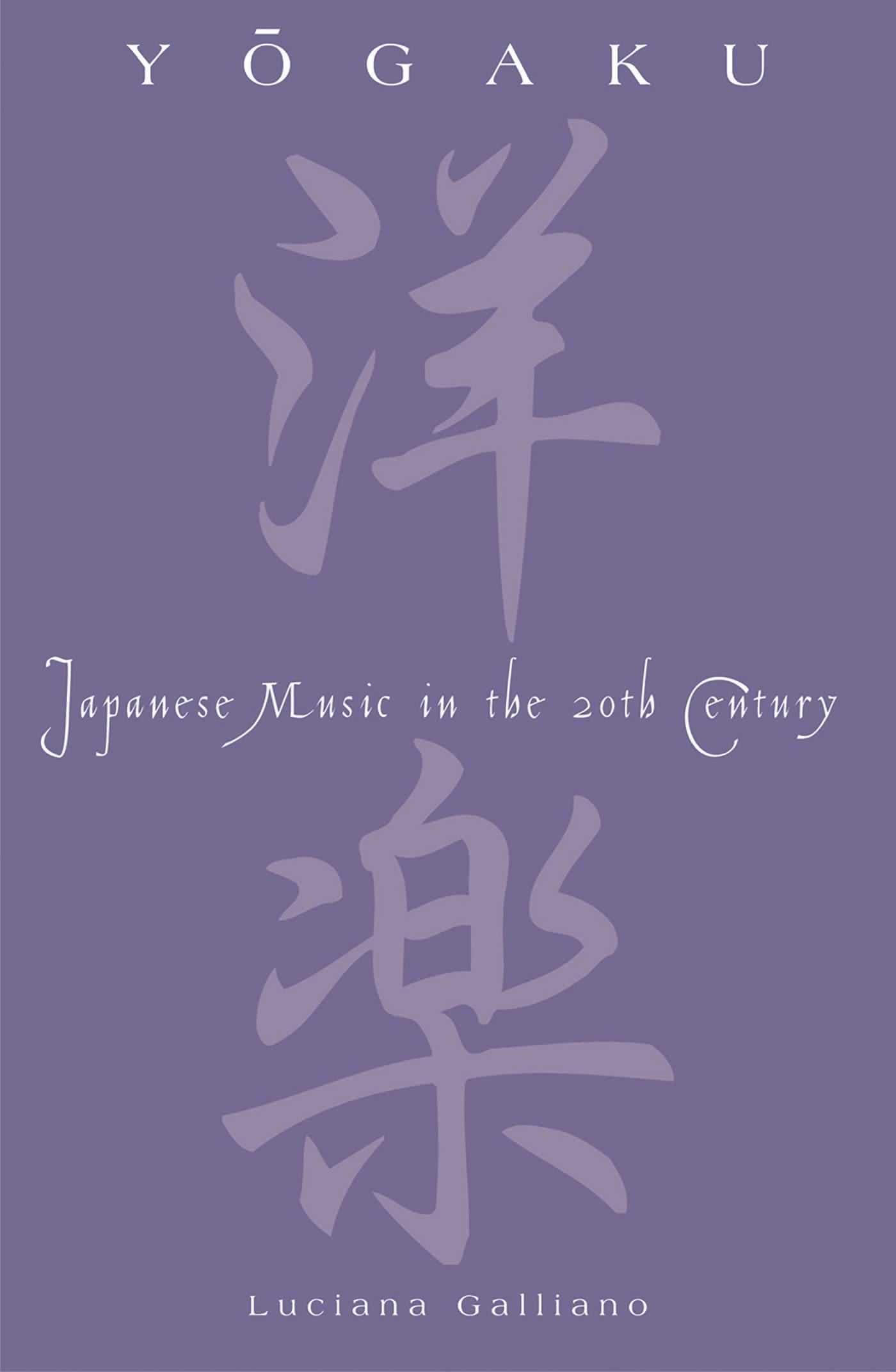
"This book introduces us to the world of contemporary Japanese music and it guides us towards a better understanding of their world."-Luciano Berio
Yogaku discusses over a century of musical activity in Japan, detailing, in particular, the music that was inspired by Western music after the Meiji Restoration in the 19th century, and its development through the end of the 20th century. The book not only examines the infiltration of Western music into Japan, but also provides insight into the aesthetic and theoretical aspects of Japanese musical thought.
The word yogaku (Western music) is made up of two characters:yo, which means "ocean" (that is, "over the ocean," meaning Western or foreign) andgaku, which means "music." Divided into two parts, the text covers the period preceding World War I as well as the post-war period. The introduction provides a history of music's role in Japanese society, touching upon the differences in the functions of Japanese and Western music. Part One describes the complex process of a new musical world and the European musical ideas that penetrated Japan. Modernization through westernization is explored; the author details the differences between the traditional Japanese music and that composed under Western influence, as well as the French and German impact on Japanese musical compositions. Galliano looks at the appearance of music in schools and the first Japanese musical compositions, as well as nationalism's effect on music through propaganda and censorship. Part Two explores topics such as the post-war avant-garde, the 1960s boom in traditional music, and the closing decades of the 20th century. The next generation of Japanese composers are also considered.
Japanese history and music scholars, as well as those interested in Japanese music, will want to include Yogaku in their collection.
Yogaku discusses over a century of musical activity in Japan, detailing, in particular, the music that was inspired by Western music after the Meiji Restoration in the 19th century, and its development through the end of the 20th century. The book not only examines the infiltration of Western music into Japan, but also provides insight into the aesthetic and theoretical aspects of Japanese musical thought.
The word yogaku (Western music) is made up of two characters:yo, which means "ocean" (that is, "over the ocean," meaning Western or foreign) andgaku, which means "music." Divided into two parts, the text covers the period preceding World War I as well as the post-war period. The introduction provides a history of music's role in Japanese society, touching upon the differences in the functions of Japanese and Western music. Part One describes the complex process of a new musical world and the European musical ideas that penetrated Japan. Modernization through westernization is explored; the author details the differences between the traditional Japanese music and that composed under Western influence, as well as the French and German impact on Japanese musical compositions. Galliano looks at the appearance of music in schools and the first Japanese musical compositions, as well as nationalism's effect on music through propaganda and censorship. Part Two explores topics such as the post-war avant-garde, the 1960s boom in traditional music, and the closing decades of the 20th century. The next generation of Japanese composers are also considered.
Japanese history and music scholars, as well as those interested in Japanese music, will want to include Yogaku in their collection.
Betala smidigt med kort, Klarna, Apple Pay eller Google Pay. Är du inte nöjd har du alltid 14 dagars ångerrätt. Läs mer i våra villkor. Har du några frågor, mejla oss på hello@memmo.org.
Memmo gör det enklare att plugga – var du än är i världen. Hos oss samlar du kursböcker och smarta studieverktyg på ett och samma ställe: sammanfattningar, quiz, poddar och flashcards. Och så Ted, din studiekompis som svarar på allt du undrar. Över 50 000 studenter pluggar redan här – byggt för att du ska lära dig snabbare och stressa mindre.