
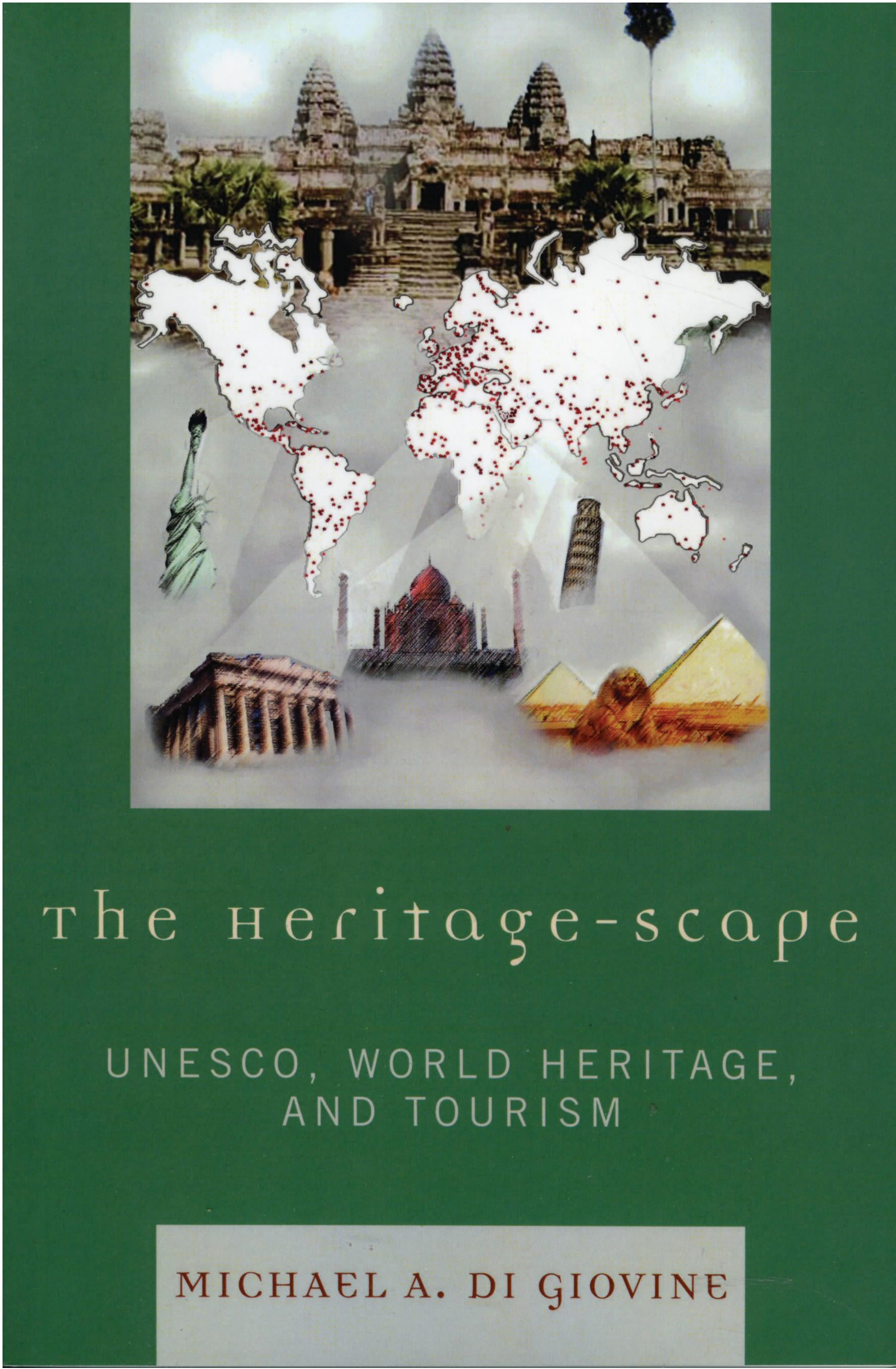
Tourism today is recognized as the largest and fastest-growing industry in the world, capable of producing positive social and economic transformations especially in developing countries. Yet for UNESCO, it works in conjunction with World Heritage sites for a far more ambitious goal: to produce "peace in the minds of men" by creating a new, global identity.
Anthropologist and former tour operator Michael Di Giovine draws on ethnographic fieldwork, close policy analysis of UNESCO's major documents, and professional experiences in Southeast Asia and Europe to provide a detailed examination of UNESCO's unusual effort to harness the phenomenon of globalization and the existence of cultural diversity for the purpose of creating "peace in the minds of men" through its World Heritage program. He convincingly argues that UNESCO's designations are not impotent political performances that lead to the commercialization of local monuments for a touristic superstructure, but instead the building blocks of a new world system, an imaginative re-ordering of the world that knows no geopolitical boundaries but exists in the individual "minds of men." Di Giovine terms this system the heritage-scape, a real social structure that extends unbridled across the globe, spreading its mantra of "unity in diversity."
Written for social scientists, heritage and tourism professionals, and the educated traveler, The Heritage-scape is an insightful, detailed, and expansive look at the politics and processes, histories and structures, and rituals and symbolisms of the interrelated phenomena of tourism, historic preservation, and UNESCO's World Heritage Program in Viet Nam, Cambodia, and across the world.
Anthropologist and former tour operator Michael Di Giovine draws on ethnographic fieldwork, close policy analysis of UNESCO's major documents, and professional experiences in Southeast Asia and Europe to provide a detailed examination of UNESCO's unusual effort to harness the phenomenon of globalization and the existence of cultural diversity for the purpose of creating "peace in the minds of men" through its World Heritage program. He convincingly argues that UNESCO's designations are not impotent political performances that lead to the commercialization of local monuments for a touristic superstructure, but instead the building blocks of a new world system, an imaginative re-ordering of the world that knows no geopolitical boundaries but exists in the individual "minds of men." Di Giovine terms this system the heritage-scape, a real social structure that extends unbridled across the globe, spreading its mantra of "unity in diversity."
Written for social scientists, heritage and tourism professionals, and the educated traveler, The Heritage-scape is an insightful, detailed, and expansive look at the politics and processes, histories and structures, and rituals and symbolisms of the interrelated phenomena of tourism, historic preservation, and UNESCO's World Heritage Program in Viet Nam, Cambodia, and across the world.
Sidor: 542
Kategori: Kultur-, Genus- & Postkoloniala studier
e-ISBN: 9781461662662
Fraktvikt: 1.2 kg
Skickas inom: 1-2 dagar
Betala smidigt med kort, Klarna, Apple Pay eller Google Pay. Är du inte nöjd har du alltid 14 dagars ångerrätt. Läs mer i våra villkor. Har du några frågor, mejla oss på hello@memmo.org.
Memmo gör det enklare att plugga – var du än är i världen. Hos oss samlar du kursböcker och smarta studieverktyg på ett och samma ställe: sammanfattningar, quiz, poddar och flashcards. Och så Ted, din studiekompis som svarar på allt du undrar. Över 50 000 studenter pluggar redan här – byggt för att du ska lära dig snabbare och stressa mindre.