
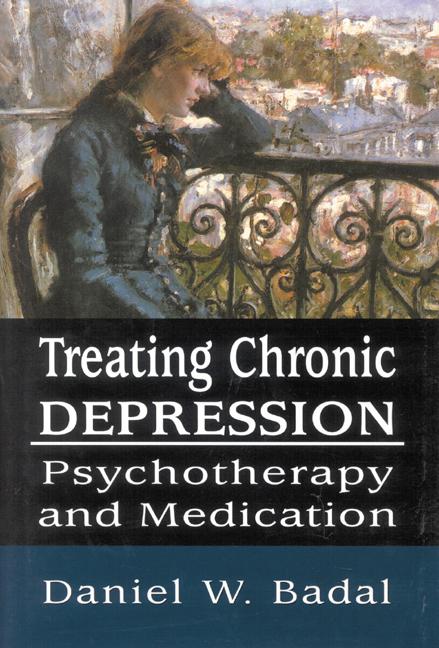
Depressive illness often becomes chronic or recurrent, and patients may recover only partially. Despite all the new and effective drugs, at least 25 to 35 percent of patients with clear-cut mood disorders do not respond in a satisfactory way even though there can be some relief of symptoms. These chronically ill patients can be identified by careful examination and are characterized by what Badal calls a “predicament.” The predicament is caused by a combination of two factors: an intolerably painful and troublesome relationship with a significant other, and a personality deficit that prevents the patient from solving that relationship problem in an acceptable way. When patients do not respond to treatment and their cases become chronic, the doctor-patient relationship must become a long-term therapeutic alliance. The personality problems may require intensive psychodynamic treatment. Combined treatment-i.e., medication, psychosocial intervention, psychotherapy, and rehabilitation-is commonly required for these patients.
The appropriate use of medication often makes it possible to conduct a successful psychotherapy. In identifying the problems causing the basic predicament of these chronic patients and successfully bringing them back into the mainstream, psychotherapists should have access to enough details and general principles of pharmacotherapy to evaluate the progress and the effects of the medication, and allow them to communicate intelligently with the person prescribing.
Badal addresses five areas of treatment with these cases: The doctor-patient relationship, pharmacological treatment, psychosocial interventions, psychotherapeutic programs, and rehabilitation. He formulates an approach to recognition and treatment of all the various types of these hard-to-treat chronic and refractory mood disorders.
A Jason Aronson Book
The appropriate use of medication often makes it possible to conduct a successful psychotherapy. In identifying the problems causing the basic predicament of these chronic patients and successfully bringing them back into the mainstream, psychotherapists should have access to enough details and general principles of pharmacotherapy to evaluate the progress and the effects of the medication, and allow them to communicate intelligently with the person prescribing.
Badal addresses five areas of treatment with these cases: The doctor-patient relationship, pharmacological treatment, psychosocial interventions, psychotherapeutic programs, and rehabilitation. He formulates an approach to recognition and treatment of all the various types of these hard-to-treat chronic and refractory mood disorders.
A Jason Aronson Book
Betala smidigt med kort, Klarna, Apple Pay eller Google Pay. Är du inte nöjd har du alltid 14 dagars ångerrätt. Läs mer i våra villkor. Har du några frågor, mejla oss på hello@memmo.org.
Memmo gör det enklare att plugga – var du än är i världen. Hos oss samlar du kursböcker och smarta studieverktyg på ett och samma ställe: sammanfattningar, quiz, poddar och flashcards. Och så Ted, din studiekompis som svarar på allt du undrar. Över 50 000 studenter pluggar redan här – byggt för att du ska lära dig snabbare och stressa mindre.