
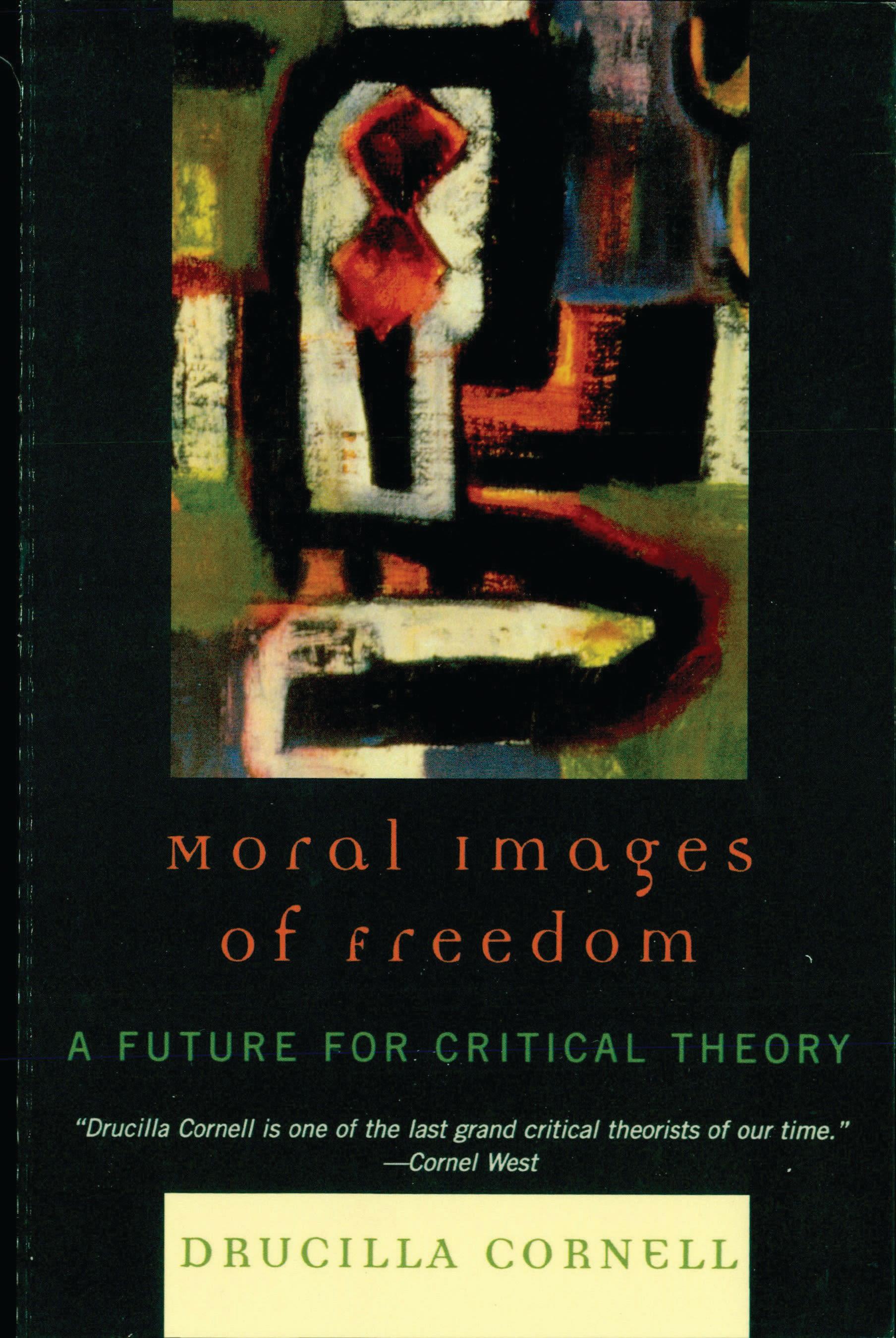
Moral Images of Freedom resurrects the Kantian project of affirmative political philosophy and traces its oft-forgotten influences found in thinkers such as Martin Heidegger, Ernst Cassirer, Frantz Fanon, and Walter Benjamin. Drucilla Cornell responds to nihilistic claims about the empty purpose of critical theory in a world so utterly captured by violence in all of its worst forms: economic, social, political, and cultural. Cornell instead draws together a sweeping thread of hope in the varied symbolic forms of freedom persistent throughout the work of a broader range of critical theorists and addresses the burning challenge for such work to respond seriously to the need for a decolonization of critical theory itself and a sustained commitment to the possible future of socialism.
Betala smidigt med kort, Klarna, Apple Pay eller Google Pay. Är du inte nöjd har du alltid 14 dagars ångerrätt. Läs mer i våra villkor. Har du några frågor, mejla oss på hello@memmo.org.
Memmo gör det enklare att plugga – var du än är i världen. Hos oss samlar du kursböcker och smarta studieverktyg på ett och samma ställe: sammanfattningar, quiz, poddar och flashcards. Och så Ted, din studiekompis som svarar på allt du undrar. Över 50 000 studenter pluggar redan här – byggt för att du ska lära dig snabbare och stressa mindre.