
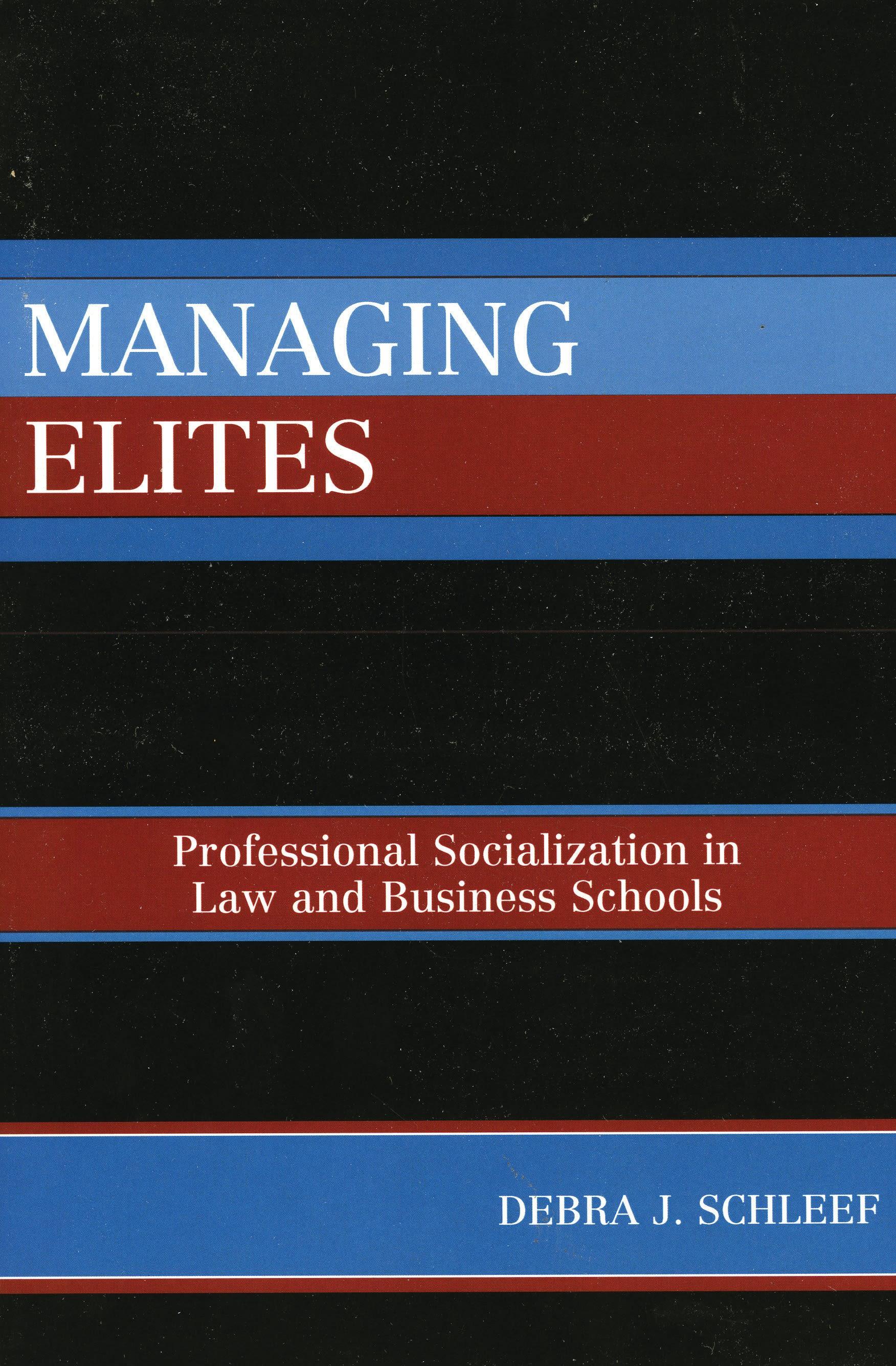
How does one become a member of an elite profession? Managing Elites examines how elites-in-training contest, rationalize and ultimately enthusiastically embrace their dominant positions in society. Using interviews with 79 law and MBA students, the author argues that elite socialization requires both accommodation and resistance to professional ideologies. Students develop a collective cynicism about elements of their education, learning that their discipline imparts esoteric knowledge - but also claiming that they didn't learn anything. They struggle with the idea that fellow students are all equally intelligent and therefore deserving of elite status, and the continuing emphasis on activities that sort students. Students resist that paths to success promoted by school cultures-investment banking, consulting, or becoming partner in a large law firm. Such cynicism is indeed ultimately revealed to be temporary, as most students end up in full support of these "jobs of least resistance". Their critiques do, however, create tensions: between competition and cooperation, between the individual and the collective, and between egalitarianism and elitism. Part of elite socialization is learning to deal with these tensions, or more specifically, to hold contradictory ideals at the same time.
Betala smidigt med kort, Klarna, Apple Pay eller Google Pay. Är du inte nöjd har du alltid 14 dagars ångerrätt. Läs mer i våra villkor. Har du några frågor, mejla oss på hello@memmo.org.
Memmo gör det enklare att plugga – var du än är i världen. Hos oss samlar du kursböcker och smarta studieverktyg på ett och samma ställe: sammanfattningar, quiz, poddar och flashcards. Och så Ted, din studiekompis som svarar på allt du undrar. Över 50 000 studenter pluggar redan här – byggt för att du ska lära dig snabbare och stressa mindre.