
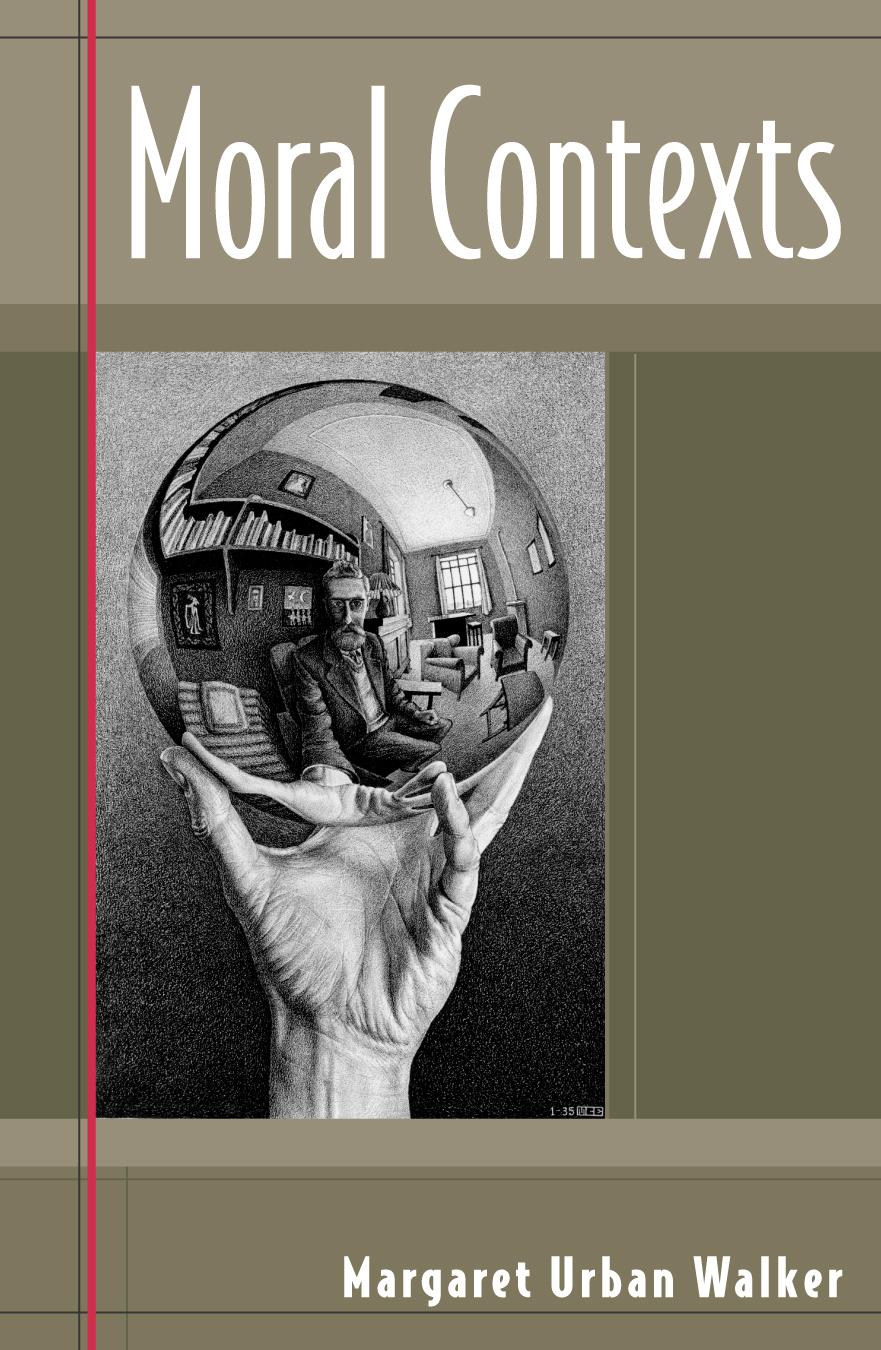
Many contexts shape and limit moral thinking in philosophy and life. Human conditions of vulnerability and interdependency, of limited awareness and control, of imperfect insight into ourselves and others are inevitable contexts that neither moral thought nor theory should forget. To be truly reflective, moral thinking and moral philosophy must become aware of the contexts that bind our thinking about how to live. This collection of essays by Margaret Urban Walker seek to show how to do this, and why it makes a difference.
Contingent and changeable contexts that shape moral thinking include our individual histories, our social positions, and institutional roles, relationships, cultural settings, and social arrangements, and the specific moral idioms we pick up along the way. The paradigms and specialized language of ethical theory are contexts, too; they shape how moral theory looks and what or whom it looks at. Ethical theory and practice are meaningless without these Moral Contexts.
Contingent and changeable contexts that shape moral thinking include our individual histories, our social positions, and institutional roles, relationships, cultural settings, and social arrangements, and the specific moral idioms we pick up along the way. The paradigms and specialized language of ethical theory are contexts, too; they shape how moral theory looks and what or whom it looks at. Ethical theory and practice are meaningless without these Moral Contexts.
Betala smidigt med kort, Klarna, Apple Pay eller Google Pay. Är du inte nöjd har du alltid 14 dagars ångerrätt. Läs mer i våra villkor. Har du några frågor, mejla oss på hello@memmo.org.
Memmo gör det enklare att plugga – var du än är i världen. Hos oss samlar du kursböcker och smarta studieverktyg på ett och samma ställe: sammanfattningar, quiz, poddar och flashcards. Och så Ted, din studiekompis som svarar på allt du undrar. Över 50 000 studenter pluggar redan här – byggt för att du ska lära dig snabbare och stressa mindre.