
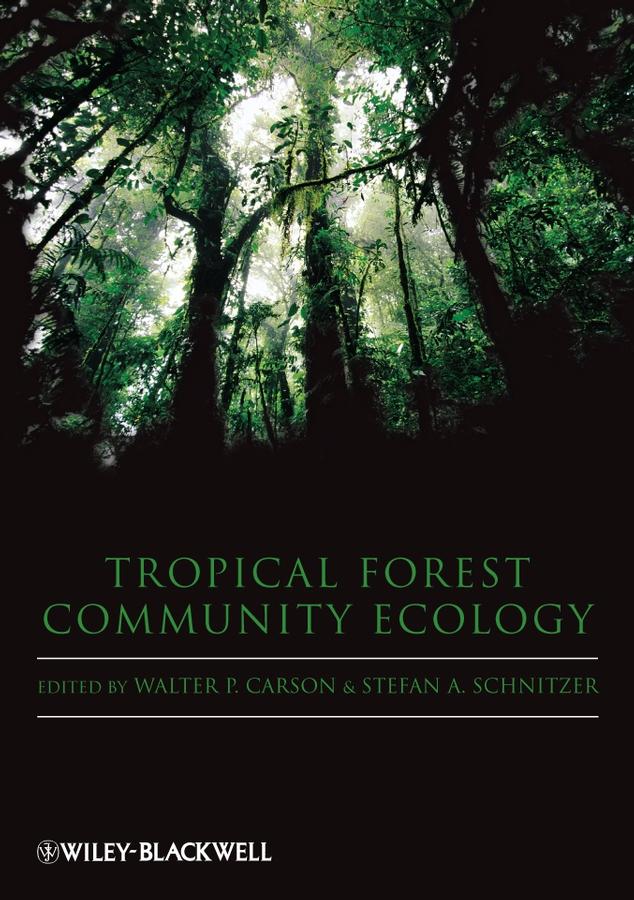
Historically, tropical ecology has been a science often content with descriptive and demographic approaches, which is understandable given the difficulty of studying these ecosystems and the need for basic demographic information. Nonetheless, over the last several years, tropical ecologists have begun to test more sophisticated ecological theory and are now beginning to address a broad array of questions that are of particular importance to tropical systems, and ecology in general. Why are there are so many species in tropical forests and what mechanisms are responsible for the maintenance of that vast species diversity? What factors control species coexistence? Are there common patterns of species abundance and distribution across broad geographic scales? What is the role of trophic interactions in these complex ecosystems? How can these fragile ecosystems be conserved?
Containing contributions from some of the world’s leading tropical ecologists, Tropical Forest Community Ecology provides a summary of the key issues in the discipline of tropical ecology:
- Includes contributions from some of the world’s leading tropical ecologists
- Covers patterns of species distribution, the maintenance of species diversity, the community ecology of tropical animals, forest regeneration and conservation of tropical ecosystems
Betala smidigt med kort, Klarna, Apple Pay eller Google Pay. Är du inte nöjd har du alltid 14 dagars ångerrätt. Läs mer i våra villkor. Har du några frågor, mejla oss på hello@memmo.org.
Memmo gör det enklare att plugga – var du än är i världen. Hos oss samlar du kursböcker och smarta studieverktyg på ett och samma ställe: sammanfattningar, quiz, poddar och flashcards. Och så Ted, din studiekompis som svarar på allt du undrar. Över 50 000 studenter pluggar redan här – byggt för att du ska lära dig snabbare och stressa mindre.