
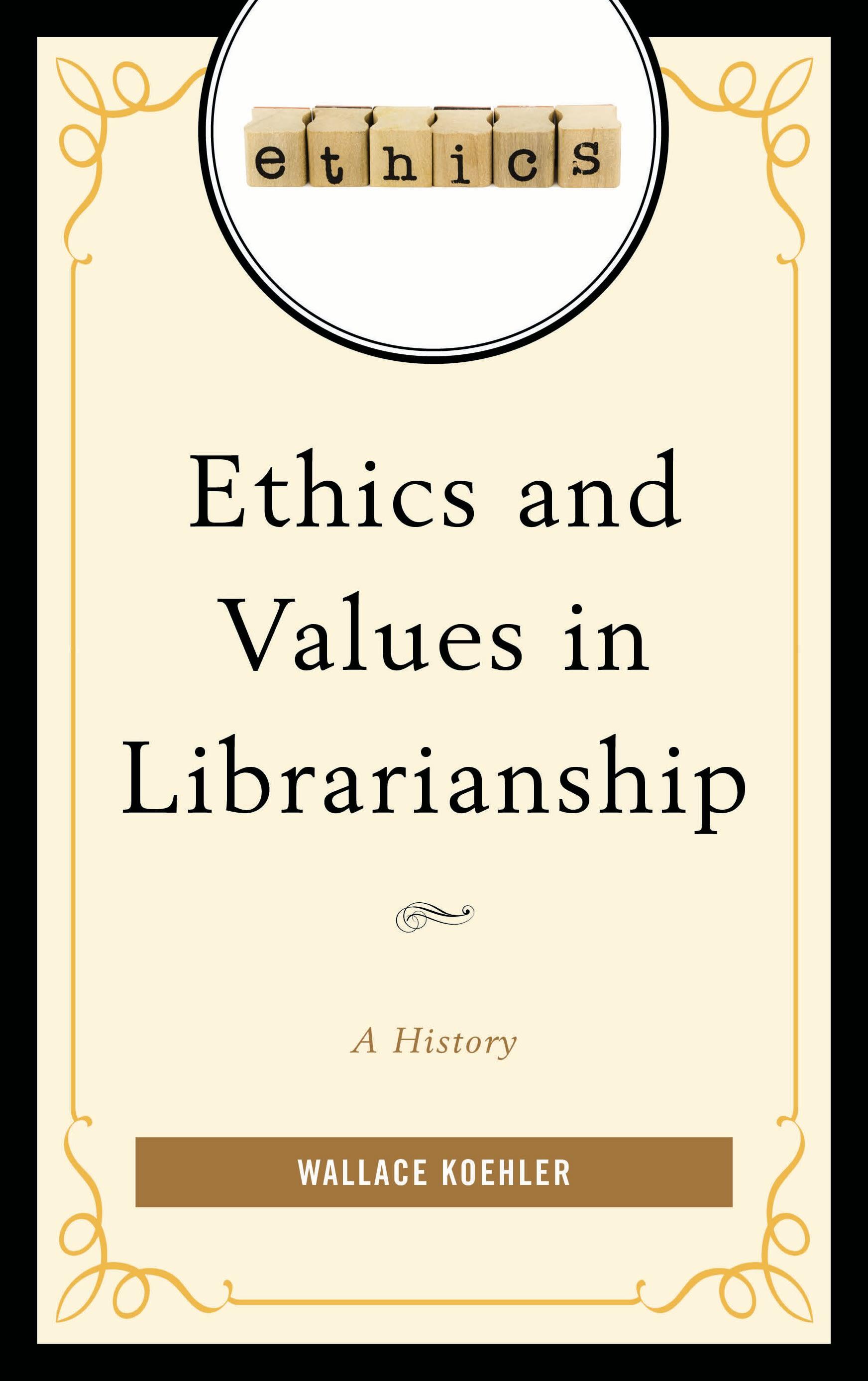
Ethics and Values in Librarianship: A History addresses the processes of development of library and information sciences, largely but not exclusively in a western context. It focuses on the field’s ethics and values.
Here, Wallace Koehler, a leading researcher in the area of information ethics, debunks the prevailing notion that library and information science concepts and ethics have and remain constant. He demonstrates that in almost all areas of practice, this is simply not so. Instead of staying the same, our professional ethics and standards have evolved or shifted in their application as well as in the recognition of those standards by practitioners and users. Some of these changes are of very recent etiology.
Topics covered include:
· the freedom of expression,
· intellectual freedom,
· libraries and democracy,
· intellectual property, copyright, and fair use and,
· professional qualifications and credentialing.
Koehler examines the development of and changes to library and information science through practice and the writings of library and information theorists and practitioners from Varro during the reign of Julius Caesar to the present. He documents technological and social changes that have had foundational implications for the information professions and argues that ethical standards may be redefined overtime and new standards may emerge, older precepts and newer ones coexist. Not only a history, this is also one of the few contemporary books suitable for use in foundational courses and courses covering information and library ethics.
Here, Wallace Koehler, a leading researcher in the area of information ethics, debunks the prevailing notion that library and information science concepts and ethics have and remain constant. He demonstrates that in almost all areas of practice, this is simply not so. Instead of staying the same, our professional ethics and standards have evolved or shifted in their application as well as in the recognition of those standards by practitioners and users. Some of these changes are of very recent etiology.
Topics covered include:
· the freedom of expression,
· intellectual freedom,
· libraries and democracy,
· intellectual property, copyright, and fair use and,
· professional qualifications and credentialing.
Koehler examines the development of and changes to library and information science through practice and the writings of library and information theorists and practitioners from Varro during the reign of Julius Caesar to the present. He documents technological and social changes that have had foundational implications for the information professions and argues that ethical standards may be redefined overtime and new standards may emerge, older precepts and newer ones coexist. Not only a history, this is also one of the few contemporary books suitable for use in foundational courses and courses covering information and library ethics.
Betala smidigt med kort, Klarna, Apple Pay eller Google Pay. Är du inte nöjd har du alltid 14 dagars ångerrätt. Läs mer i våra villkor. Har du några frågor, mejla oss på hello@memmo.org.
Memmo gör det enklare att plugga – var du än är i världen. Hos oss samlar du kursböcker och smarta studieverktyg på ett och samma ställe: sammanfattningar, quiz, poddar och flashcards. Och så Ted, din studiekompis som svarar på allt du undrar. Över 50 000 studenter pluggar redan här – byggt för att du ska lära dig snabbare och stressa mindre.