
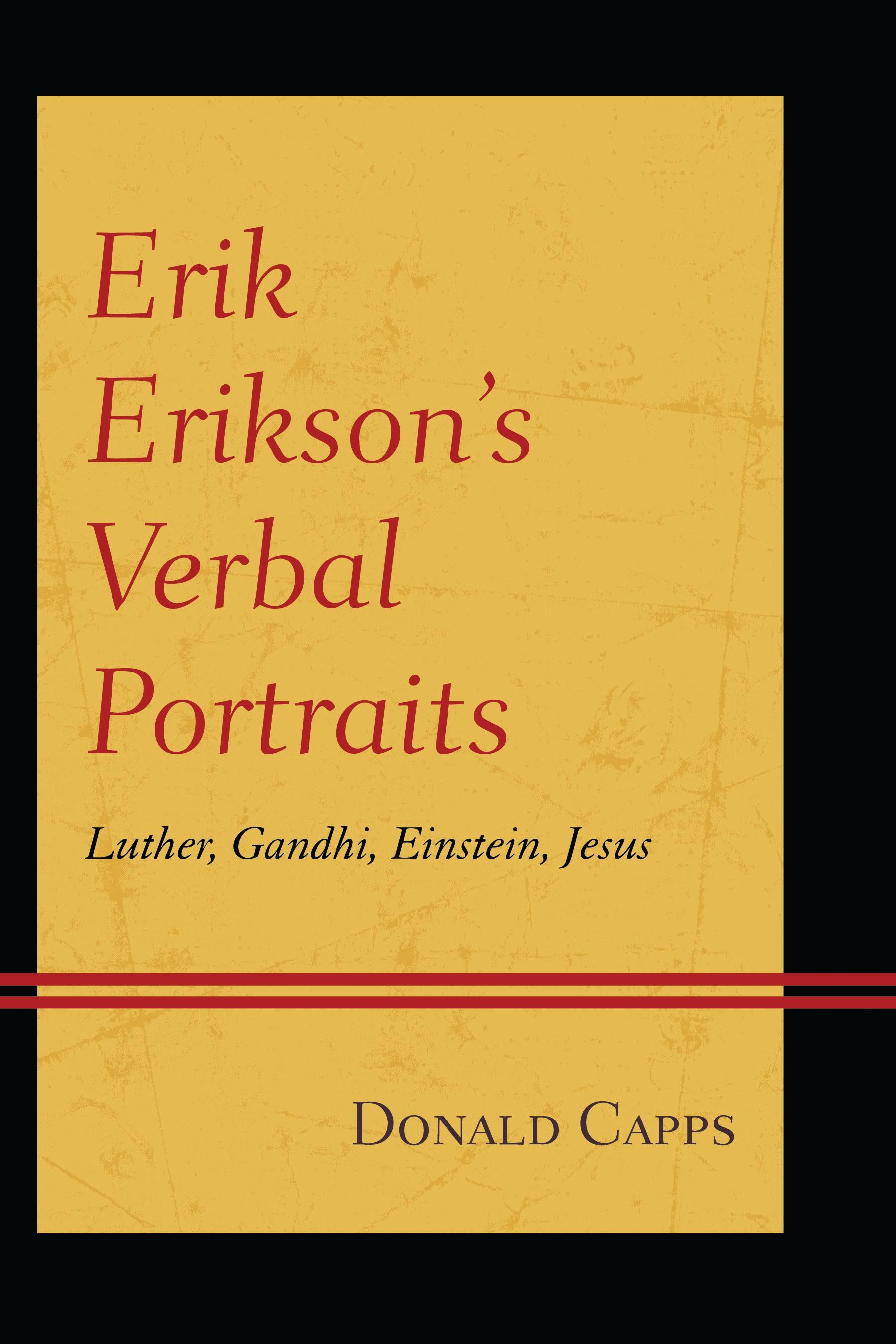
In his late teens and early twenties Erik H. Erikson, the widely acclaimed psychoanalyst and developmental theorist, aspired to be an artist. In Erik Erikson’s Verbal Portraits: Luther, Gandhi, Einstein, Jesus, Donald Cappscontends that Erikson’s portraits of respective historical figures not only reflect his artistic gifts but also make a highly creative contribution to psychoanalytic discourse. Moreover, his verbal portraits are vivid and compelling representations of his multifaceted conception of identity. His emphasis on the formative role of the mutual recognition of mother and infant in human portraiture, the importance he attaches to the Self and the sense of “I,” and his use of psychoanalysis as a means to experience the living presence of noteworthy historical figures are especially noted. In addition to his portraits of the four men, his brief verbal portrait of Ruth Benedict is presented, and his personal identification with a fifteenth century painting of Mary, the mother of Jesus, is also explored.
Betala smidigt med kort, Klarna, Apple Pay eller Google Pay. Är du inte nöjd har du alltid 14 dagars ångerrätt. Läs mer i våra villkor. Har du några frågor, mejla oss på hello@memmo.org.
Memmo gör det enklare att plugga – var du än är i världen. Hos oss samlar du kursböcker och smarta studieverktyg på ett och samma ställe: sammanfattningar, quiz, poddar och flashcards. Och så Ted, din studiekompis som svarar på allt du undrar. Över 50 000 studenter pluggar redan här – byggt för att du ska lära dig snabbare och stressa mindre.