
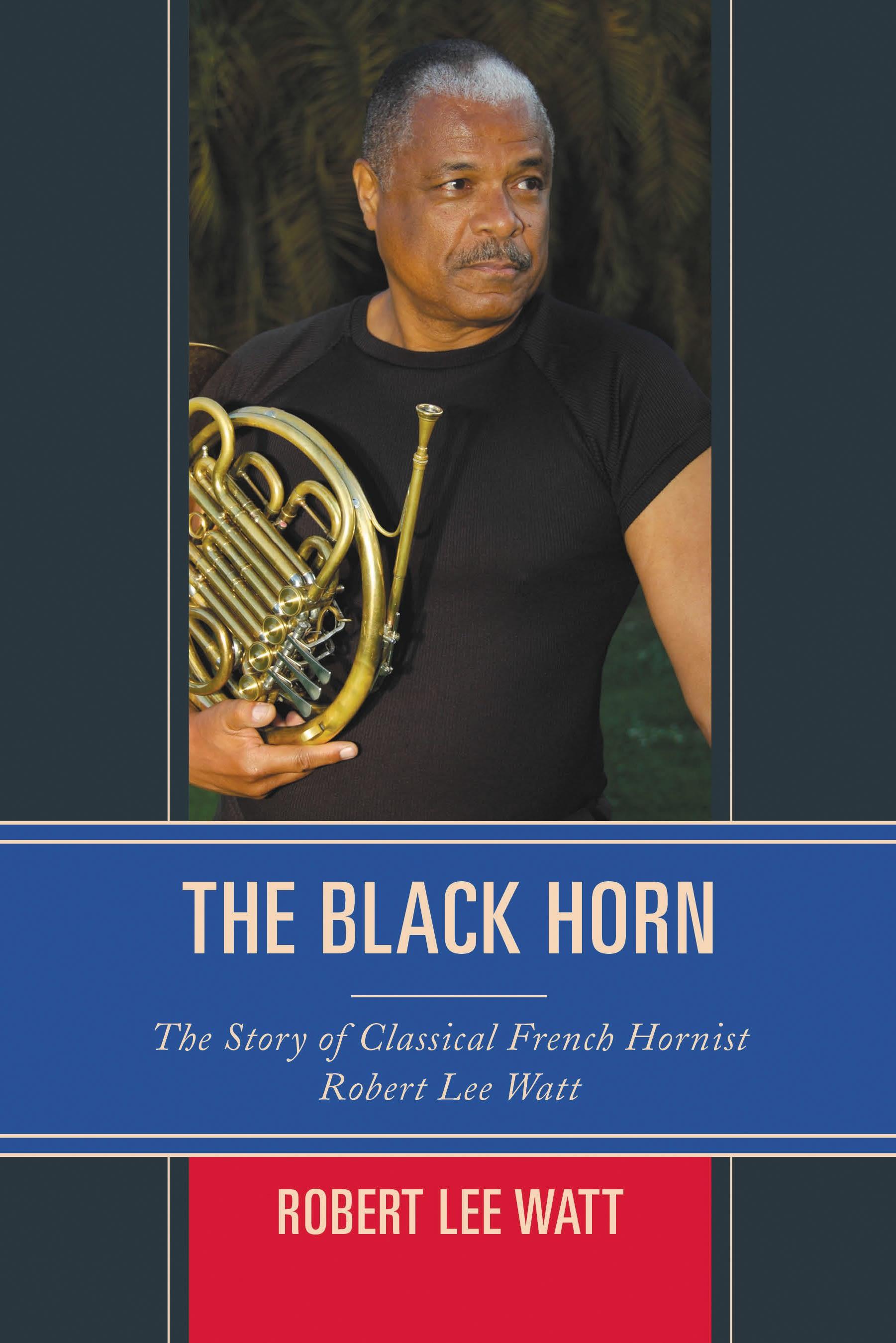
The Black Horn: The Story of Classical French Hornist Robert Lee Watt tells the story of the first African American French Hornist hired by a major symphony in the United States. Today, few African Americans hold chairs in major American symphony orchestras, and Watt is the first in many years to write about this uniquely exhilarating—and at times painful—experience.
The Black Horn chronicles the upbringing of a young boy fascinated by the sound of the French horn. Watt walks readers through the many obstacles of the racial climate in the United States, both on and off stage, and his efforts to learn and eventually master an instrument little considered in the African American community. Even the author’s own father, who played trumpet, sought to dissuade the young classical musician in the making. He faced opposition from within the community—where the instrument was deemed by Watt’s father a “middle instrument suited only for thin-lipped white boys”—and from without. Watt also documented his struggles as a student at a nearly all-white major music conservatory, as well as his first job in a major symphony orchestra after the conservatory canceled his scholarship.
Watt subsequently chronicles his triumphs and travails as a musician when confronting the realities of race in America and the world of classical music. This book will surely interest any classical musician and student, particularly those of color, seeking to grasp the sometimes troubled history of being the only “black horn.”
The Black Horn chronicles the upbringing of a young boy fascinated by the sound of the French horn. Watt walks readers through the many obstacles of the racial climate in the United States, both on and off stage, and his efforts to learn and eventually master an instrument little considered in the African American community. Even the author’s own father, who played trumpet, sought to dissuade the young classical musician in the making. He faced opposition from within the community—where the instrument was deemed by Watt’s father a “middle instrument suited only for thin-lipped white boys”—and from without. Watt also documented his struggles as a student at a nearly all-white major music conservatory, as well as his first job in a major symphony orchestra after the conservatory canceled his scholarship.
Watt subsequently chronicles his triumphs and travails as a musician when confronting the realities of race in America and the world of classical music. This book will surely interest any classical musician and student, particularly those of color, seeking to grasp the sometimes troubled history of being the only “black horn.”
Betala smidigt med kort, Klarna, Apple Pay eller Google Pay. Är du inte nöjd har du alltid 14 dagars ångerrätt. Läs mer i våra villkor. Har du några frågor, mejla oss på hello@memmo.org.
Memmo gör det enklare att plugga – var du än är i världen. Hos oss samlar du kursböcker och smarta studieverktyg på ett och samma ställe: sammanfattningar, quiz, poddar och flashcards. Och så Ted, din studiekompis som svarar på allt du undrar. Över 50 000 studenter pluggar redan här – byggt för att du ska lära dig snabbare och stressa mindre.