
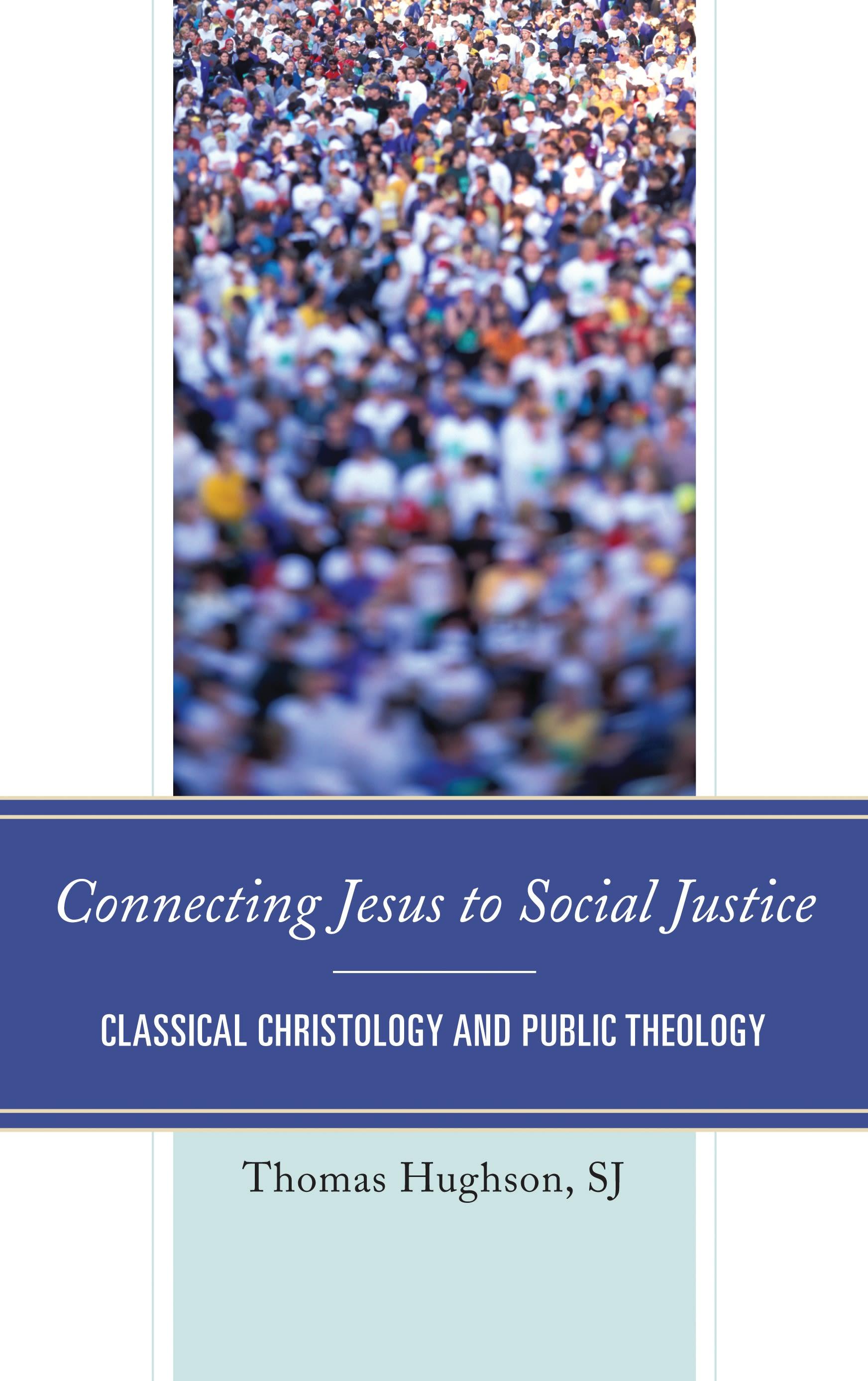
Many Christians see the societal dimension of their faith as a matter of biblical and social ethics. Returning to classical Christology, Connecting Jesus to Social Justice explores messianic potential in the Council of Chalcedon on the divine identity of Christ.
Who Jesus is makes all the difference to Christian entrance into the public sphere on behalf of a just society. The Messiah’s divinity bears on social mission directed toward a just social order. Theological appropriation of Chalcedon overcomes a gap between the professing the Creed and interpreting social existence in light of a just social order. Connecting Jesus to Social Justice argues a doctrinally traditional, orthodox basis for Christian participation in the public sphere on behalf of social justice.
The book addresses a situation internal to churches in the U.S. from a Catholic perspective yet not without analogies in other churches and Christian movements. Applying traditional Christology to contemporary social mission solidifies an answer to adversarial queries on the appropriateness of a social agenda. Implications in the classical Christology also confirm churches and discipleship in commitment to social justice promoted through a subaltern counter-public and then by word and deed in the public sphere.
Who Jesus is makes all the difference to Christian entrance into the public sphere on behalf of a just society. The Messiah’s divinity bears on social mission directed toward a just social order. Theological appropriation of Chalcedon overcomes a gap between the professing the Creed and interpreting social existence in light of a just social order. Connecting Jesus to Social Justice argues a doctrinally traditional, orthodox basis for Christian participation in the public sphere on behalf of social justice.
The book addresses a situation internal to churches in the U.S. from a Catholic perspective yet not without analogies in other churches and Christian movements. Applying traditional Christology to contemporary social mission solidifies an answer to adversarial queries on the appropriateness of a social agenda. Implications in the classical Christology also confirm churches and discipleship in commitment to social justice promoted through a subaltern counter-public and then by word and deed in the public sphere.
Betala smidigt med kort, Klarna, Apple Pay eller Google Pay. Är du inte nöjd har du alltid 14 dagars ångerrätt. Läs mer i våra villkor. Har du några frågor, mejla oss på hello@memmo.org.
Memmo gör det enklare att plugga – var du än är i världen. Hos oss samlar du kursböcker och smarta studieverktyg på ett och samma ställe: sammanfattningar, quiz, poddar och flashcards. Och så Ted, din studiekompis som svarar på allt du undrar. Över 50 000 studenter pluggar redan här – byggt för att du ska lära dig snabbare och stressa mindre.