
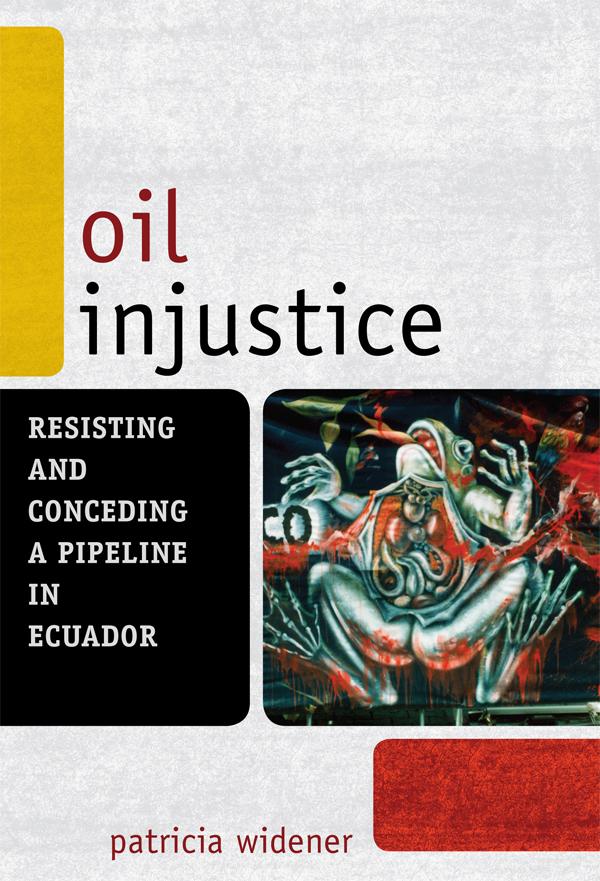
Oil Injustice examines the mobilization efforts of four communities with different oil histories in response to the construction of an oil pipeline. Using multiple sites in Ecuador as case studies, Patricia Widener examines the efforts of grassroots groups, non-governmental organizations, activist mayors, and transnational advocates that mobilized to redefine the country's oil path and to represent the voice of many local communities and organizations that sought to offer an alternative to the nation's oil dependency and to the use of its oil wealth. These groups generated divergent and at times rival reactions to the pipeline, though at their core, the multiple campaigns developed from a shared history and awareness of a number of marginalized communities and degraded environments in areas most important to the oil process. Widener shows that global environmental justice demands are bound within a capitalist political system, where community activists, national NGOs and their international allies are forced to seek local change rather than attempt to defeat a disabling and unequal system.
Betala smidigt med kort, Klarna, Apple Pay eller Google Pay. Är du inte nöjd har du alltid 14 dagars ångerrätt. Läs mer i våra villkor. Har du några frågor, mejla oss på hello@memmo.org.
Memmo gör det enklare att plugga – var du än är i världen. Hos oss samlar du kursböcker och smarta studieverktyg på ett och samma ställe: sammanfattningar, quiz, poddar och flashcards. Och så Ted, din studiekompis som svarar på allt du undrar. Över 50 000 studenter pluggar redan här – byggt för att du ska lära dig snabbare och stressa mindre.