
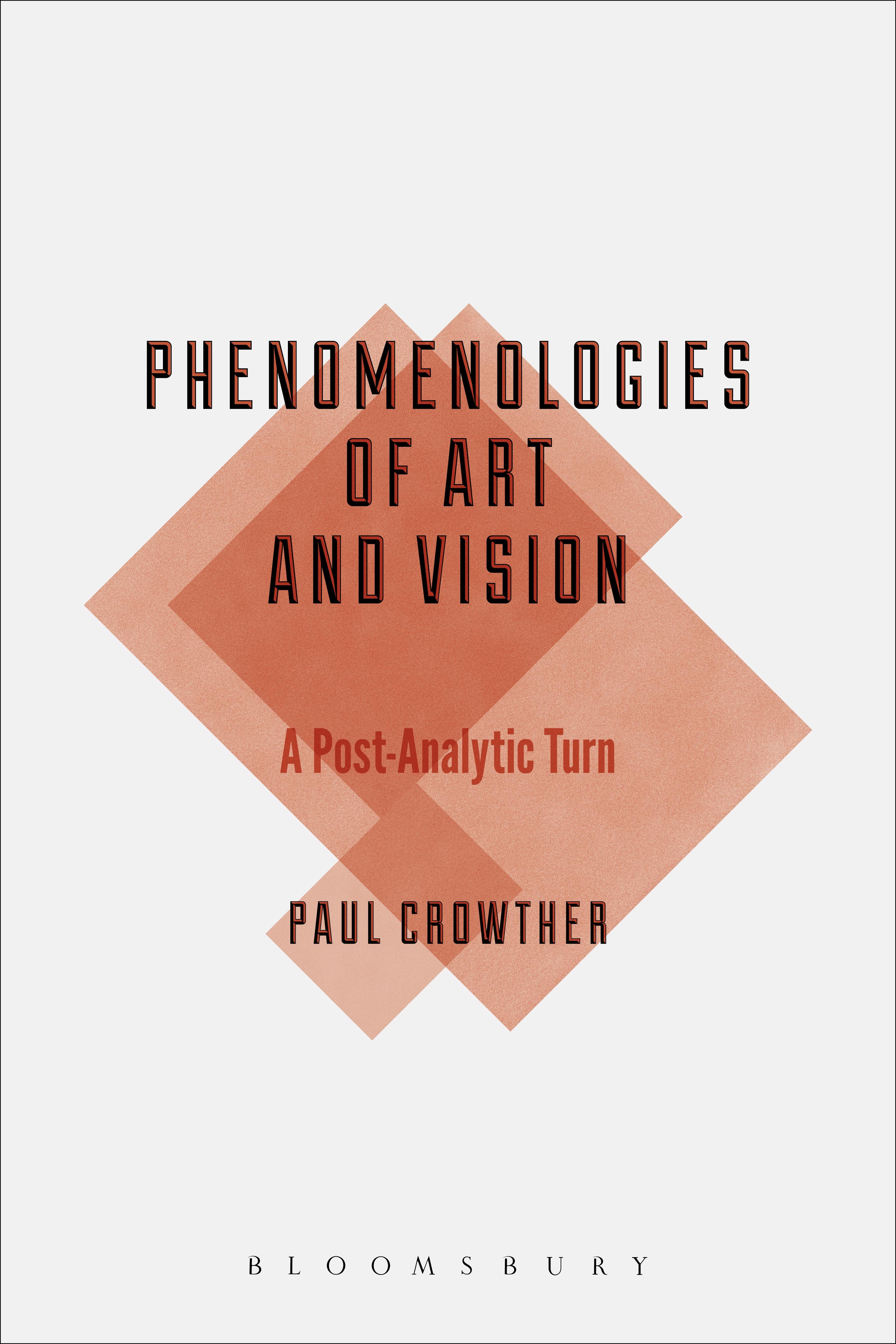
Contemporary
discussions of the image like to emphasize art's societal functions. Few
studies come close to answering why pictures and sculptures fascinate and
intrigue regardless of any practical functions they might serve. In this
original, thought-provoking study, Paul Crowther reveals the intrinsic
significance of pictures and sculptures.
To address the
question of how painting becomes an art, Crowther uses the analytic philosophy
of Richard Wollheim as a starting point. But to sufficiently answer the
question, he makes an important link to a tradition much more successful in
giving voice to the deeper ontology of visual art - existential phenomenology.
The result is a work that demonstrates the
reciprocal relationship between phenomenology and analytic aesthetics. To
expand its ontological scope and solve the problem of expression, analytic aesthetics
needs phenomenology; while to develop a sustained, critically balanced, and
intellectually available ontology, phenomenology needs the discursive force and
lucidity of analytic philosophy. This convincing case for a post-analytic
phenomenology of art is an important advancement of contemporary discussions of
the philosophy of art.
discussions of the image like to emphasize art's societal functions. Few
studies come close to answering why pictures and sculptures fascinate and
intrigue regardless of any practical functions they might serve. In this
original, thought-provoking study, Paul Crowther reveals the intrinsic
significance of pictures and sculptures.
To address the
question of how painting becomes an art, Crowther uses the analytic philosophy
of Richard Wollheim as a starting point. But to sufficiently answer the
question, he makes an important link to a tradition much more successful in
giving voice to the deeper ontology of visual art - existential phenomenology.
The result is a work that demonstrates the
reciprocal relationship between phenomenology and analytic aesthetics. To
expand its ontological scope and solve the problem of expression, analytic aesthetics
needs phenomenology; while to develop a sustained, critically balanced, and
intellectually available ontology, phenomenology needs the discursive force and
lucidity of analytic philosophy. This convincing case for a post-analytic
phenomenology of art is an important advancement of contemporary discussions of
the philosophy of art.
Betala smidigt med kort, Klarna, Apple Pay eller Google Pay. Är du inte nöjd har du alltid 14 dagars ångerrätt. Läs mer i våra villkor. Har du några frågor, mejla oss på hello@memmo.org.
Memmo gör det enklare att plugga – var du än är i världen. Hos oss samlar du kursböcker och smarta studieverktyg på ett och samma ställe: sammanfattningar, quiz, poddar och flashcards. Och så Ted, din studiekompis som svarar på allt du undrar. Över 50 000 studenter pluggar redan här – byggt för att du ska lära dig snabbare och stressa mindre.