
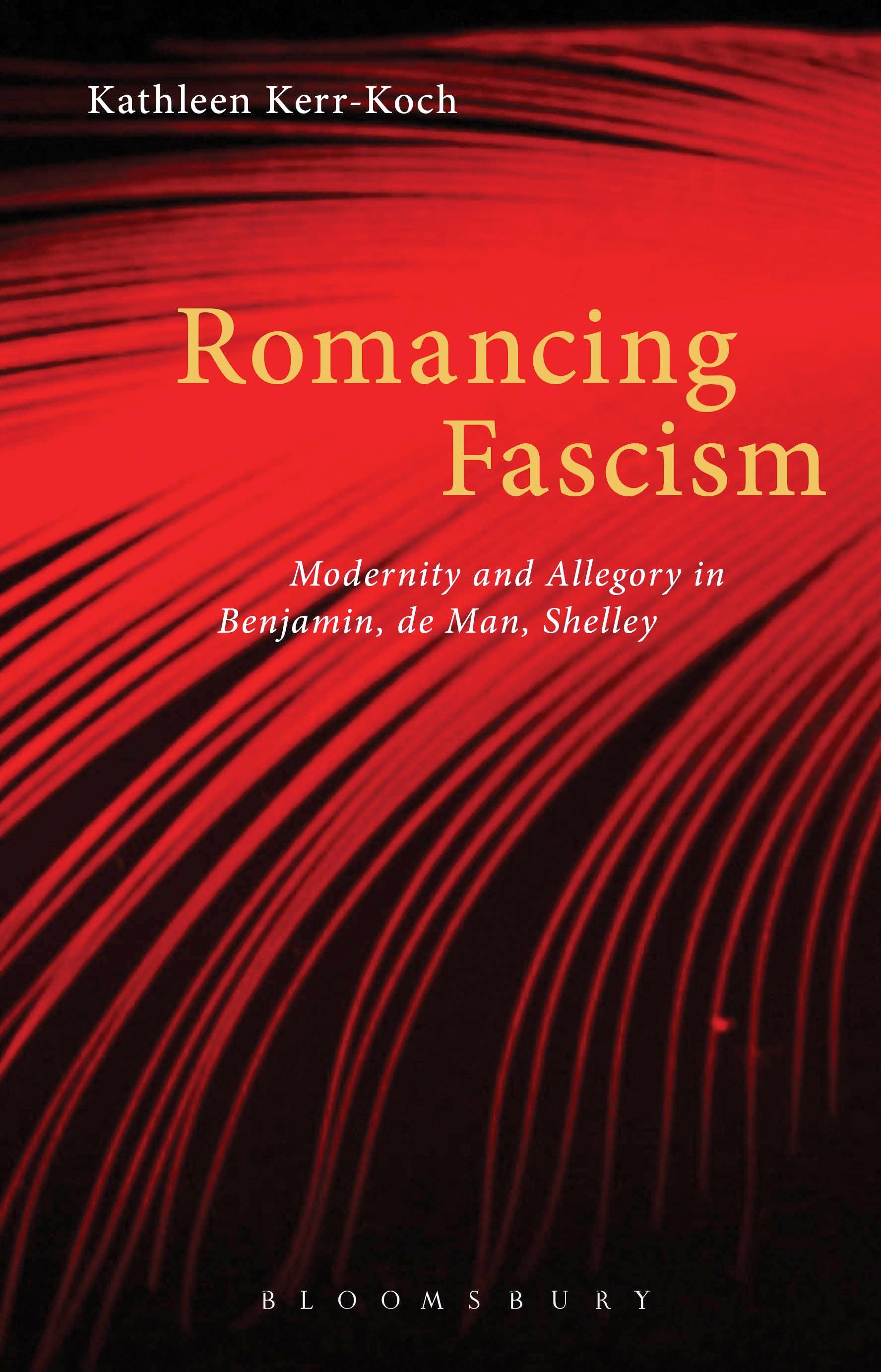
Romancing Fascism argues that intellectual responsibility can only be safeguarded if criticism is mobilised both as a poetic and as a critically enlightened endeavour. In this analysis of allegory as a function of modernity, what is made clear is the difficulty, if not impossibility, of definitively determining the genealogical antecedents of intellectual trends, particularly those considered pernicious to clear thinking.
Thus Kerr-Koch takes a wide-ranging approach to the analysis of allegory as it is treated by three controversial writers whose works flank the 19th and 20th centuries, the middle and late periods of what we call modernity-Walter Benjamin, Paul de Man and Percy Bysshe Shelley. These three writers have been chosen because they have been at some point recuperated for a theory of 'postmodernism', a term that for some theorists represents liberal free play, and for others represents a lack of rigour and a pernicious corruption of thought.
Thus Kerr-Koch takes a wide-ranging approach to the analysis of allegory as it is treated by three controversial writers whose works flank the 19th and 20th centuries, the middle and late periods of what we call modernity-Walter Benjamin, Paul de Man and Percy Bysshe Shelley. These three writers have been chosen because they have been at some point recuperated for a theory of 'postmodernism', a term that for some theorists represents liberal free play, and for others represents a lack of rigour and a pernicious corruption of thought.
Betala smidigt med kort, Klarna, Apple Pay eller Google Pay. Är du inte nöjd har du alltid 14 dagars ångerrätt. Läs mer i våra villkor. Har du några frågor, mejla oss på hello@memmo.org.
Memmo gör det enklare att plugga – var du än är i världen. Hos oss samlar du kursböcker och smarta studieverktyg på ett och samma ställe: sammanfattningar, quiz, poddar och flashcards. Och så Ted, din studiekompis som svarar på allt du undrar. Över 50 000 studenter pluggar redan här – byggt för att du ska lära dig snabbare och stressa mindre.