
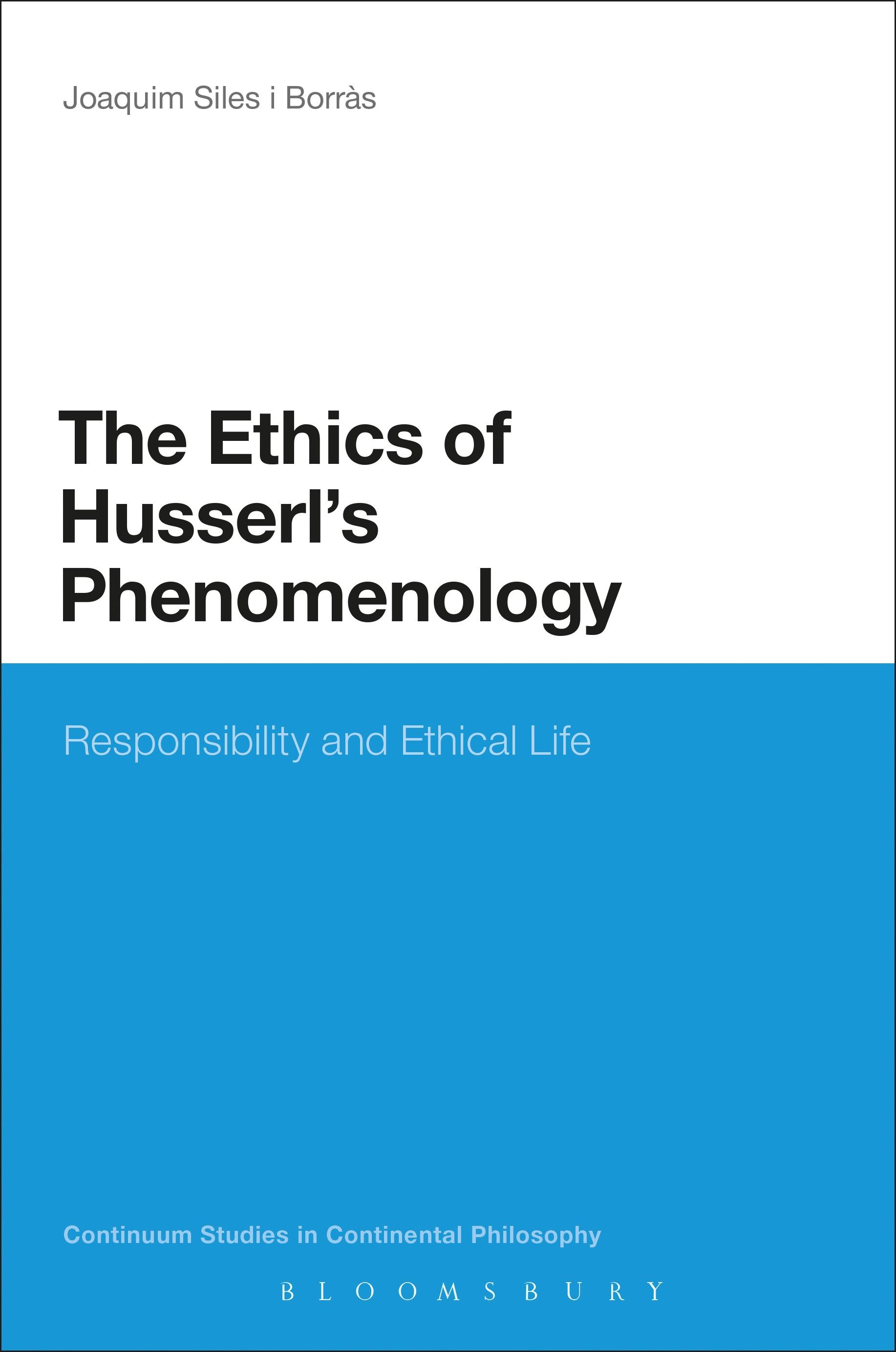
The Ethics of Husserl's Phenomenology aims to relocate the question of ethics at the very heart of Husserl's phenomenology. This is based on the idea that Husserl's phenomenology is an epistemological inquiry ultimately motivated by an ethical demand that pervades his writing from the publication of Logical Investigations (1900-1901) up to The Crisis of European Sciences and Transcendental Phenomenology (1935).
Joaquim Siles-Borràs traces the ethical concepts apparent throughout Husserl's main body of work and argues that Husserl's phenomenology of consciousness, experience and meaning is ultimately motivated by an ethical demand, by means of which Husserl aims to re-define philosophy and re-found science, with the aim of making philosophy and science capable of dealing with the most pressing questions concerning the meaningfulness of human existence.
Joaquim Siles-Borràs traces the ethical concepts apparent throughout Husserl's main body of work and argues that Husserl's phenomenology of consciousness, experience and meaning is ultimately motivated by an ethical demand, by means of which Husserl aims to re-define philosophy and re-found science, with the aim of making philosophy and science capable of dealing with the most pressing questions concerning the meaningfulness of human existence.
Betala smidigt med kort, Klarna, Apple Pay eller Google Pay. Är du inte nöjd har du alltid 14 dagars ångerrätt. Läs mer i våra villkor. Har du några frågor, mejla oss på hello@memmo.org.
Memmo gör det enklare att plugga – var du än är i världen. Hos oss samlar du kursböcker och smarta studieverktyg på ett och samma ställe: sammanfattningar, quiz, poddar och flashcards. Och så Ted, din studiekompis som svarar på allt du undrar. Över 50 000 studenter pluggar redan här – byggt för att du ska lära dig snabbare och stressa mindre.