
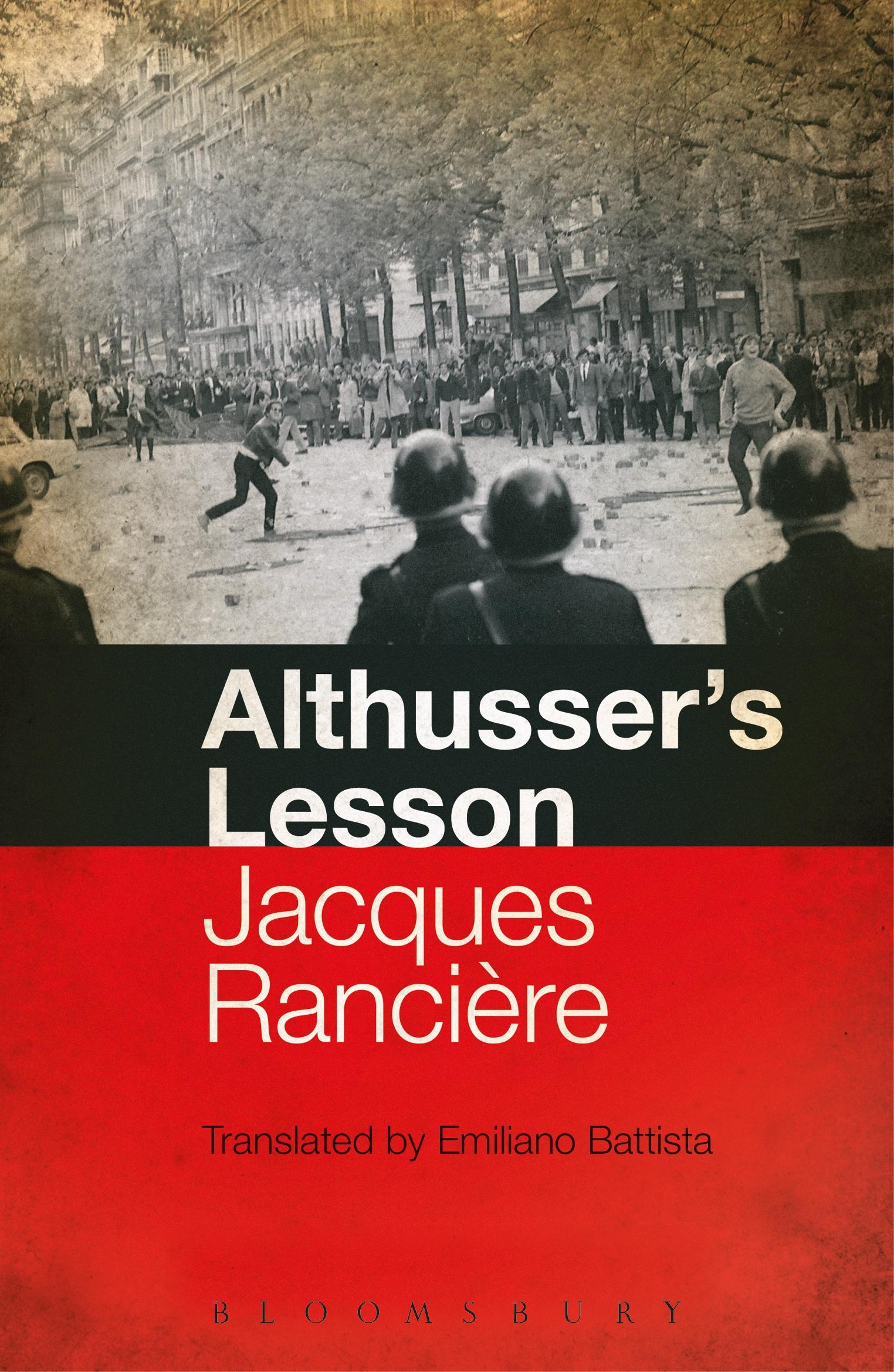
Jacques Rancière's first major work, Althusser's Lesson appeared in 1974, just as the energies of May 68 were losing ground to the calls for a return to order. Rancière's analysis of Althusserian Marxism unfolds against this background: what is the relationship between the return to order and the enthusiasm which greeted the publication of Althusser's Reply to John Lewis in 1973? How to explain the rehabilitation of a philosophy that had been declared 'dead and buried on the barricades of May 68'? What had changed? The answer to this question takes the form of a genealogy of Althusserianism that is, simultaneously, an account of the emergence of militant student movements in the '60s, of the arrival of Maoism in France, and of how May 68 rearranged all the pieces anew. Encompassing the book's distinctive combination of theoretical analysis and historical description is a question that has guided Rancière's thought ever since: how do theories of subversion become the rationale for order?
Betala smidigt med kort, Klarna, Apple Pay eller Google Pay. Är du inte nöjd har du alltid 14 dagars ångerrätt. Läs mer i våra villkor. Har du några frågor, mejla oss på hello@memmo.org.
Memmo gör det enklare att plugga – var du än är i världen. Hos oss samlar du kursböcker och smarta studieverktyg på ett och samma ställe: sammanfattningar, quiz, poddar och flashcards. Och så Ted, din studiekompis som svarar på allt du undrar. Över 50 000 studenter pluggar redan här – byggt för att du ska lära dig snabbare och stressa mindre.