
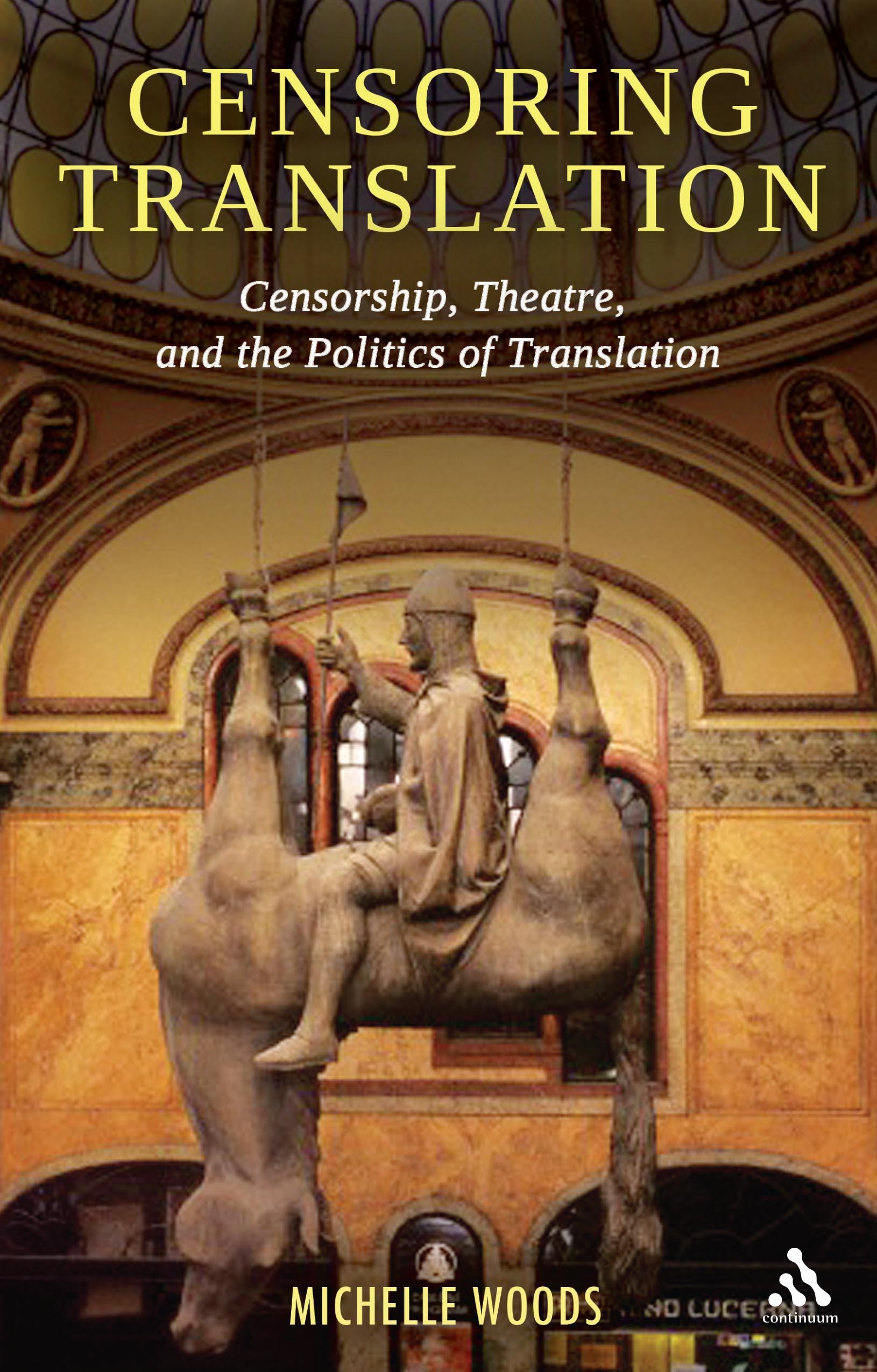
A play is written, faces censorship and is banned in its native country. There is strong international interest; the play is translated into English, it is adapted, and it is not performed.
Censoring Translation questions the role of textual translation practices in shaping the circulation and reception of foreign censored theatre. It examines three forms of censorship in relation to translation: ideological censorship; gender censorship; and market censorship.
This examination of censorship is informed by extensive archival evidence from the previously unseen archives of Václav Havel's main theatre translator, Vera Blackwell, which includes drafts of playscripts, legal negotiations, reviews, interviews, notes and previously unseen correspondence over thirty years with Havel and central figures of the theatre world, such as Kenneth Tynan, Martin Esslin, and Tom Stoppard.
Michelle Woods uses this previously unresearched archive to explore broader questions on censorship, asking why texts are translated at a given time, who translates them, how their identity may affect the translation, and how the constituents of success in a target culture may involve elements of censorship.
Censoring Translation questions the role of textual translation practices in shaping the circulation and reception of foreign censored theatre. It examines three forms of censorship in relation to translation: ideological censorship; gender censorship; and market censorship.
This examination of censorship is informed by extensive archival evidence from the previously unseen archives of Václav Havel's main theatre translator, Vera Blackwell, which includes drafts of playscripts, legal negotiations, reviews, interviews, notes and previously unseen correspondence over thirty years with Havel and central figures of the theatre world, such as Kenneth Tynan, Martin Esslin, and Tom Stoppard.
Michelle Woods uses this previously unresearched archive to explore broader questions on censorship, asking why texts are translated at a given time, who translates them, how their identity may affect the translation, and how the constituents of success in a target culture may involve elements of censorship.
Betala smidigt med kort, Klarna, Apple Pay eller Google Pay. Är du inte nöjd har du alltid 14 dagars ångerrätt. Läs mer i våra villkor. Har du några frågor, mejla oss på hello@memmo.org.
Memmo gör det enklare att plugga – var du än är i världen. Hos oss samlar du kursböcker och smarta studieverktyg på ett och samma ställe: sammanfattningar, quiz, poddar och flashcards. Och så Ted, din studiekompis som svarar på allt du undrar. Över 75 000 studenter pluggar redan här – byggt för att du ska lära dig snabbare och stressa mindre.