
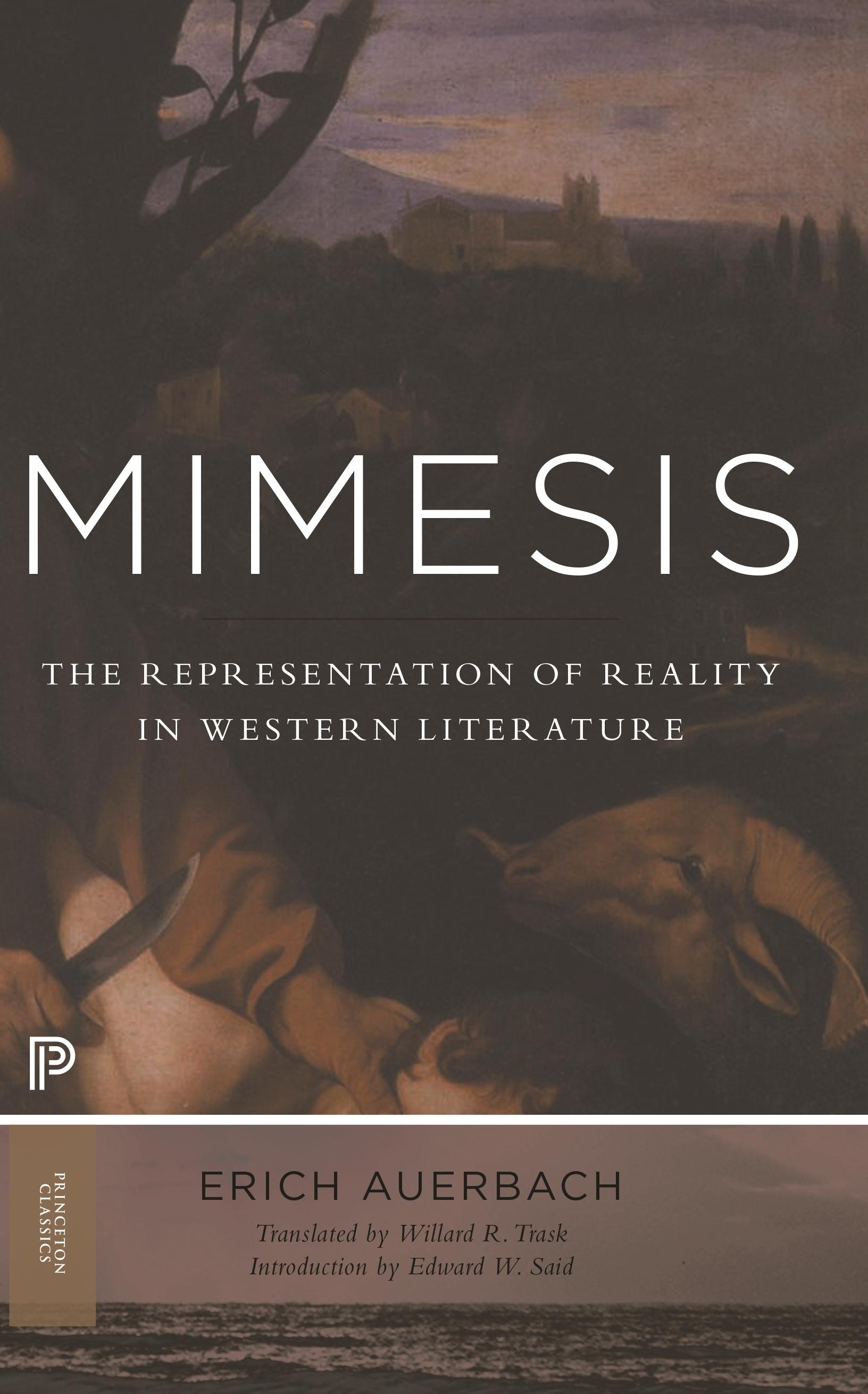
The classic book that has taught generations how to read Western literature
More than half a century after its translation into English, Erich Auerbach’s Mimesis remains a masterpiece of literary criticism. A brilliant display of erudition, wit, and wisdom, his exploration of how great European writers from Homer to Virginia Woolf depict reality has taught generations how to read Western literature.
A German Jew who was forced out of his professorship at the University of Marburg in 1935, Auerbach left for Turkey, where he taught in Istanbul. There he wrote Mimesis, publishing it in German after the war. Displaced as he was, Auerbach produced a work of great erudition that contains no footnotes, basing his arguments instead on searching, illuminating readings of key passages from his primary texts. His aim was to show how, from antiquity to modernity, literature progresses toward ever more naturalistic and democratic forms of representation. Ranging over works in Greek, Latin, Spanish, French, Italian, German, and English, Auerbach uses his remarkable skills in philology and comparative literature to present an optimistic view of Western history and culture and to refute any narrow form of nationalism or chauvinism.
This expanded Princeton Classics edition of Mimesis includes a substantial introduction by Edward Said as well as an essay in which Auerbach responds to his critics.
Betala smidigt med kort, Klarna, Apple Pay eller Google Pay. Är du inte nöjd har du alltid 14 dagars ångerrätt. Läs mer i våra villkor. Har du några frågor, mejla oss på hello@memmo.org.
Memmo gör det enklare att plugga – var du än är i världen. Hos oss samlar du kursböcker och smarta studieverktyg på ett och samma ställe: sammanfattningar, quiz, poddar och flashcards. Och så Ted, din studiekompis som svarar på allt du undrar. Över 50 000 studenter pluggar redan här – byggt för att du ska lära dig snabbare och stressa mindre.