
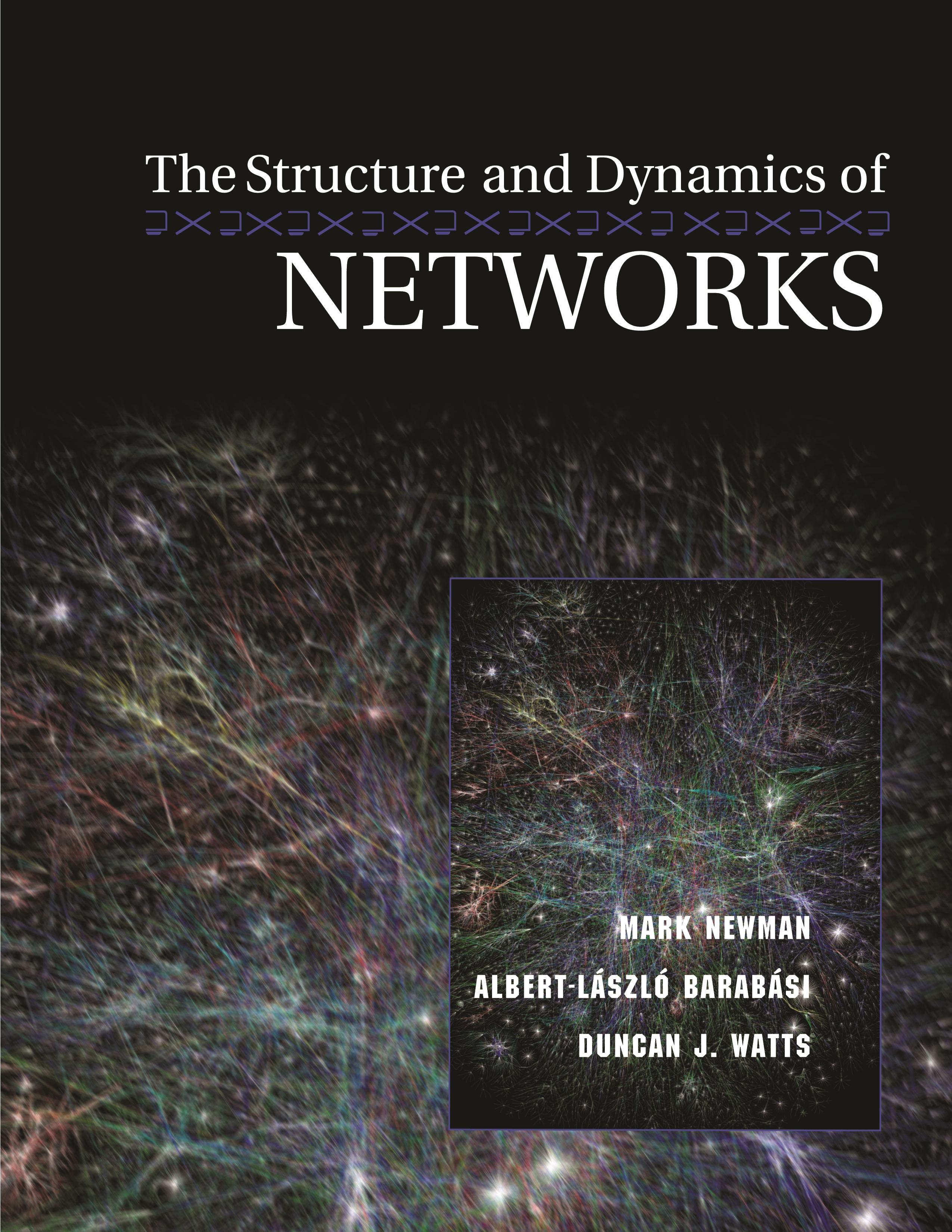
From the Internet to networks of friendship, disease transmission, and even terrorism, the concept--and the reality--of networks has come to pervade modern society. But what exactly is a network? What different types of networks are there? Why are they interesting, and what can they tell us? In recent years, scientists from a range of fields--including mathematics, physics, computer science, sociology, and biology--have been pursuing these questions and building a new "science of networks." This book brings together for the first time a set of seminal articles representing research from across these disciplines. It is an ideal sourcebook for the key research in this fast-growing field.
The book is organized into four sections, each preceded by an editors' introduction summarizing its contents and general theme. The first section sets the stage by discussing some of the historical antecedents of contemporary research in the area. From there the book moves to the empirical side of the science of networks before turning to the foundational modeling ideas that have been the focus of much subsequent activity. The book closes by taking the reader to the cutting edge of network science--the relationship between network structure and system dynamics. From network robustness to the spread of disease, this section offers a potpourri of topics on this rapidly expanding frontier of the new science.
Betala smidigt med kort, Klarna, Apple Pay eller Google Pay. Är du inte nöjd har du alltid 14 dagars ångerrätt. Läs mer i våra villkor. Har du några frågor, mejla oss på hello@memmo.org.
Memmo gör det enklare att plugga – var du än är i världen. Hos oss samlar du kursböcker och smarta studieverktyg på ett och samma ställe: sammanfattningar, quiz, poddar och flashcards. Och så Ted, din studiekompis som svarar på allt du undrar. Över 50 000 studenter pluggar redan här – byggt för att du ska lära dig snabbare och stressa mindre.