
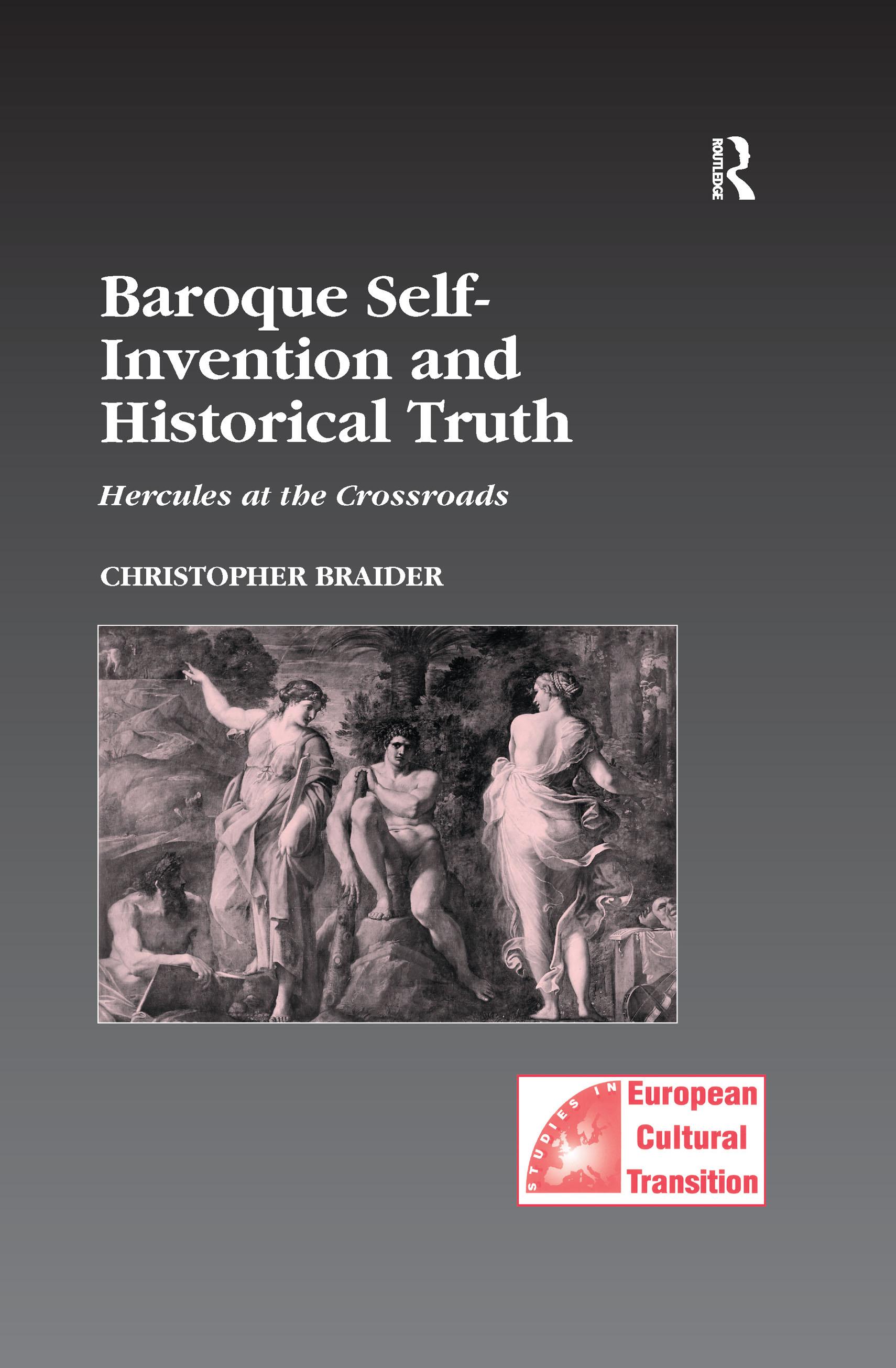
In his monumental study, Christopher Braider explores the dialectical contest between history and truth that defines the period of cultural transition called the 'baroque'. For example, Annibale Carracci's portrayal of the Stoic legend of Hercules at the Crossroads departs from earlier, more static representations that depict an emblematic demigod who has already rejected the fallen path of worldly Pleasure for the upward road of heroic Virtue. Braider argues that, in breaking with tradition in order to portray a tragic soliloquist whose dominant trait is agonized indecision, Carracci joins other baroque artists, poets and philosophers in rehearsing the historical dilemma of choice itself. Carracci's picture thus becomes a framing device that illuminates phenomena as diverse as the construction of gender in baroque painting and science, the Pauline ontology of art in Caravaggio and Rembrandt, the metaphysics of baroque soliloquy and the dismantling of Cartesian dualism in Cyrano de Bergerac and Pascal.
Betala smidigt med kort, Klarna, Apple Pay eller Google Pay. Är du inte nöjd har du alltid 14 dagars ångerrätt. Läs mer i våra villkor. Har du några frågor, mejla oss på hello@memmo.org.
Memmo gör det enklare att plugga – var du än är i världen. Hos oss samlar du kursböcker och smarta studieverktyg på ett och samma ställe: sammanfattningar, quiz, poddar och flashcards. Och så Ted, din studiekompis som svarar på allt du undrar. Över 75 000 studenter pluggar redan här – byggt för att du ska lära dig snabbare och stressa mindre.
Du kanske också gillar
Köp boken0