
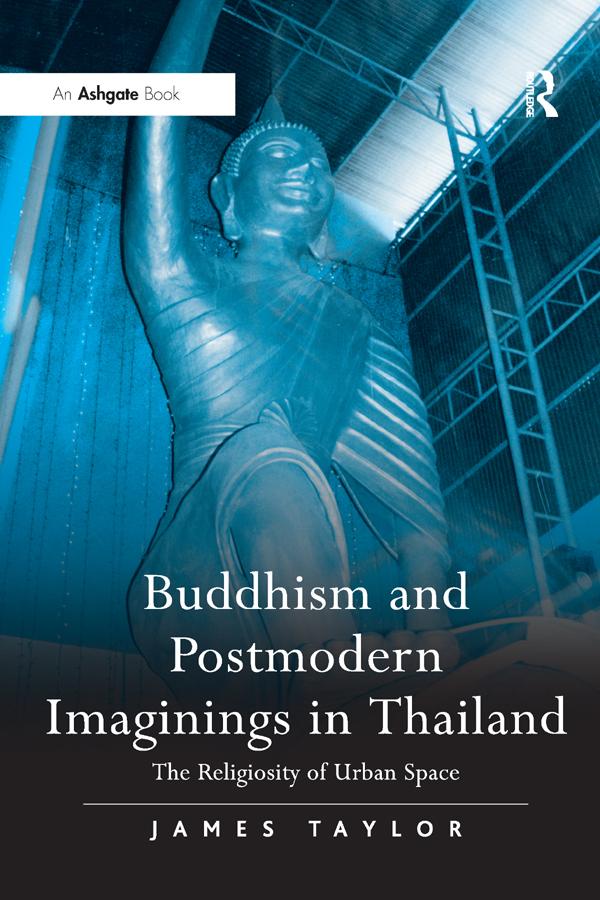
This book presents a rethink on the significance of Thai Buddhism in an increasingly complex and changing post-modern urban context, especially following the financial crisis of 1997. Defining the cultural nature of Thai ’urbanity’; the implications for local/global flows, interactions and emergent social formations, James Taylor opens up new possibilities in understanding the specificities of everyday urban life as this relates to perceptions, conceptions and lived experiences of religiosity. Changes in the centre are also reverberating in the remaining forests and the monastic tradition of forest-dwelling which has sourced most of the nation’s modern saints. The text is based on ethnography taking into account the rich variety of everyday practices in a mélange of the religious. In Thailand, Buddhism is so intimately interconnected with national identity and social, economic and ethno-political concerns as to be inseparable. Taylor argues here that in recent years there has been a marked reformulation of important conventional cosmologies through new and challenging Buddhist ideas and practices. These influences and changes are as much located outside as inside the Buddhist temples/monasteries.
Betala smidigt med kort, Klarna, Apple Pay eller Google Pay. Är du inte nöjd har du alltid 14 dagars ångerrätt. Läs mer i våra villkor. Har du några frågor, mejla oss på hello@memmo.org.
Memmo gör det enklare att plugga – var du än är i världen. Hos oss samlar du kursböcker och smarta studieverktyg på ett och samma ställe: sammanfattningar, quiz, poddar och flashcards. Och så Ted, din studiekompis som svarar på allt du undrar. Över 50 000 studenter pluggar redan här – byggt för att du ska lära dig snabbare och stressa mindre.
Du kanske också gillar
Köp boken0