
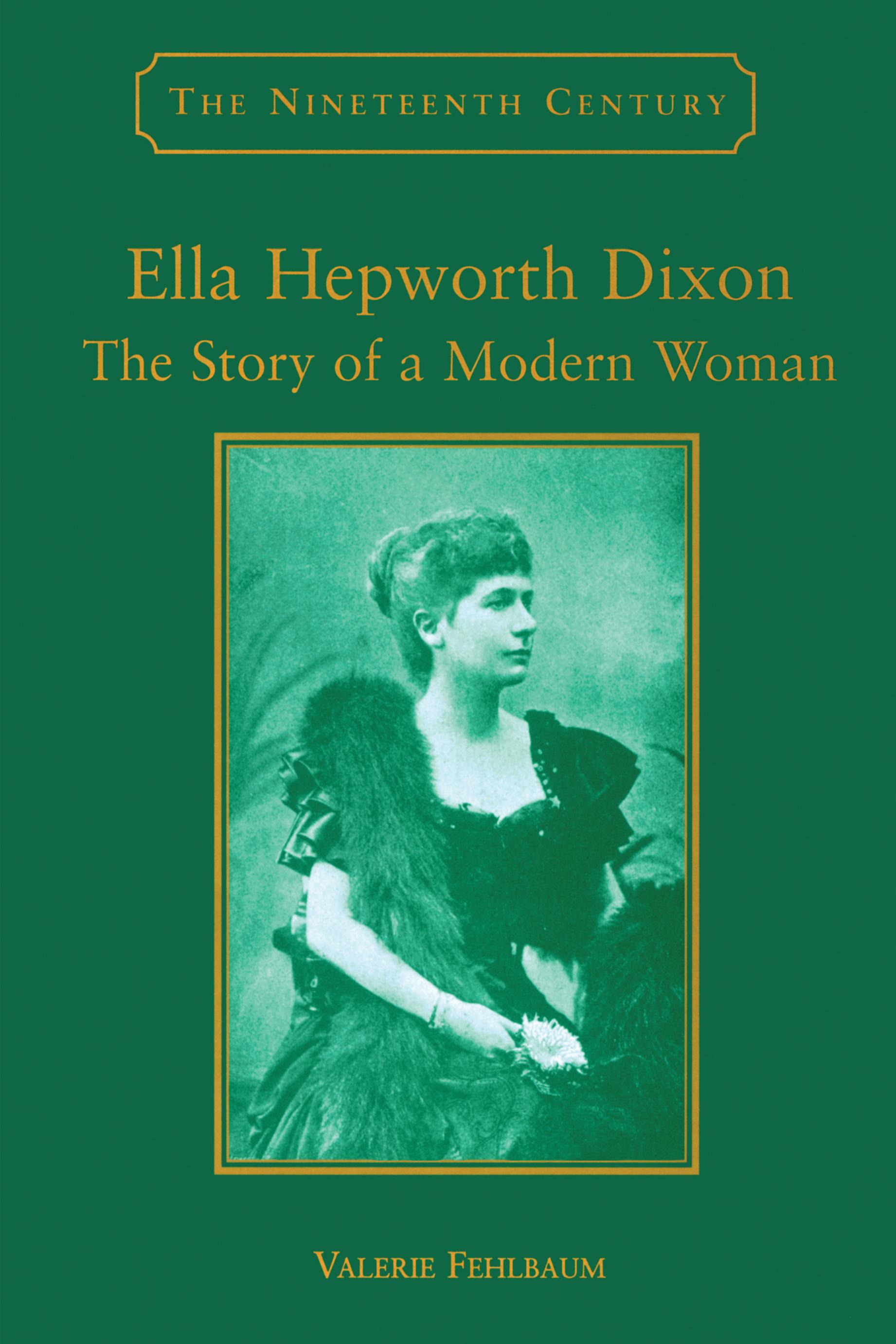
In a career that spanned over forty years, Ella Hepworth Dixon (1857-1932) was alternately journalist, critic, essayist, short story writer, novelist, editor of a women's magazine, dramatist, and autobiographer. After an initial popularity, however, Ella Hepworth Dixon's work, like that of the majority of her contemporaries, remained largely unread for decades. In her new study, Valerie Fehlbaum sheds light on Dixon's life and work, and provides profound insight not only into Dixon herself but into the multifaceted character of the 'New Woman' writer that Dixon typified. The figure of the New Woman as representing new-found intellectual, social, and political freedom came to the fore towards the end of the nineteenth century when the term 'woman' was being interrogated on every imaginable level. In heated debates about woman's nature, primary questions such as 'what is a woman?' and 'what does a woman want?' were accompanied by subsidiary controversies about the precise role she should play in society. Fehlbaum's re-evaluation of Dixon's varied literary output enhances our understanding of this period of radical change for women, and shows that Ella Hepworth Dixon's writing remains as lively and pertinent today as it was when it was first published.
Betala smidigt med kort, Klarna, Apple Pay eller Google Pay. Är du inte nöjd har du alltid 14 dagars ångerrätt. Läs mer i våra villkor. Har du några frågor, mejla oss på hello@memmo.org.
Memmo gör det enklare att plugga – var du än är i världen. Hos oss samlar du kursböcker och smarta studieverktyg på ett och samma ställe: sammanfattningar, quiz, poddar och flashcards. Och så Ted, din studiekompis som svarar på allt du undrar. Över 50 000 studenter pluggar redan här – byggt för att du ska lära dig snabbare och stressa mindre.
Du kanske också gillar
Köp boken0