
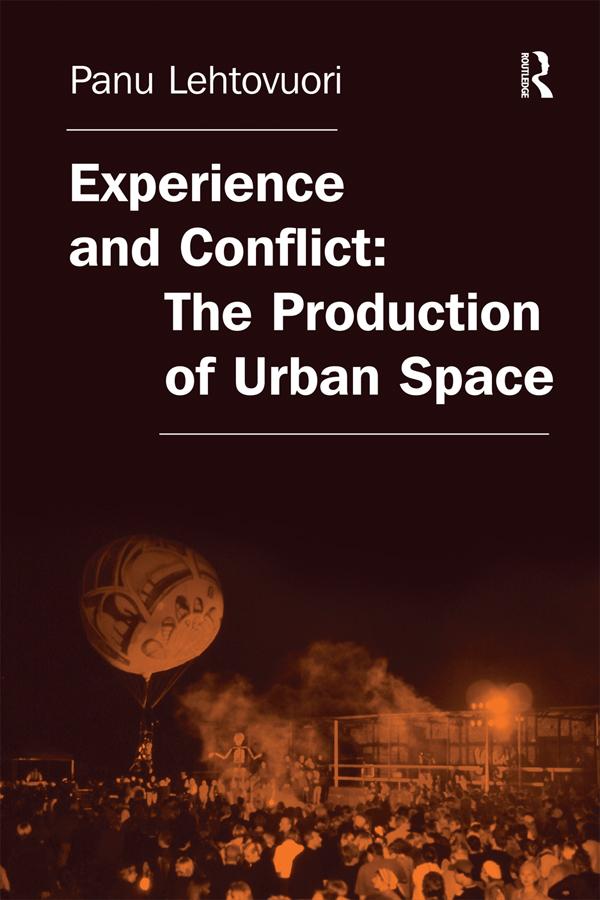
When designing, planning and building urban spaces, many contradictory and conflicting actors, practices and agendas coexist. This book propounds that, at present, this process is conducted in an artificial reality, 'Concept City', characterized by a simplified and outdated conception of space. It provides a constructive critique of the concepts, underlying the practices of planning and architecture and, in order to facilitate more dynamic, inclusive and subtle practices, it formulates a new theory about space in general and public urban space in particular. The central notions in this theory are temporality, experiment and conflict, which are grounded on empirical observations in Helsinki, Manchester and Berlin. While the book contextualizes Lefebvre's ideas on urban planning and architecture, it is in no way limited to Lefebvrean discourse, but allows insights to new theoretical work, including that of Finnish and Swedish authors. In doing so, it suggests and develops exciting new approaches and tools leading to 'experiential urbanism'.
Betala smidigt med kort, Klarna, Apple Pay eller Google Pay. Är du inte nöjd har du alltid 14 dagars ångerrätt. Läs mer i våra villkor. Har du några frågor, mejla oss på hello@memmo.org.
Memmo gör det enklare att plugga – var du än är i världen. Hos oss samlar du kursböcker och smarta studieverktyg på ett och samma ställe: sammanfattningar, quiz, poddar och flashcards. Och så Ted, din studiekompis som svarar på allt du undrar. Över 75 000 studenter pluggar redan här – byggt för att du ska lära dig snabbare och stressa mindre.
Du kanske också gillar
Köp boken0