
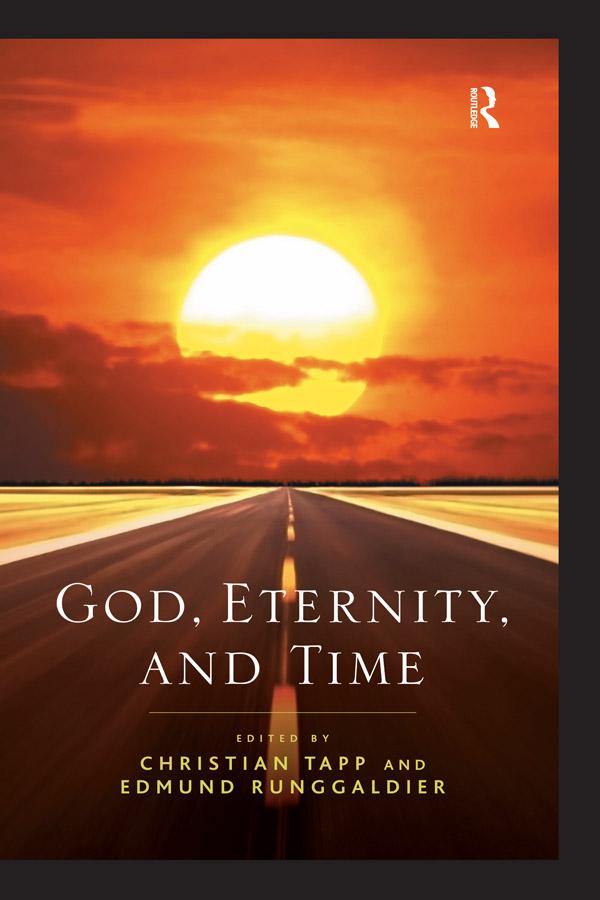
"God is eternal" is a standard belief of all theistic religions. But what does it mean? If, on the one hand, "eternal" means timeless, how can God hear the prayers of the faithful at some point of time? And how can a timeless God act in order to answer the prayers? If God knows what I will do tomorrow from all eternity, how can I be free to choose what to do? If, on the other hand, "eternal" means everlasting, does that not jeopardize divine majesty? How can everlastingness be reconciled with the traditional doctrines of divine simplicity and perfection? An outstanding group of American, UK, German, Austrian, and Swiss philosophers and theologians discuss the problem of God's relation to time. Their contributions range from analyzing and defending classical conceptions of eternity (Boethius's and Aquinas's) to vindicating everlastingness accounts, and from the foreknowledge problem to Einstein's Special Theory of Relativity. This book tackles philosophical questions that are of utmost importance for Systematic Theology. Its highest aim is to deepen our understanding of religious faith by surveying its relations to one of the most fundamental aspects of reality: time.
Betala smidigt med kort, Klarna, Apple Pay eller Google Pay. Är du inte nöjd har du alltid 14 dagars ångerrätt. Läs mer i våra villkor. Har du några frågor, mejla oss på hello@memmo.org.
Memmo gör det enklare att plugga – var du än är i världen. Hos oss samlar du kursböcker och smarta studieverktyg på ett och samma ställe: sammanfattningar, quiz, poddar och flashcards. Och så Ted, din studiekompis som svarar på allt du undrar. Över 50 000 studenter pluggar redan här – byggt för att du ska lära dig snabbare och stressa mindre.
Du kanske också gillar
Köp boken0