
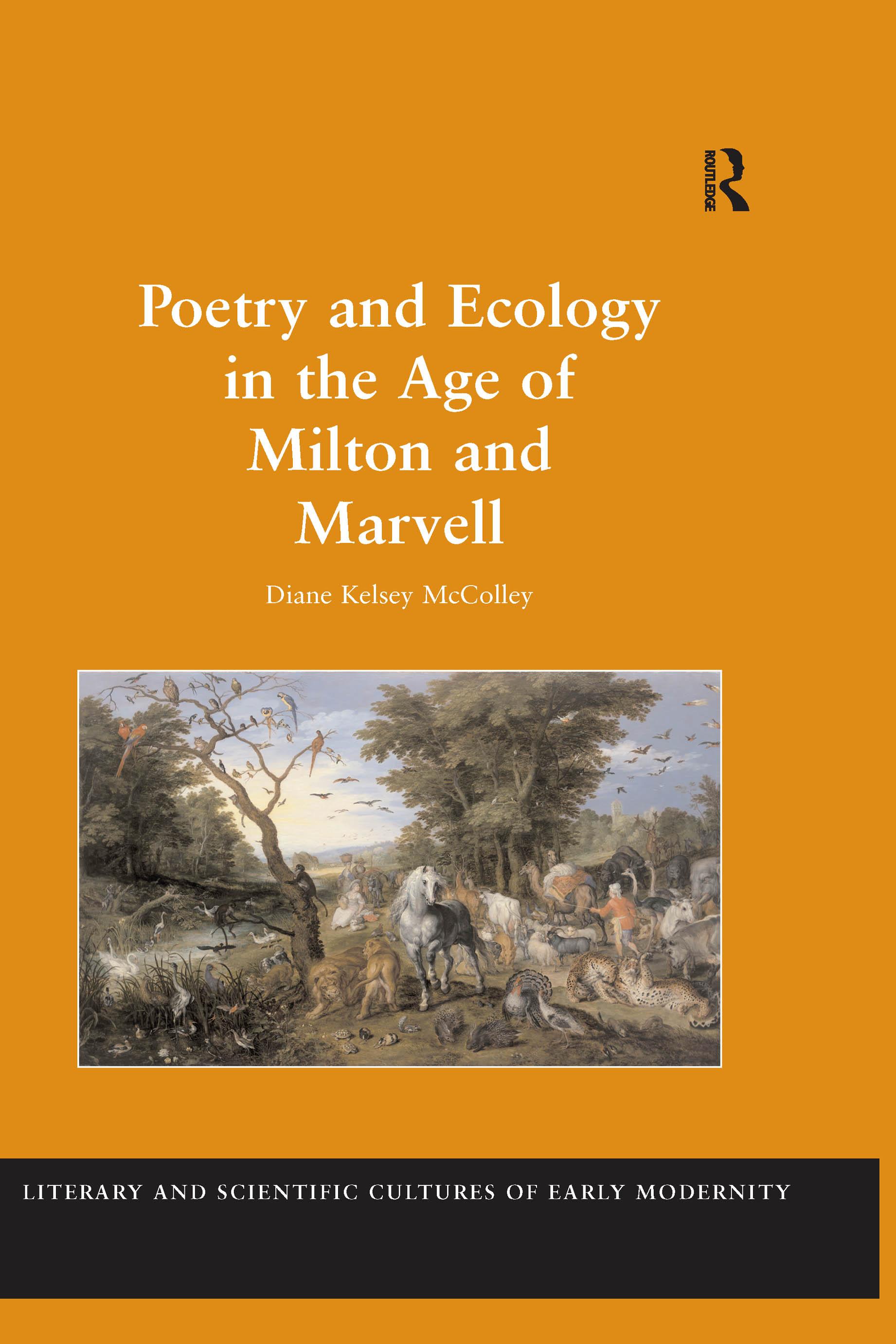
The focus of this study is the perception of nature in the language of poetry and the languages of natural philosophy, technology, theology, and global exploration, primarily in seventeenth-century England. Its premise is that language and the perception of nature vitally affect each other and that seventeenth-century poets, primarily John Milton, Andrew Marvell, and Henry Vaughan, but also Margaret Cavendish, Thomas Traherne, Anne Finch, and others, responded to experimental proto-science and new technology in ways that we now call 'ecological' - concerned with watersheds and habitats and the lives of all creatures. It provides close readings of works by these poets in the contexts of natural history, philosophy, and theology as well as technology and land use, showing how they responded to what are currently considered ecological issues: deforestation, mining, air pollution, drainage of wetlands, destruction of habitats, the sentience and intelligence of animals, overbuilding, global commerce, the politics of land use, and relations between social justice and justice towards the other-than-human world. In this important book, Diane McColley demonstrates the language of poetry, the language of responsible science, and the language of moral and political philosophy all to be necessary parts of public discourse.
Sidor: 276
Kategori: Litteraturvetenskap & Teori
e-ISBN: 9781351910637
Fraktvikt: 1.2 kg
Skickas inom: 1-2 dagar
Betala smidigt med kort, Klarna, Apple Pay eller Google Pay. Är du inte nöjd har du alltid 14 dagars ångerrätt. Läs mer i våra villkor. Har du några frågor, mejla oss på hello@memmo.org.
Memmo gör det enklare att plugga – var du än är i världen. Hos oss samlar du kursböcker och smarta studieverktyg på ett och samma ställe: sammanfattningar, quiz, poddar och flashcards. Och så Ted, din studiekompis som svarar på allt du undrar. Över 50 000 studenter pluggar redan här – byggt för att du ska lära dig snabbare och stressa mindre.
Du kanske också gillar
Köp boken0