
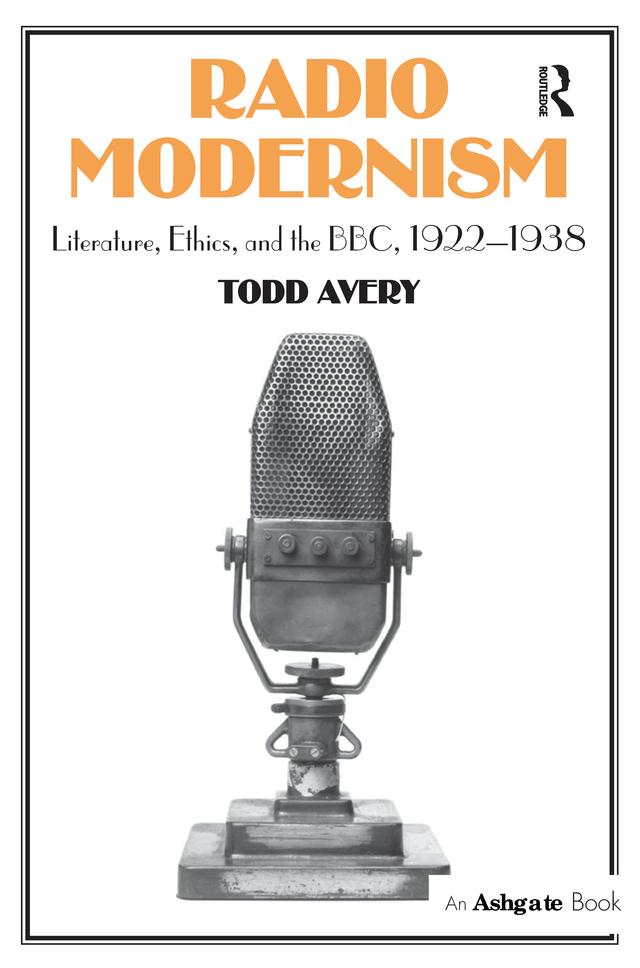
Radio Modernism marries the fields of radio studies and modernist cultural historiography to the recent 'ethical turn' in literary and cultural studies to examine how representative British writers negotiated the moral imperative for public service broadcasting that was crafted, embraced, and implemented by the BBC's founders and early administrators. Weaving together the institutional history of the BBC and developments in ethical philosophy as mediated and forged by writers such as T. S. Eliot, H. G. Wells, E. M. Forster, and Virginia Woolf, Todd Avery shows how these and other prominent authors' involvement with radio helped to shape the ethical contours of literary modernism. In so doing, Avery demonstrates the central role radio played in the early dissemination of modernist art and literature, and also challenges the conventional assertion that modernists were generally elitist and anti-democratic. Intended for readers interested in the fields of media and cultural studies and modernist historiography, this book is remarkable in recapturing for a twenty-first-century audience the interest, fascination, excitement, and often consternation that British radio induced in its literary listeners following its inception in 1922.
Betala smidigt med kort, Klarna, Apple Pay eller Google Pay. Är du inte nöjd har du alltid 14 dagars ångerrätt. Läs mer i våra villkor. Har du några frågor, mejla oss på hello@memmo.org.
Memmo gör det enklare att plugga – var du än är i världen. Hos oss samlar du kursböcker och smarta studieverktyg på ett och samma ställe: sammanfattningar, quiz, poddar och flashcards. Och så Ted, din studiekompis som svarar på allt du undrar. Över 50 000 studenter pluggar redan här – byggt för att du ska lära dig snabbare och stressa mindre.
Du kanske också gillar
Köp boken0