
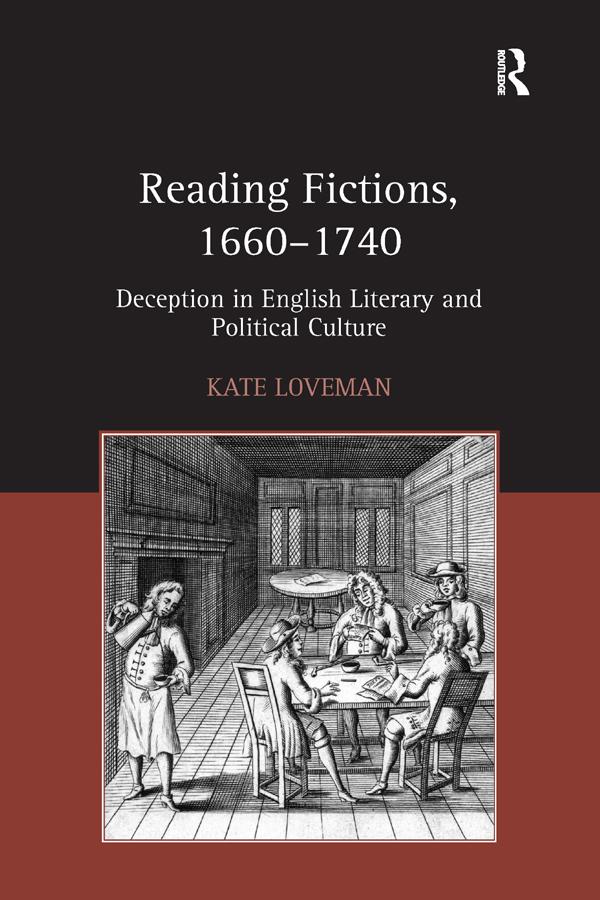
English society in the late seventeenth and early eighteenth centuries was fascinated by deception, and concerns about deceptive narratives had a profound effect on reading practices. Kate Loveman's interdisciplinary study explores the ways in which reading habits, first developed to deal with suspect political and religious texts, were applied to a range of genres, and, as authors responded to readers' critiques, shaped genres. Examining responses to authors such as Defoe, Swift, Richardson and Fielding, Loveman investigates reading as a sociable activity. She uncovers a lost critical discourse, centred on strategies of 'shamming', which involved readers in public displays of reason, wit and ironic pretence as they discussed the credibility of oral and written narratives. Widely understood by early modern readers and authors, the codes of this rhetoric have now been forgotten, to the detriment of our perception of the period's literature and politics. Loveman's lively book offers a striking new approach to Restoration and eighteenth-century literary culture and, in particular, to understanding the development of the novel.
Betala smidigt med kort, Klarna, Apple Pay eller Google Pay. Är du inte nöjd har du alltid 14 dagars ångerrätt. Läs mer i våra villkor. Har du några frågor, mejla oss på hello@memmo.org.
Memmo gör det enklare att plugga – var du än är i världen. Hos oss samlar du kursböcker och smarta studieverktyg på ett och samma ställe: sammanfattningar, quiz, poddar och flashcards. Och så Ted, din studiekompis som svarar på allt du undrar. Över 50 000 studenter pluggar redan här – byggt för att du ska lära dig snabbare och stressa mindre.
Du kanske också gillar
Köp boken0