
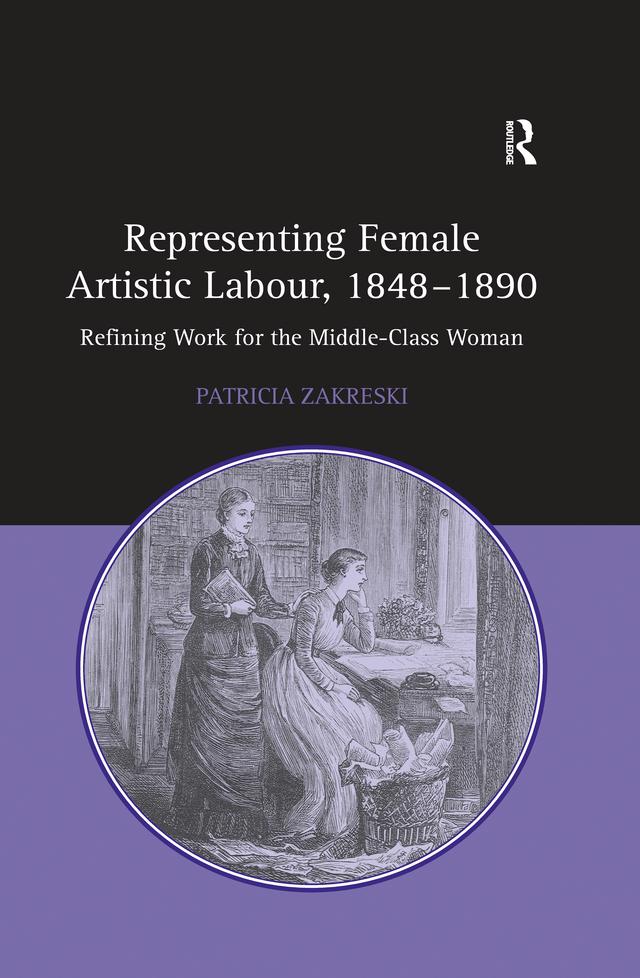
Patricia Zakreski's interdisciplinary study draws on fiction, prose, painting, and the periodical press to expand and redefine our understanding of women's relationship to paid work during the Victorian period. While the idea of 'separate spheres' has largely gone uncontested by feminist critics studying female labour during the nineteenth century, Zakreski challenges this distinction by showing that the divisions between public and private were, in fact, surprisingly flexible, with homes described as workplaces and workplaces as homes. By combining art with forms of industrial or mass production in representations of the respectable woman worker, writers projected a form of paid creative work that was not violated or profaned by the public world of the market in which it was traded. Looking specifically at sewing, art, writing, and acting, Zakreski shows how these professions increasingly came to be defined as 'artistic' and thus as suitable professions for middle-class women, and argues that the supposedly degrading activity of paid work could be transformed into a refining experience for women. Rather than consigning working women to the margins of patriarchal culture, then, her study shows how representations of creative women, by authors such as Elizabeth Barrett Browning, Dinah Craik, Charles Dickens, Anthony Trollope, and Charlotte Yonge, participated in and shaped new forms of mainstream culture.
Betala smidigt med kort, Klarna, Apple Pay eller Google Pay. Är du inte nöjd har du alltid 14 dagars ångerrätt. Läs mer i våra villkor. Har du några frågor, mejla oss på hello@memmo.org.
Memmo gör det enklare att plugga – var du än är i världen. Hos oss samlar du kursböcker och smarta studieverktyg på ett och samma ställe: sammanfattningar, quiz, poddar och flashcards. Och så Ted, din studiekompis som svarar på allt du undrar. Över 50 000 studenter pluggar redan här – byggt för att du ska lära dig snabbare och stressa mindre.
Du kanske också gillar
Köp boken0