
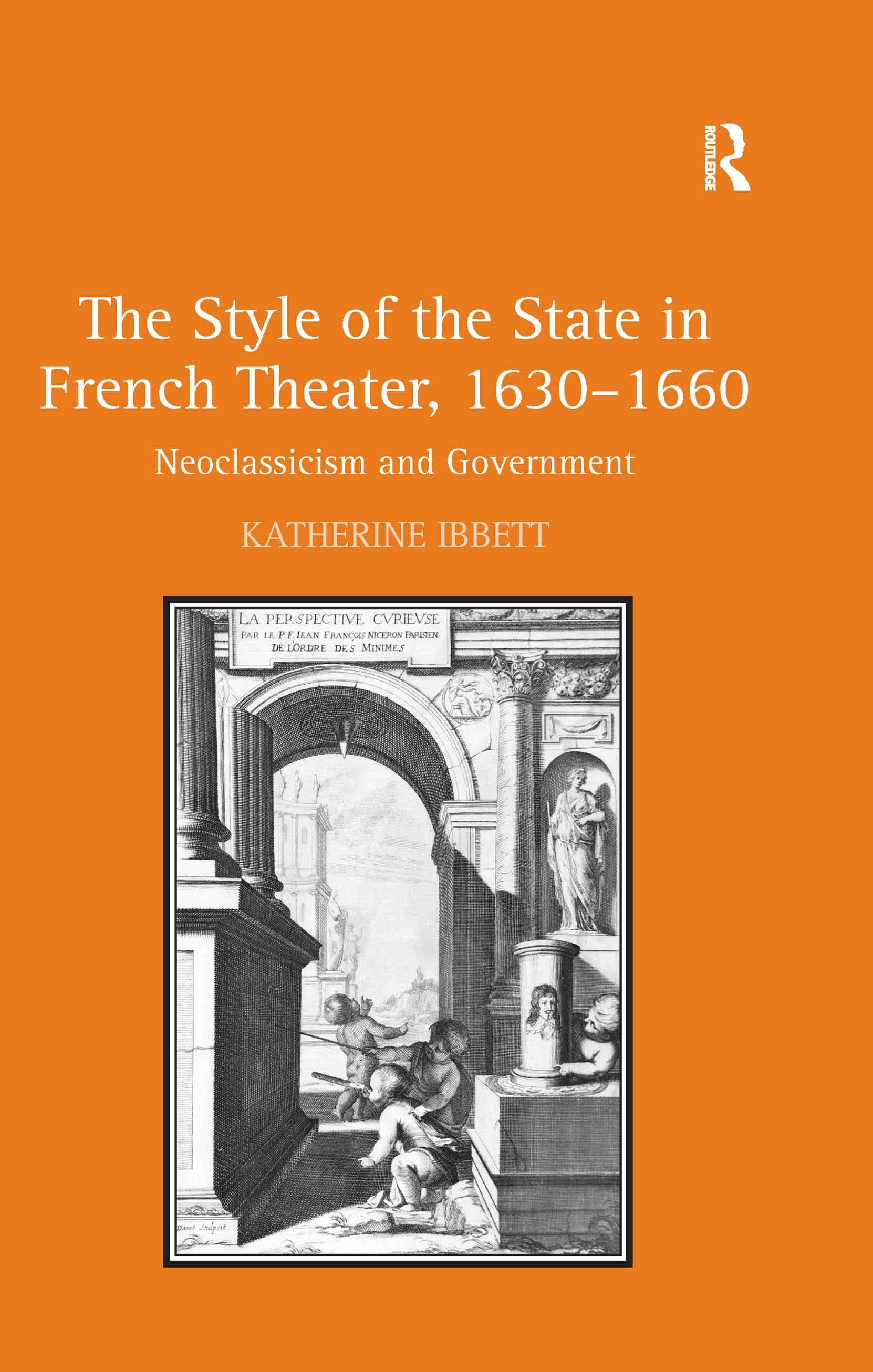
Engaging with recent thinking about performance, political theory and canon formation, this study addresses the significance of the formal changes in seventeenth-century French theater. Each chapter takes up a particularity of seventeenth-century theatrical style and staging”for example, the clearing of violence from the stage”and shows how the conceptualization of these French stylistic shifts appropriates a rich body of Italian political writing on questions of action, temporality, and law. The theater's appropriation of political concerns and vocabularies, the author argues, proffers an astute reflection on the practices of government that draws attention to questions obscured in reason of state, such as the instrumentalization of women's bodies. In a new reading of tragedies about government, the author shows how the canonical figure of Pierre Corneille is formally engaged with the political strategizing he often appears to repudiate, and in so doing challenges a literary history that has read neoclassicism largely as a display of pure French style.
Betala smidigt med kort, Klarna, Apple Pay eller Google Pay. Är du inte nöjd har du alltid 14 dagars ångerrätt. Läs mer i våra villkor. Har du några frågor, mejla oss på hello@memmo.org.
Memmo gör det enklare att plugga – var du än är i världen. Hos oss samlar du kursböcker och smarta studieverktyg på ett och samma ställe: sammanfattningar, quiz, poddar och flashcards. Och så Ted, din studiekompis som svarar på allt du undrar. Över 50 000 studenter pluggar redan här – byggt för att du ska lära dig snabbare och stressa mindre.
Du kanske också gillar
Köp boken0