
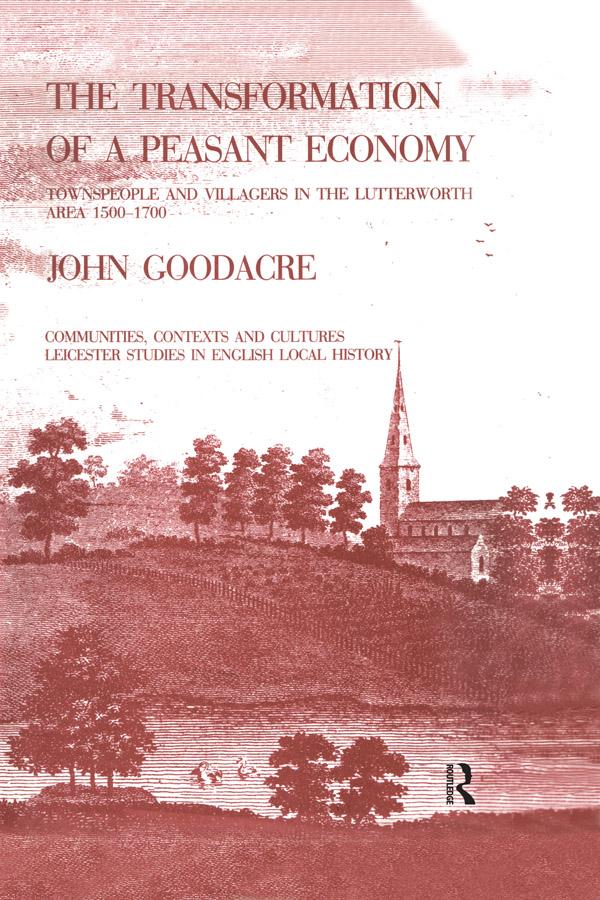
The market town has been dismissed as an incompletely formed urban community; in fact it was the primary urban unit in pre-industrial England. This study places the market town at the centre of the transformation of early-modern England, both catalysing changes in agriculture and experiencing, in a distinctive fashion, the urbanisation that was to occur a century or more later in the great industrial and commercial centres of Europe. In the two centuries after 1500 the rural economy changed from a pattern of subsistence to 'improved' farming. The first great enclosures took place during this time, but the economic base for this revolution was the growth of local trading, centred on markets and local communications networks. This redistribution of produce, provisions and information was the motor of specialisation and hence modernisation. The strength of this study is in its detailed research into this process in one representative locality, and the sensitive extrapolation of local experiences on to the national and European scale. By integrating in one book the themes of rural transformation and early urbanisation this account of one typical midland market town demonstrates the continuing vigour of the discipline of local history.
Betala smidigt med kort, Klarna, Apple Pay eller Google Pay. Är du inte nöjd har du alltid 14 dagars ångerrätt. Läs mer i våra villkor. Har du några frågor, mejla oss på hello@memmo.org.
Memmo gör det enklare att plugga – var du än är i världen. Hos oss samlar du kursböcker och smarta studieverktyg på ett och samma ställe: sammanfattningar, quiz, poddar och flashcards. Och så Ted, din studiekompis som svarar på allt du undrar. Över 50 000 studenter pluggar redan här – byggt för att du ska lära dig snabbare och stressa mindre.
Du kanske också gillar
Köp boken0