
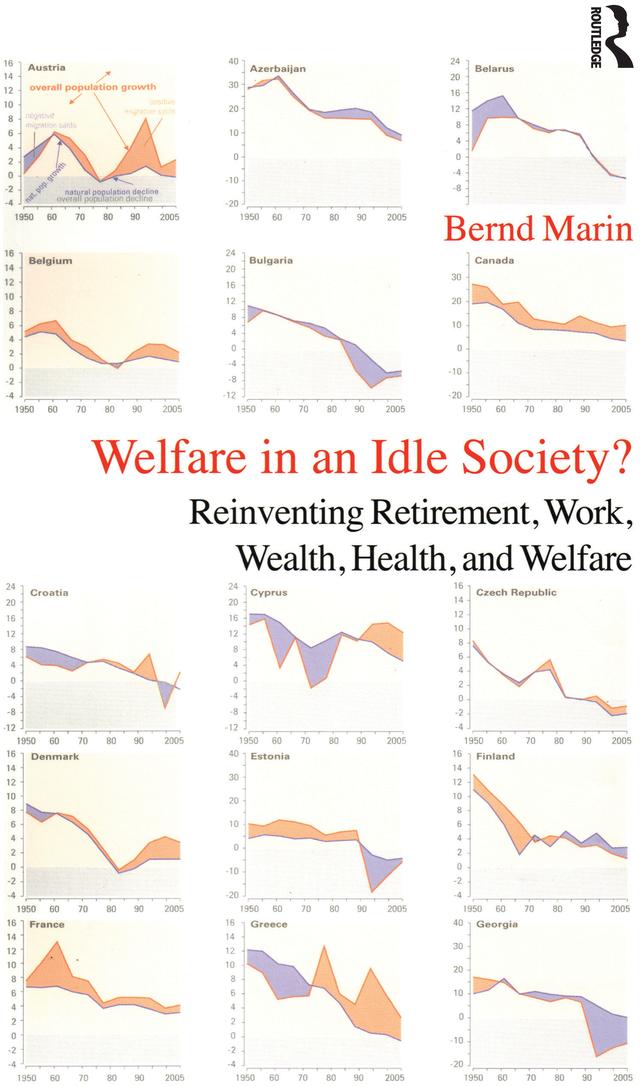
The modern welfare state is indeed one of the greatest achievements of the post-war 20th century. With its key aims of eradicating the five giant social ills of Want, Ignorance, Disease, Squalor and Idleness, it aimed to providing a minimum standard of living, with all people of working age paying a weekly contribution; in return, benefits would be paid to anyone who was sick, unemployed, retired or widowed. The modern welfare state, therefore, is about maintaining a delicate equilibrium between dependent social groups on the one hand and the active working classes on the other. In the case of old-age security, this balance is being achieved (or not) by the so-called Generation Contract. This social pact is more of an implicit, unwritten and unspecified social contract. This ground-breaking book demonstrates how countries are addressing population-ageing challenges in depth, using the case study of Austria to gain the required complexity and differentiation in a comparative European framework of empirical evidence. This is a broad social science study in political economy and sociology, not an economic analysis. Though focusing on pensions, it centres on the (im)balance between work and non-work, issues of health, work ability, employability, and benefit receipt from old-age security to disability allowance. It will be required reading for all sociologists and social policy experts and academics working within this area.
Betala smidigt med kort, Klarna, Apple Pay eller Google Pay. Är du inte nöjd har du alltid 14 dagars ångerrätt. Läs mer i våra villkor. Har du några frågor, mejla oss på hello@memmo.org.
Memmo gör det enklare att plugga – var du än är i världen. Hos oss samlar du kursböcker och smarta studieverktyg på ett och samma ställe: sammanfattningar, quiz, poddar och flashcards. Och så Ted, din studiekompis som svarar på allt du undrar. Över 50 000 studenter pluggar redan här – byggt för att du ska lära dig snabbare och stressa mindre.
Du kanske också gillar
Köp boken0