
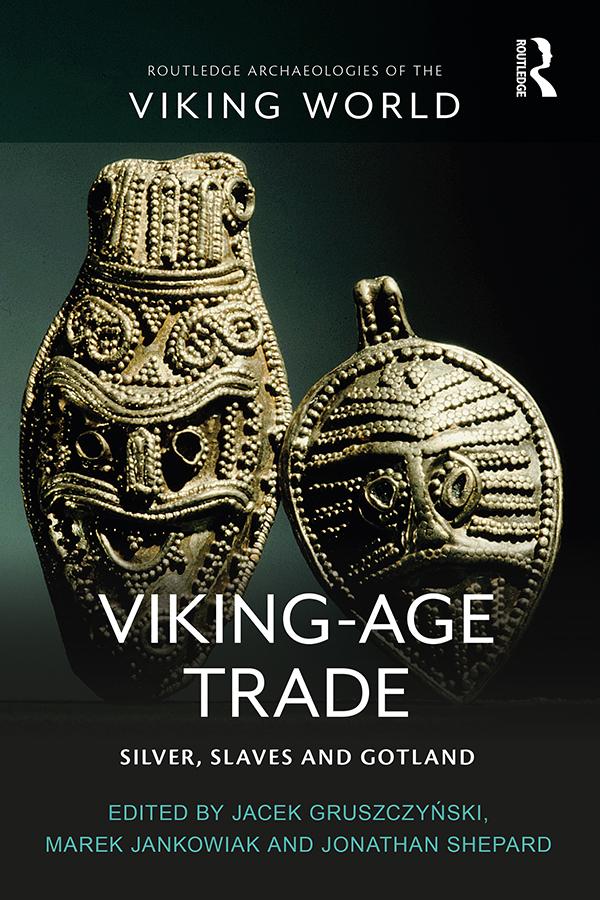
That there was an influx of silver dirhams from the Muslim world into eastern and northern Europe in the ninth and tenth centuries is well known, as is the fact that the largest concentration of hoards is on the Baltic island of Gotland. Recent discoveries have shown that dirhams were reaching the British Isles, too. What brought the dirhams to northern Europe in such large numbers? The fur trade has been proposed as one driver for transactions, but the slave trade offers another – complementary – explanation.
This volume does not offer a comprehensive delineation of the hoard finds, or a full answer to the question of what brought the silver north. But it highlights the trade in slaves as driving exchanges on a trans-continental scale. By their very nature, the nexuses were complex, mutable and unclear even to contemporaries, and they have eluded modern scholarship. Contributions to this volume shed light on processes and key places: the mints of Central Asia; the chronology of the inflows of dirhams to Rus and northern Europe; the reasons why silver was deposited in the ground and why so much ended up on Gotland; the functioning of networks – perhaps comparable to the twenty-first-century drug trade; slave-trading in the British Isles; and the stimulus and additional networks that the Vikings brought into play.
This combination of general surveys, presentations of fresh evidence and regional case studies sets Gotland and the early medieval slave trade in a firmer framework than has been available before.
Betala smidigt med kort, Klarna, Apple Pay eller Google Pay. Är du inte nöjd har du alltid 14 dagars ångerrätt. Läs mer i våra villkor. Har du några frågor, mejla oss på hello@memmo.org.
Memmo gör det enklare att plugga – var du än är i världen. Hos oss samlar du kursböcker och smarta studieverktyg på ett och samma ställe: sammanfattningar, quiz, poddar och flashcards. Och så Ted, din studiekompis som svarar på allt du undrar. Över 50 000 studenter pluggar redan här – byggt för att du ska lära dig snabbare och stressa mindre.