
How Can We Lower the Power Consumption of Gas Sensors?
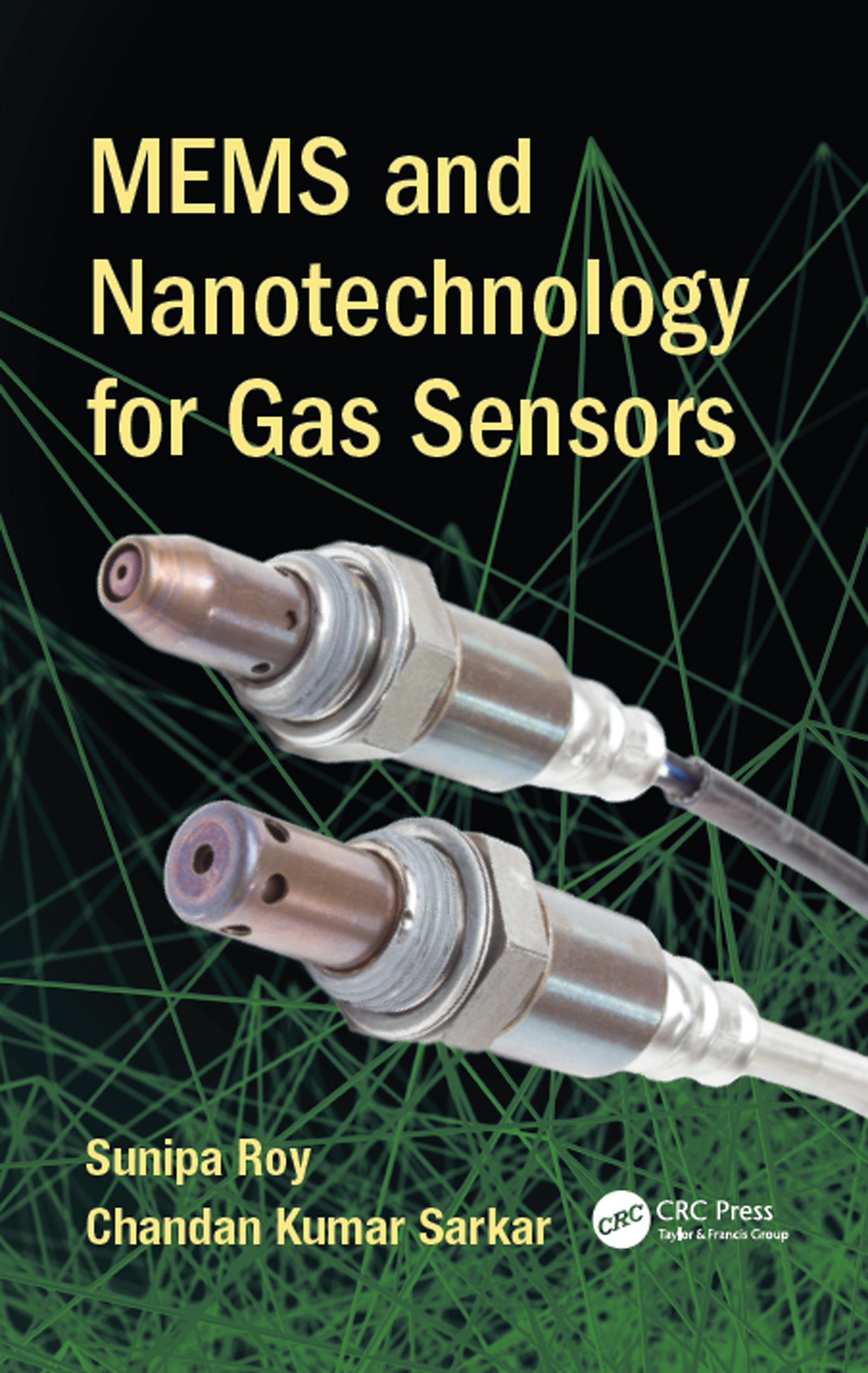
There is a growing demand for low-power, high-density gas sensor arrays that can overcome problems relative to high power consumption. Low power consumption is a prerequisite for any type of sensor system to operate at optimum efficiency. Focused on fabrication-friendly microelectromechanical systems (MEMS) and other areas of sensor technology, MEMS and Nanotechnology for Gas Sensors explores the distinct advantages of using MEMS in low power consumption, and provides extensive coverage of the MEMS/nanotechnology platform for gas sensor applications.
This book outlines the microfabrication technology needed to fabricate a gas sensor on a MEMS platform. It discusses semiconductors, graphene, nanocrystalline ZnO-based microfabricated sensors, and nanostructures for volatile organic compounds. It also includes performance parameters for the state of the art of sensors, and the applications of MEMS and nanotechnology in different areas relevant to the sensor domain.
In addition, the book includes:
- An introduction to MEMS for MEMS materials, and a historical background of MEMS
- A concept for cleanroom technology
- The substrate materials used for MEMS
- Two types of deposition techniques, including chemical vapour deposition (CVD)
- The properties and types of photoresists, and the photolithographic processes
- Different micromachining techniques for the gas sensor platform, and bulk and surface micromachining
- The design issues of a microheater for MEMS-based sensors
- The synthesis technique of a nanocrystalline metal oxide layer
- A detailed review about graphene; its different deposition techniques; and its important electronic, electrical, and mechanical properties with its application as a gas sensor
- Low-cost, low-temperature synthesis techniques
- An explanation of volatile organic compound (VOC) detection and how relative humidity affects the sensing parameters
MEMS and Nanotechnology for Gas Sensors provides a broad overview of current, emerging, and possible future MEMS applications. MEMS technology can be applied in the automotive, consumer, industrial, and biotechnology domains.
Betala smidigt med kort, Klarna, Apple Pay eller Google Pay. Är du inte nöjd har du alltid 14 dagars ångerrätt. Läs mer i våra villkor. Har du några frågor, mejla oss på hello@memmo.org.
Memmo gör det enklare att plugga – var du än är i världen. Hos oss samlar du kursböcker och smarta studieverktyg på ett och samma ställe: sammanfattningar, quiz, poddar och flashcards. Och så Ted, din studiekompis som svarar på allt du undrar. Över 50 000 studenter pluggar redan här – byggt för att du ska lära dig snabbare och stressa mindre.