
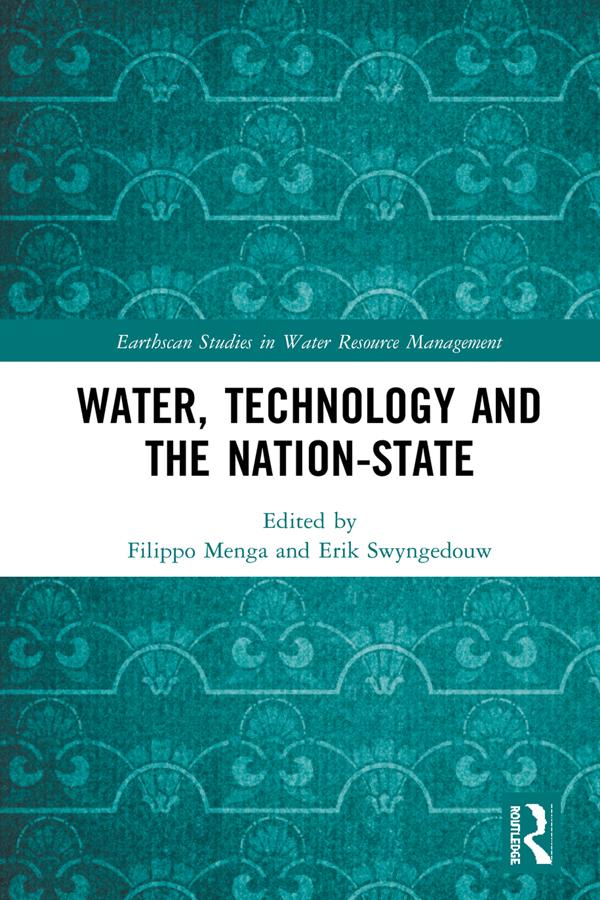
Just as space, territory and society can be socially and politically co-constructed, so can water, and thus the construction of hydraulic infrastructures can be mobilised by politicians to consolidate their grip on power while nurturing their own vision of what the nation is or should become. This book delves into the complex and often hidden connection between water, technological advancement and the nation-state, addressing two major questions. First, the arguments deployed consider how water as a resource can be ideologically constructed, imagined and framed to create and reinforce a national identity, and secondly, how the idea of a nation-state can and is materially co-constituted out of the material infrastructure through which water is harnessed and channelled.
The book consists of 13 theoretical and empirical interdisciplinary chapters covering four continents. The case studies cover a diverse range of geographical areas and countries, including China, Cyprus, Egypt, Ethiopia, France, Nepal and Thailand, and together illustrate that the meaning and rationale behind water infrastructures goes well beyond the control and regulation of water resources, as it becomes central in the unfolding of power dynamics across time and space.
Betala smidigt med kort, Klarna, Apple Pay eller Google Pay. Är du inte nöjd har du alltid 14 dagars ångerrätt. Läs mer i våra villkor. Har du några frågor, mejla oss på hello@memmo.org.
Memmo gör det enklare att plugga – var du än är i världen. Hos oss samlar du kursböcker och smarta studieverktyg på ett och samma ställe: sammanfattningar, quiz, poddar och flashcards. Och så Ted, din studiekompis som svarar på allt du undrar. Över 50 000 studenter pluggar redan här – byggt för att du ska lära dig snabbare och stressa mindre.