
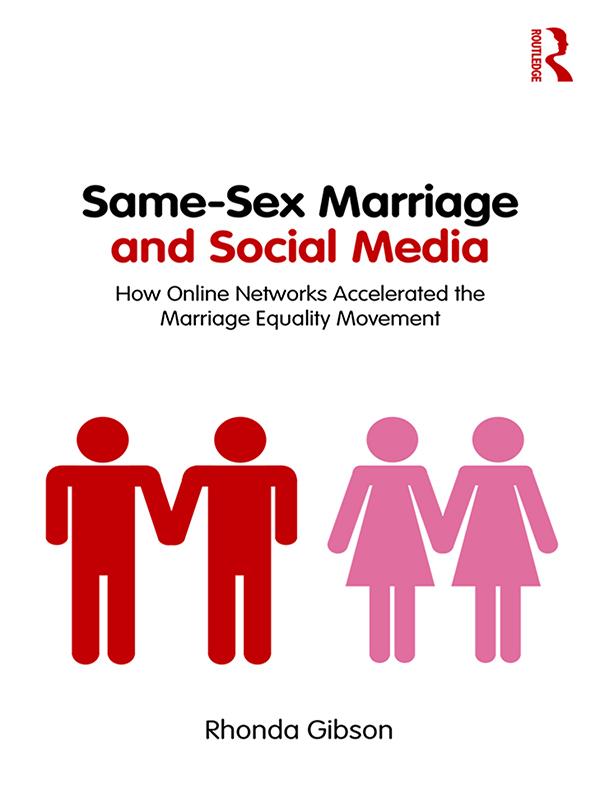
According to polls, from the early noughties to now, public support for same-sex marriage has increased dramatically. Same-Sex Marriage and Social Media asks how such a rate of attitude change came about and, more specifically, what role social media played.
Digital platforms like Facebook, Twitter and YouTube have proved to be useful outlets for political expression, and Rhonda Gibson explores how this came to benefit the marriage equality movement. Drawing on a wealth of movement-related discourse, the book looks at:
- how marriage equality was framed by news companies online and in print;
- the digital strategies deployed by LGBT+ rights organizations and their opponents to gain support;
- the corporate response to the same-sex marriage debate;
- the effect of perceived public opinion and the concept of social identity on how the debate evolved online.
This book seeks to demonstrate how the unique ability of social networks to share personal stories on a mass scale, connect like-minded individuals regardless of geography, and leverage the bandwagon effect of viral content contributed to a seismic shift in visibility and public opinion around the issue of marriage equality. Students and researchers will find this a timely and accessible introduction to the impact of online networks on LGBTQ rights.
Betala smidigt med kort, Klarna, Apple Pay eller Google Pay. Är du inte nöjd har du alltid 14 dagars ångerrätt. Läs mer i våra villkor. Har du några frågor, mejla oss på hello@memmo.org.
Memmo gör det enklare att plugga – var du än är i världen. Hos oss samlar du kursböcker och smarta studieverktyg på ett och samma ställe: sammanfattningar, quiz, poddar och flashcards. Och så Ted, din studiekompis som svarar på allt du undrar. Över 50 000 studenter pluggar redan här – byggt för att du ska lära dig snabbare och stressa mindre.