
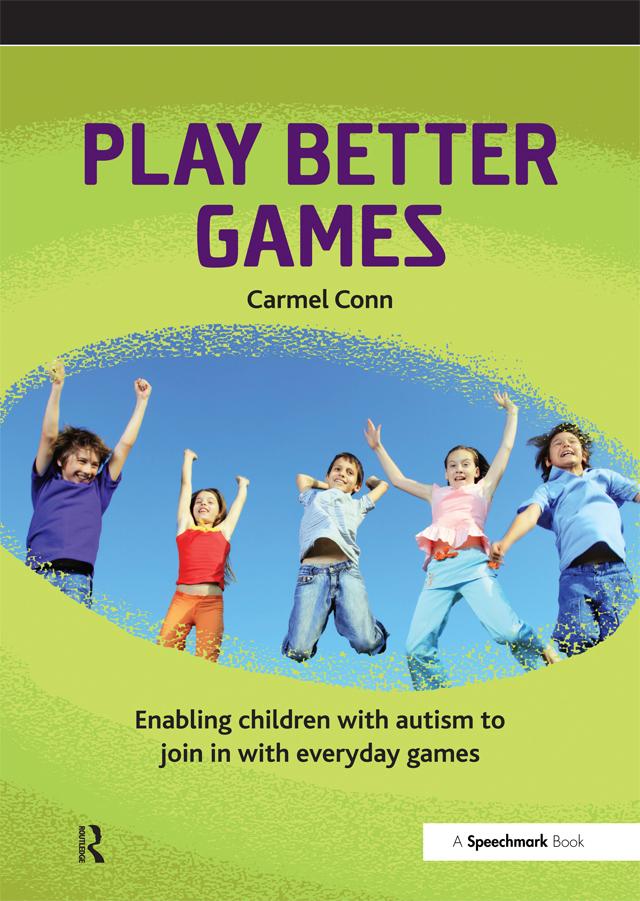
Ordinary games are an important vehicle for children's learning. They provide a powerful, naturally occurring learning environment that is physical, playful and fun. Playing games requires interpersonal skills in language, thought, social behavior, creativity, self-regulation and skilful use of the body. When children play games together they develop the following key capacities:
•Cooperative behavior
•Focused attention
•Social understanding
•Holding information in mind
•Motor, spatial and sequential planning
•Self-regulation, e.g impulse control, coping with excitement, controlled exertion
•Collaborative behavior and negotiation
•Self-expression and creativity.
Games provide a social experience that is emotionally compelling, where children laugh and have fun and do not realise they are interacting, problem solving, negotiating and cooperating with each other.
Play Better Games is designed to help practitioners and parents to think about what might prohibit their children from joining in with games and plan effective strategies for support. It will be of benefit to teachers, therapists, group works, play workers, midday supervisors and support workers, as well as to parents and siblings of children with autism.
Betala smidigt med kort, Klarna, Apple Pay eller Google Pay. Är du inte nöjd har du alltid 14 dagars ångerrätt. Läs mer i våra villkor. Har du några frågor, mejla oss på hello@memmo.org.
Memmo gör det enklare att plugga – var du än är i världen. Hos oss samlar du kursböcker och smarta studieverktyg på ett och samma ställe: sammanfattningar, quiz, poddar och flashcards. Och så Ted, din studiekompis som svarar på allt du undrar. Över 50 000 studenter pluggar redan här – byggt för att du ska lära dig snabbare och stressa mindre.