
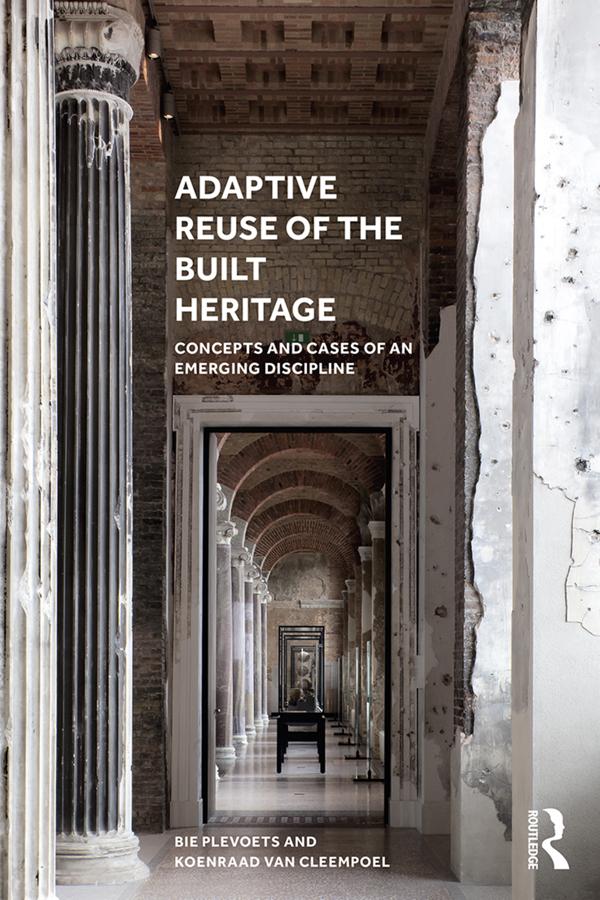
Adaptive reuse – the process of repairing and restoring existing buildings for new or continued use – is becoming an essential part of architectural practice. As mounting demographic, economic, and ecological challenges limit opportunities for new construction, architects increasingly focus on transforming and adapting existing buildings.
This book introduces adaptive reuse as a new discipline. It provides students and professionals with the understanding and the tools they need to develop innovative and creative approaches, helping them to rethink and redesign existing buildings – a skill which is becoming more and more important. Part I outlines the history of adaptive reuse and explains the concepts and methods that lie behind new design processes and contemporary practice. Part II consists of a wide range of case studies, representing different time periods and strategies for intervention. Iconic adaptive reuse projects such as the Caixa Forum in Madrid and the Rijksmuseum in Amsterdam are discussed alongside less famous and spontaneous transformations such as the Kunsthaus Tacheles in Berlin, in addition to projects from Italy, Spain, Croatia, Belgium, Poland, and the USA.
Featuring over 100 high-quality color illustrations, Adaptive Reuse of the Built Heritage is essential reading for students and professionals in architecture, interior design, heritage conservation, and urban planning.
Betala smidigt med kort, Klarna, Apple Pay eller Google Pay. Är du inte nöjd har du alltid 14 dagars ångerrätt. Läs mer i våra villkor. Har du några frågor, mejla oss på hello@memmo.org.
Memmo gör det enklare att plugga – var du än är i världen. Hos oss samlar du kursböcker och smarta studieverktyg på ett och samma ställe: sammanfattningar, quiz, poddar och flashcards. Och så Ted, din studiekompis som svarar på allt du undrar. Över 75 000 studenter pluggar redan här – byggt för att du ska lära dig snabbare och stressa mindre.