
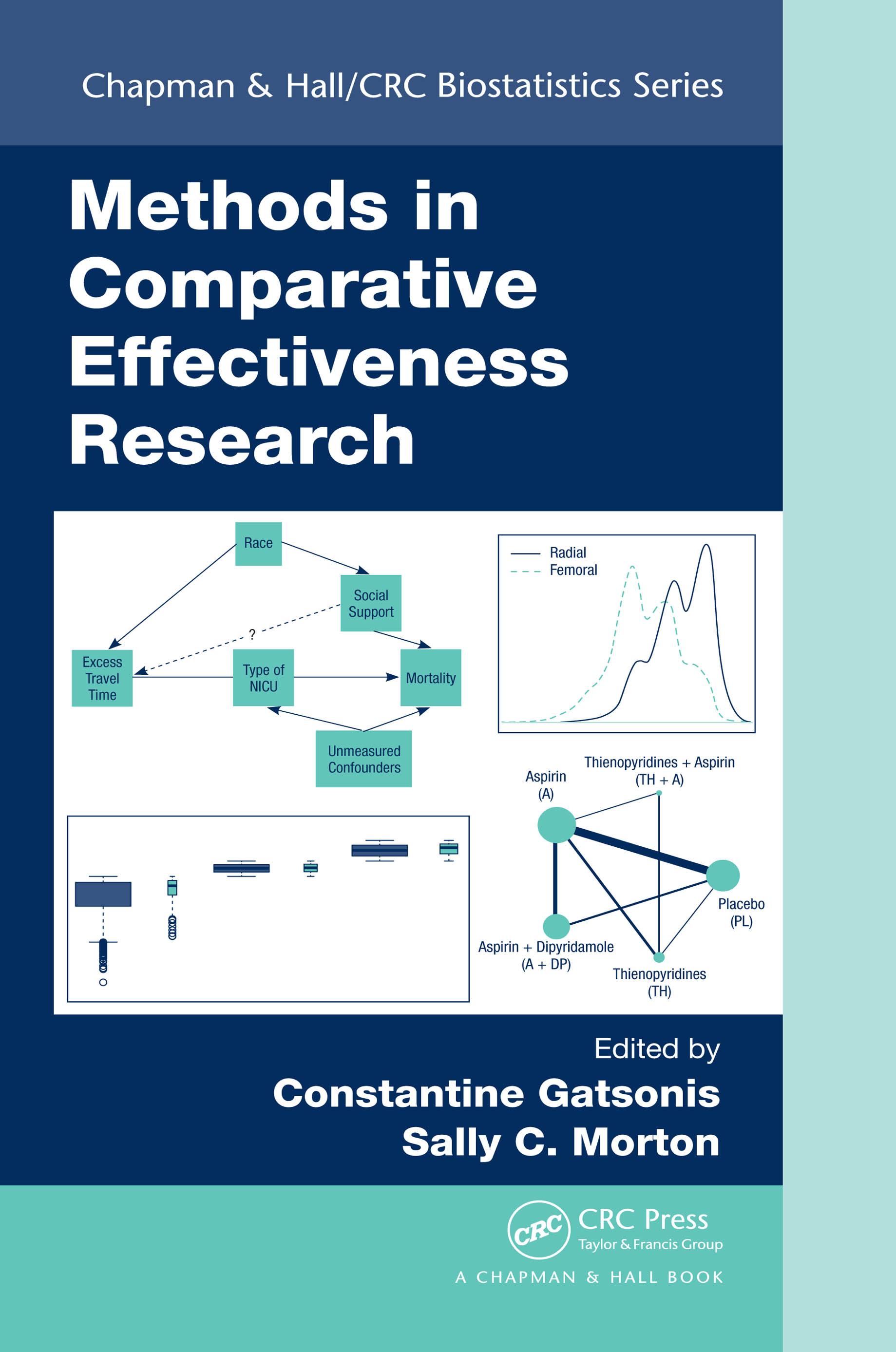
Comparative effectiveness research (CER) is the generation and synthesis of evidence that compares the benefits and harms of alternative methods to prevent, diagnose, treat, and monitor a clinical condition or to improve the delivery of care (IOM 2009). CER is conducted to develop evidence that will aid patients, clinicians, purchasers, and health policy makers in making informed decisions at both the individual and population levels. CER encompasses a very broad range of types of studies—experimental, observational, prospective, retrospective, and research synthesis.
This volume covers the main areas of quantitative methodology for the design and analysis of CER studies. The volume has four major sections—causal inference; clinical trials; research synthesis; and specialized topics. The audience includes CER methodologists, quantitative-trained researchers interested in CER, and graduate students in statistics, epidemiology, and health services and outcomes research. The book assumes a masters-level course in regression analysis and familiarity with clinical research.
Betala smidigt med kort, Klarna, Apple Pay eller Google Pay. Är du inte nöjd har du alltid 14 dagars ångerrätt. Läs mer i våra villkor. Har du några frågor, mejla oss på hello@memmo.org.
Memmo gör det enklare att plugga – var du än är i världen. Hos oss samlar du kursböcker och smarta studieverktyg på ett och samma ställe: sammanfattningar, quiz, poddar och flashcards. Och så Ted, din studiekompis som svarar på allt du undrar. Över 50 000 studenter pluggar redan här – byggt för att du ska lära dig snabbare och stressa mindre.