
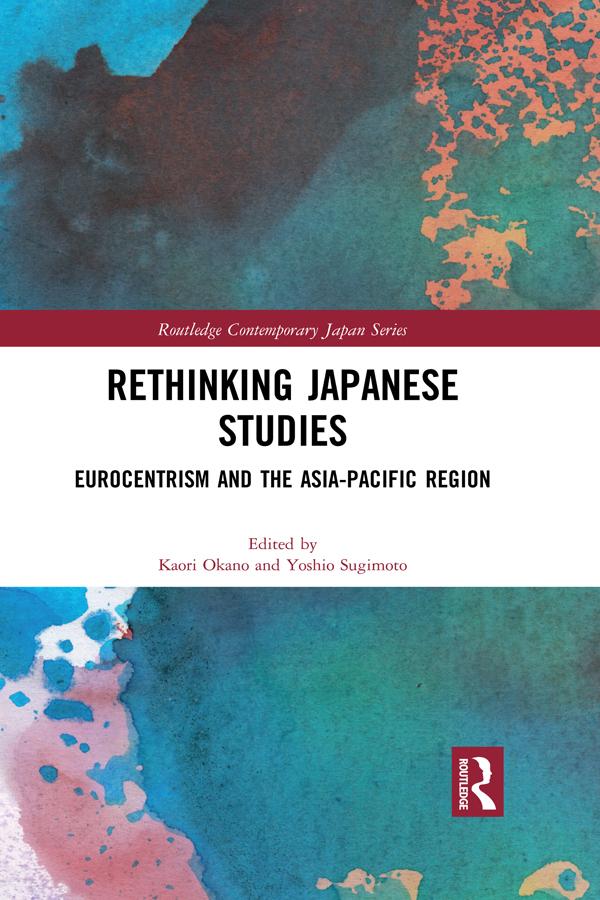
Japanese Studies has provided a fertile space for non-Eurocentric analysis for a number of reasons. It has been embroiled in the long-running internal debate over the so-called Nihonjinron, revolving around the extent to which the effective interpretation of Japanese society and culture requires non-Western, Japan-specific emic concepts and theories. This book takes this question further and explores how we can understand Japanese society and culture by combining Euro-American concepts and theories with those that originate in Japan. Because Japan is the only liberal democracy to have achieved a high level of capitalism outside the Western cultural framework, Japanese Studies has long provided a forum for deliberations about the extent to which the Western conception of modernity is universally applicable. Furthermore, because of Japan’s military, economic and cultural dominance in Asia at different points in the last century, Japanese Studies has had to deal with the issues of Japanocentrism as well as Eurocentrism, a duality requiring complex and nuanced analysis.
This book identifies variations amongst Japanese Studies academic communities in the Asia-Pacific and examines the extent to which relatively autonomous scholarship, intellectual approach or theories exist in the region. It also evaluates how studies on Japan in the region contribute to global Japanese Studies and explores their potential for formulating concrete strategies to unsettle Eurocentric dominance of the discipline.
Betala smidigt med kort, Klarna, Apple Pay eller Google Pay. Är du inte nöjd har du alltid 14 dagars ångerrätt. Läs mer i våra villkor. Har du några frågor, mejla oss på hello@memmo.org.
Memmo gör det enklare att plugga – var du än är i världen. Hos oss samlar du kursböcker och smarta studieverktyg på ett och samma ställe: sammanfattningar, quiz, poddar och flashcards. Och så Ted, din studiekompis som svarar på allt du undrar. Över 50 000 studenter pluggar redan här – byggt för att du ska lära dig snabbare och stressa mindre.