
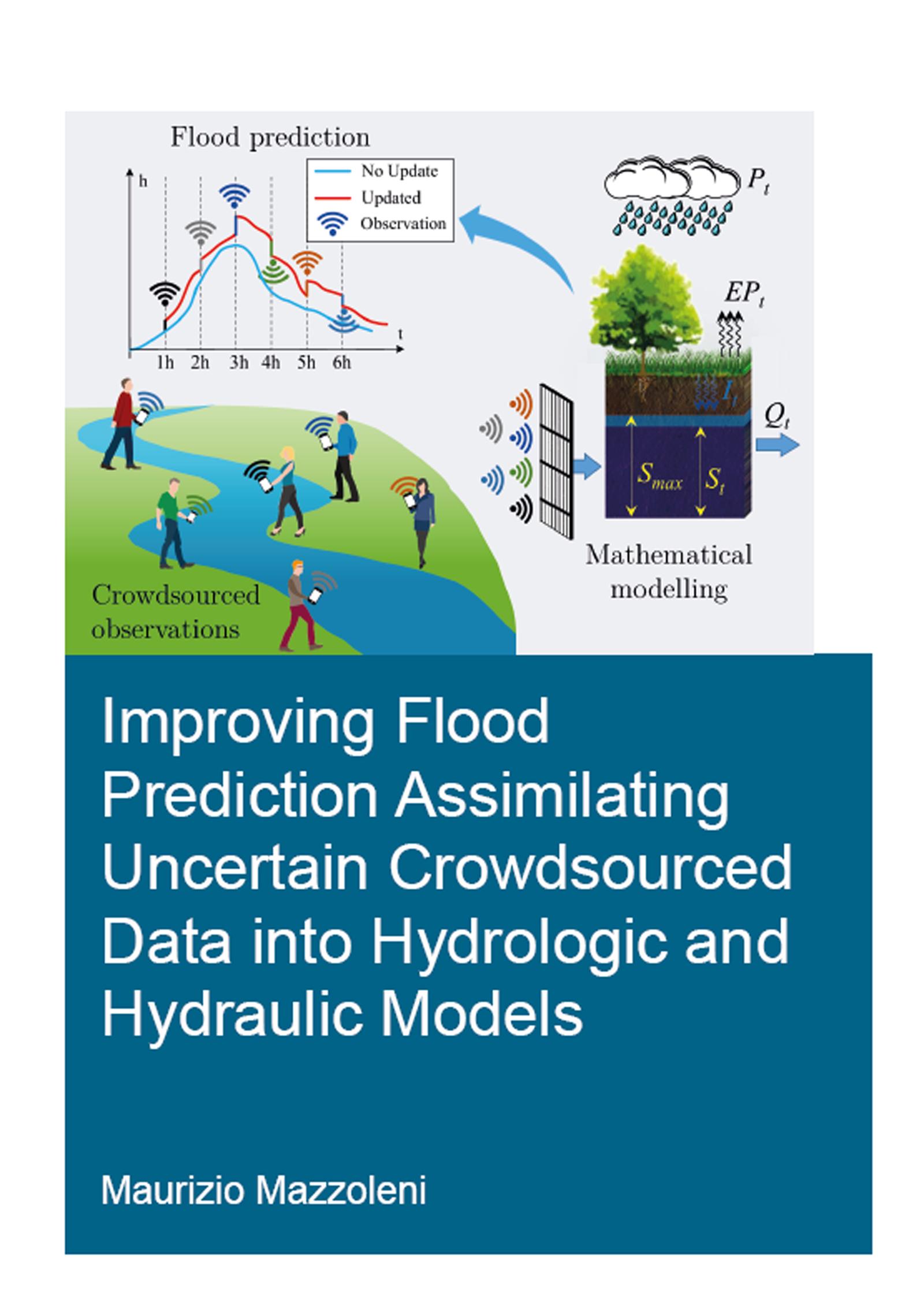
In recent years, the continued technological advances have led to the spread of low-cost sensors and devices supporting crowdsourcing as a way to obtain observations of hydrological variables in a more distributed way than the classic static physical sensors. The main advantage of using these type of sensors is that they can be used not only by technicians but also by regular citizens. However, due to their relatively low reliability and varying accuracy in time and space, crowdsourced observations have not been widely integrated in hydrological and/or hydraulic models for flood forecasting applications. Instead, they have generally been used to validate model results against observations, in post-event analyses.
This research aims to investigate the benefits of assimilating the crowdsourced observations, coming from a distributed network of heterogeneous physical and social (static and dynamic) sensors, within hydrological and hydraulic models, in order to improve flood forecasting. The results of this study demonstrate that crowdsourced observations can significantly improve flood prediction if properly integrated in hydrological and hydraulic models. This study provides technological support to citizen observatories of water, in which citizens not only can play an active role in information capturing, evaluation and communication, leading to improved model forecasts and better flood management.
Betala smidigt med kort, Klarna, Apple Pay eller Google Pay. Är du inte nöjd har du alltid 14 dagars ångerrätt. Läs mer i våra villkor. Har du några frågor, mejla oss på hello@memmo.org.
Memmo gör det enklare att plugga – var du än är i världen. Hos oss samlar du kursböcker och smarta studieverktyg på ett och samma ställe: sammanfattningar, quiz, poddar och flashcards. Och så Ted, din studiekompis som svarar på allt du undrar. Över 50 000 studenter pluggar redan här – byggt för att du ska lära dig snabbare och stressa mindre.